Wiggle your toes into the powder-soft sand on Alona Beach and here’s an uncomfortable little truth: a good handful of it once passed through a fish.
Not eroded off a cliff. Not ground down by a million years of waves. Eaten, chewed, digested, and politely deposited. The culprit is one of the loudest, most colourful characters on every reef in Bohol, and once you know what it’s up to down there, you’ll never look at a beach quite the same way again.
Meet the parrotfish.
The beak that built the beach
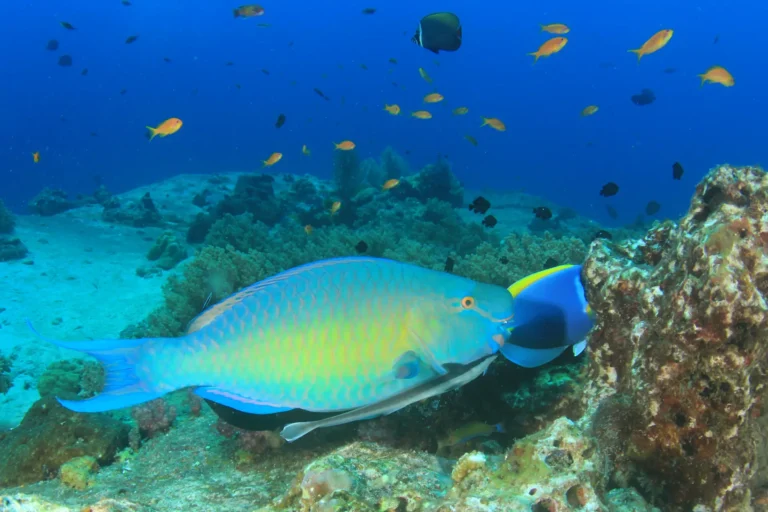
Parrotfish get their name from that fused, beak-like mouth, and it’s basically a set of teeth welded into a coral-cracking tool. They spend their whole day scraping algae off hard coral and rock. To get at it, they bite off chunks of the coral skeleton too.
That skeleton is calcium carbonate. The fish grinds it up with a second set of teeth in its throat, digests the tasty algae, and expels the leftover rock as fine, clean, white sand.
Watch one closely on your next dive and you’ll actually hear the crunch. Hang around a moment longer and you might see the little cloud that follows. That cloud is beach in the making.
One fish, a whole lot of sand
The numbers are genuinely silly. A single large parrotfish can grind out hundreds of pounds of white sand in a year. Multiply that by every parrotfish on every reef around Panglao, Balicasag and Pamilacan, working every daylight hour, for years, and you start to understand where those postcard beaches actually come from.
So the resort brochure showing sugar-white sand and turquoise water? That’s a parrotfish production line, running quietly a few metres below the boats.
The reef’s unpaid gardeners
Here’s the part that matters even more than the sand. By constantly mowing down algae, parrotfish stop it from smothering the coral. Reefs with healthy parrotfish populations tend to be cleaner, more resilient, and quicker to bounce back after stress like a bleaching event or a storm.
It’s no accident that Bohol’s reefs look so good. Strong protection keeps the grazers around, and the grazers keep the coral in the light. If you want the bigger picture on how that protection works, our breakdown of why Bohol’s reefs are so healthy is a good place to start.
The bubble sleeping bag
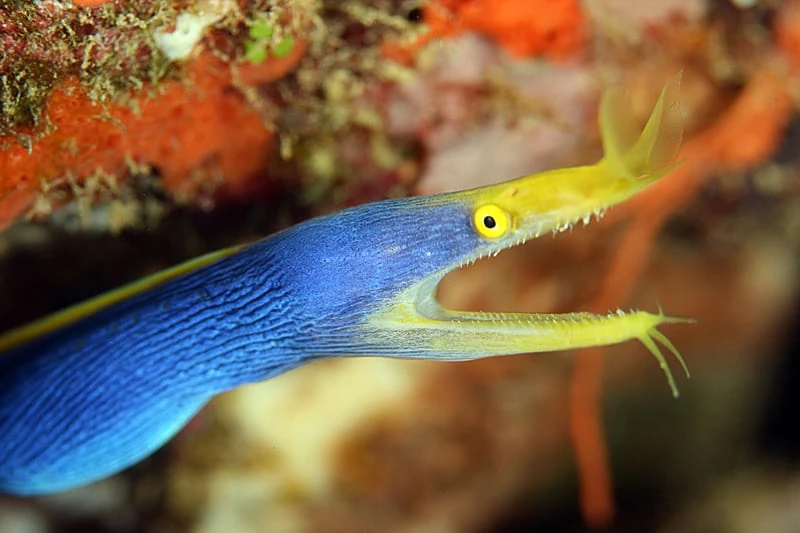
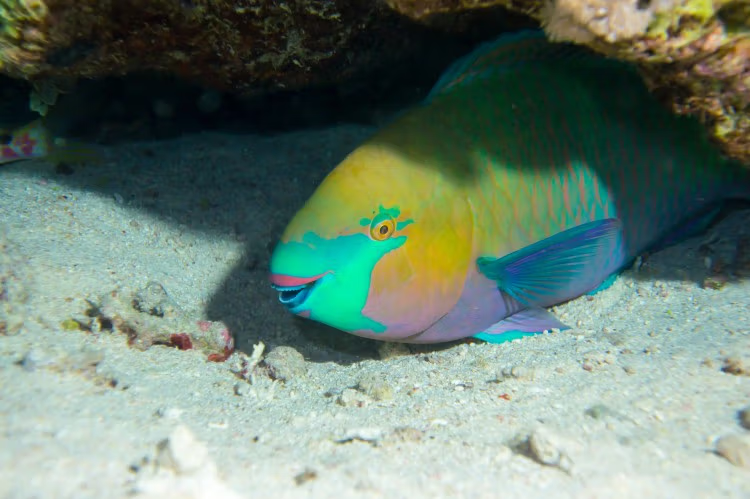
Now for the fact that wins dinner parties. Many parrotfish don’t just tuck into a crevice at night. They blow a cocoon of mucus around themselves before they sleep, a see-through sleeping bag that seals in their scent so hunting predators like moray eels can’t smell them in the dark.
Slimy? Absolutely. Brilliant? Also yes. Spotting a parrotfish snoozing in its bubble is one of the quiet joys of a Bohol night dive, and it’s the kind of thing you only notice once someone tells you to look.
Where to meet them in Bohol
You honestly can’t miss them. From palm-sized bullethead parrotfish nibbling the shallows to the occasional bumphead the size of your torso, they’re on every reef we visit. Balicasag’s slopes and Napaling’s wall are reliable, and even the house reef right off Alona has a busy parrotfish crew keeping the coral tidy.
Next time you’re down there, stop kicking for a minute and just listen. Once you’ve heard that crunch and connected it to the sand between your toes, the reef gets a whole lot more interesting.
Want a guide who’ll show you the parrotfish at work and translate what the rest of the reef is saying? Come diving with us and we’ll help you see it. And if you’re curious how much conversation is really happening down there, our post on the secret language of coral is a fun follow-up.