Marine Life
The Ribbon Eel of Bohol: A Fish That Changes Color and Sex
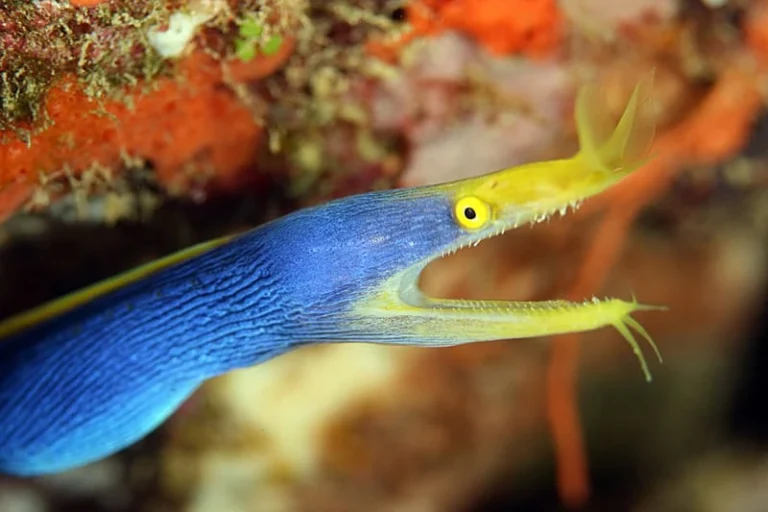
Picture a ribbon of electric blue rising out of the sand, edged in bright yellow, its nostrils flared into little flaring petals, mouth gaping as it sways in the current. It looks less like a fish and more like something out of a fever dream. Then it spots you, and in a blink it’s gone, whipped back down into its burrow.
That’s a ribbon eel, and it’s one of the most striking little creatures on a Bohol reef. It’s also hiding a life story stranger than its looks. This is a fish that’s born one color, matures into another, and changes sex along the way.
A Moray in Disguise
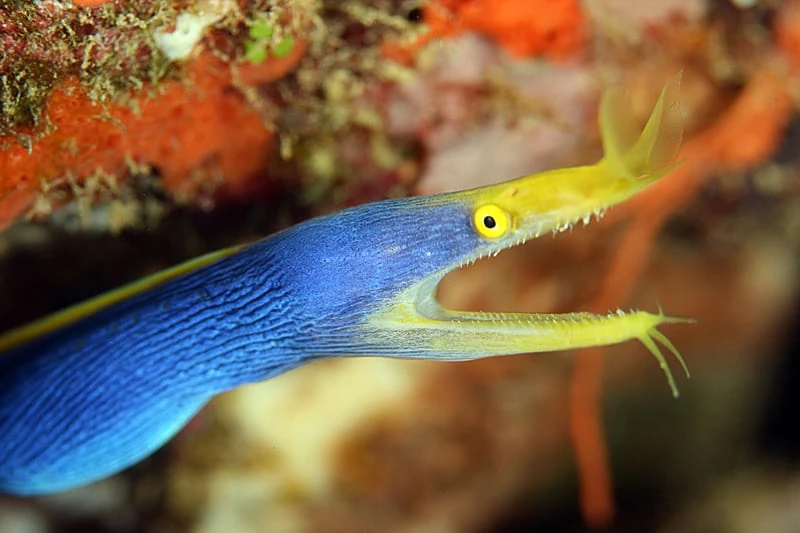
Despite the flamboyant looks, the ribbon eel is a member of the moray family. Unlike its chunkier cousins, it’s slender and flat, almost ribbon-like, and spends its days anchored in a burrow in the sand or rubble with just its head and neck waving out. That gaping mouth isn’t a threat, it’s how the eel breathes and watches for small fish to ambush. Those expanded nostrils give it a permanently surprised, orchid-like face.
They’re almost always seen alone, each one holding down its own little patch of seabed. Find one today and there’s a good chance it’ll be in the very same hole next week.
Black, Blue, Then Yellow: The Big Secret
Here’s what makes the ribbon eel unforgettable. The color you see tells you exactly where that eel is in its life, because it transforms as it grows.
Biologists call this protandry, starting male and later becoming female. So that rare all-yellow ribbon eel isn’t a different species or a lucky color variant. It’s simply an older female, the final chapter of a life that began as a little black juvenile in the sand.
Spot a black, a blue, and a yellow on the same trip and you’ve seen one animal’s entire life laid out in color.
Finding Ribbon Eels in Bohol
Ribbon eels love the same sandy, rubbly ground that makes Panglao such good critter diving. Keep your eyes on the seabed on slopes and sandy patches, and look for that thin ribbon of color poking up, swaying like a stray piece of weed with a mind of its own. The blue males are the ones you’ll spot most often. A yellow female is a genuine treat.
They make wonderful photo subjects, with that vivid color and constant swaying motion, but they’re shy. Move in slowly and keep low. Rush it and the eel simply vanishes into its hole, and no amount of waving will coax it back out while you’re looming over it.
That’s the whole trick with ribbon eels, and with so much of Bohol’s small stuff. Hang back, stay patient, and let the reef relax around you. The quieter you are, the more it shows you.
Come Meet the Ribbon Eel
Our guides know exactly where to look for Bohol’s weird and wonderful little residents. Dive the sandy slopes with us and we’ll help you find a ribbon eel of your own, whatever color it’s wearing that day.
Dive Bohol With Us