Marine Life
Nudibranchs of Bohol: A Guide to the Reef’s Living Jewels
Here’s a word that does no justice at all to one of the most beautiful animals in the sea: slug.
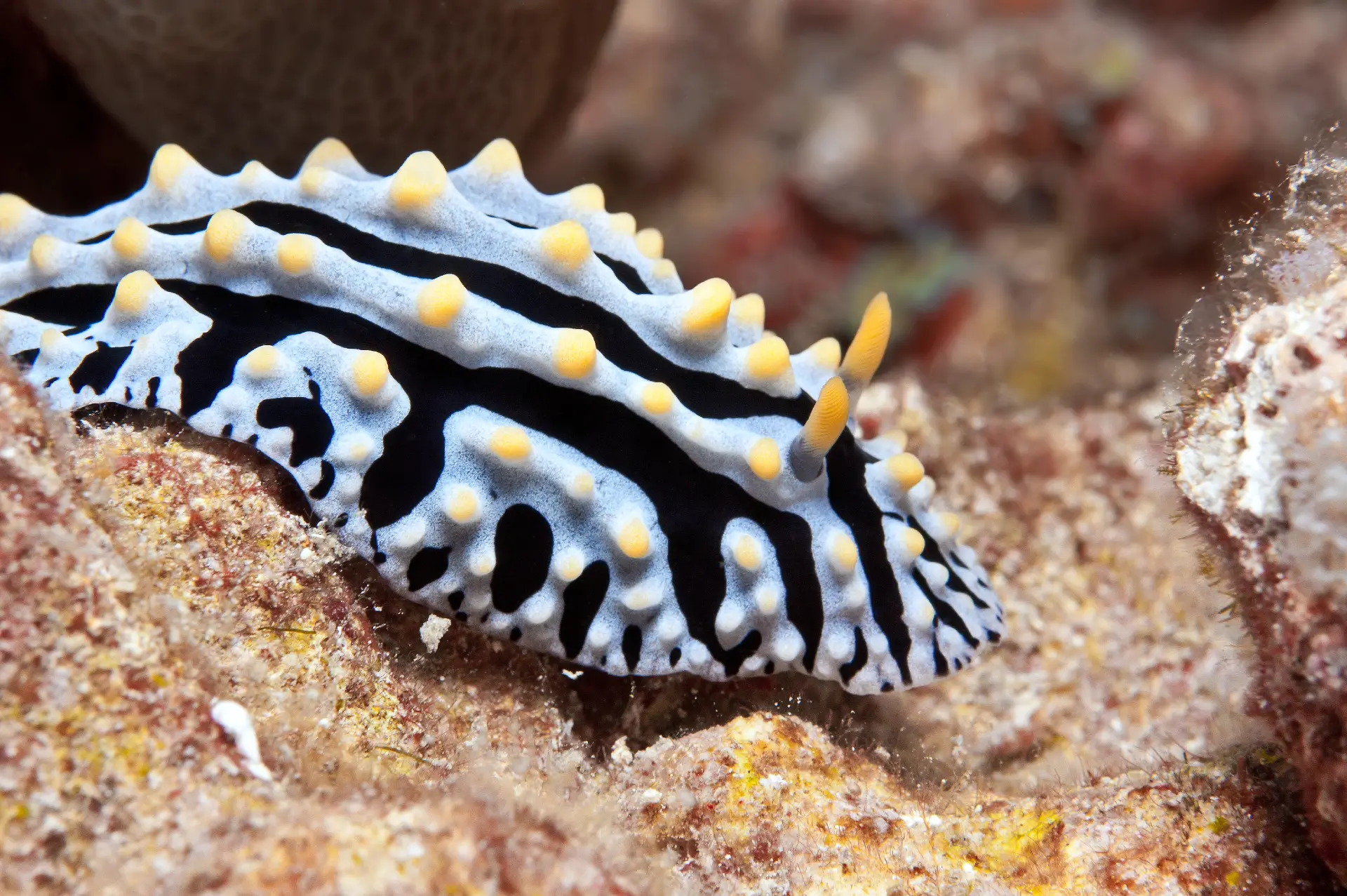
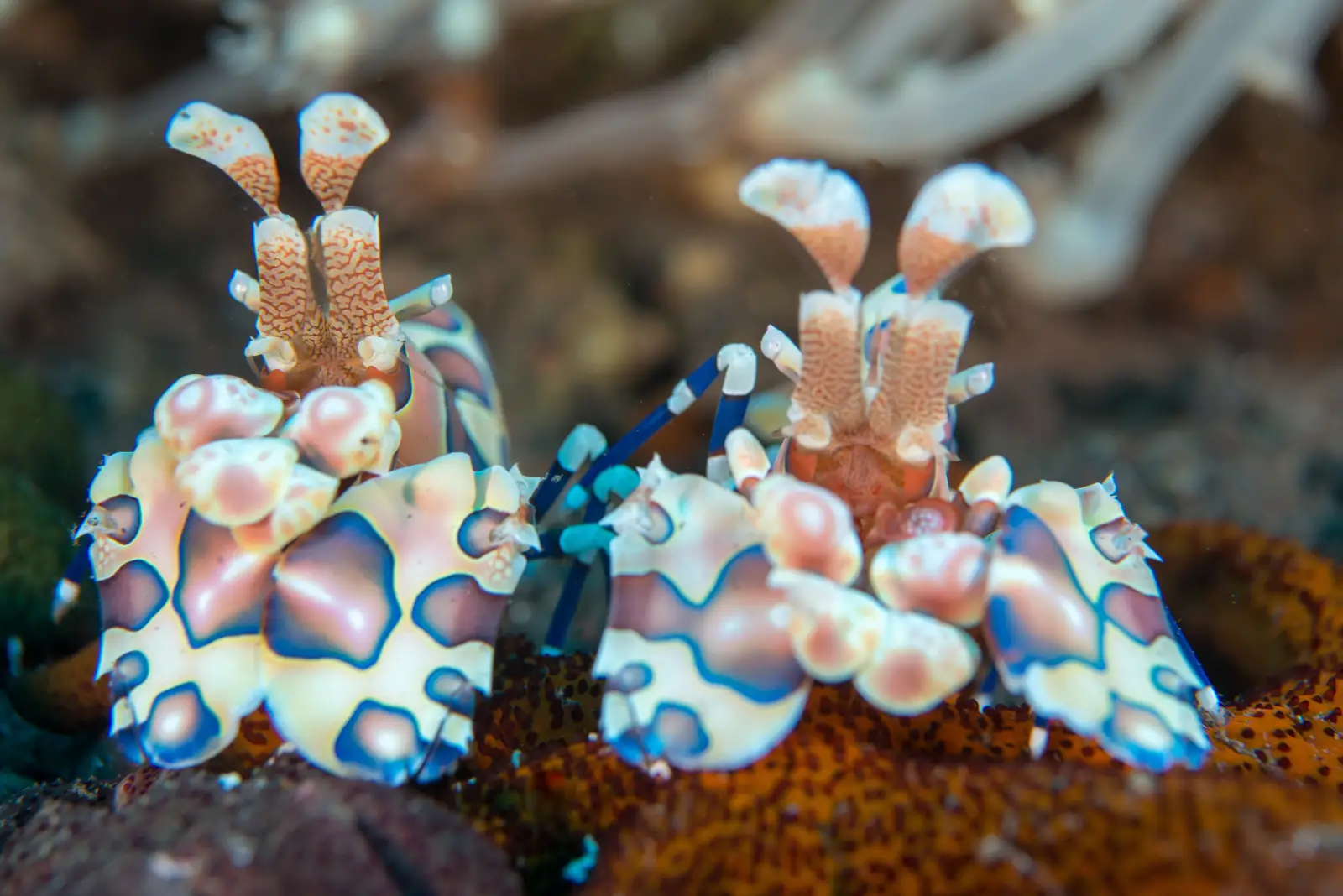
That’s technically what a nudibranch is. A shell-less marine snail, a slug with the garden-variety drabness swapped out for electric blues, screaming oranges, polka dots, racing stripes and frills that look hand-painted. Once a guide points your first one out on a Bohol reef, something shifts. You slow down. You start scanning every sponge and every blade of seagrass. And you’re hooked for life.
Welcome to the wonderful, slightly obsessive world of nudibranch hunting.
What exactly is a nudibranch?
The name means “naked gills,” and that’s your first clue to finding them. Most nudibranchs wear their breathing apparatus on the outside, usually as a frilly rosette toward the tail. Up front they have two little horns called rhinophores, chemical sensors that taste the water to find food and mates.
They’re small. Many are the size of your thumbnail, some no bigger than a grain of rice. That’s exactly why they’re such a prize. Spotting one takes a calm, slow, close-to-the-reef approach, which happens to be the approach that makes you a better diver anyway.
Why Bohol is a nudibranch paradise
Bohol sits in the Coral Triangle, the most biodiverse stretch of ocean on the planet, and nudibranchs love it here. The sandy slopes and rubble patches around Panglao are hunting grounds, and the healthy, protected reefs give them endless food to graze.
That food is the whole reason the colours exist. Many nudibranchs eat one specific thing, a certain sponge, a particular hydroid, a single type of soft coral, and the reefs here serve up a buffet. More food species means more nudibranch species, which is why a single muck dive off Alona can turn up half a dozen different ones if your eyes are tuned in. It’s no accident the reefs are this rich, either, as we explain in why Bohol’s reefs are so healthy.
The superpowers hiding in the frills
Nudibranchs are gorgeous, but they’re also quietly savage, and that’s the part that wins people over.
Stars of the Bohol reef
You’ll meet all sorts here. Chromodoris species show up in white with bold purple and orange trim. Flabellina look like little flames in pink and lilac. Nembrotha come in deep greens and blacks with orange gills.
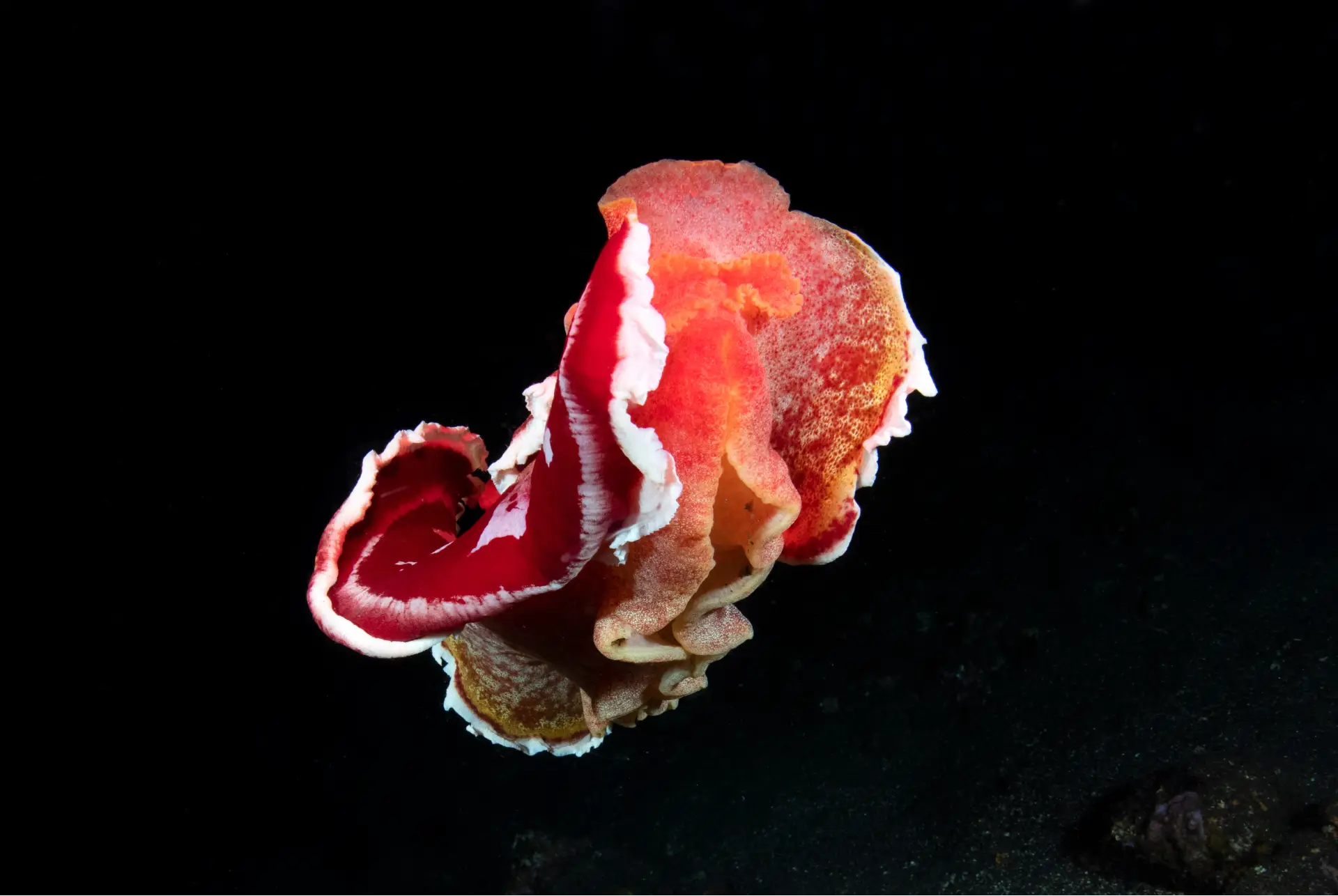
If you’re lucky, you’ll meet the showstopper: the Spanish dancer, a giant among nudibranchs that can reach the length of your forearm. Nudge it off the reef and it swims, flamenco-red flanks rippling through the water like a flung scarf. It’s one of the great sights of a Bohol night dive.
Find your first nudibranch and we promise you’ll be counting them for the rest of your diving life.
How to find your first one
Nudibranchs reward patience. Get your buoyancy dialled so you can hover a few centimetres off the sand without stirring it, then slow right down and look closely at sponges, sea fans and bare rubble. A good guide is worth their weight in gold here, since years on the same reefs train the eyes to catch what beginners cruise straight past.
They’re also the ultimate macro photography subject, slow, patient and painfully photogenic. If that’s your thing, our guide to choosing wide-angle or macro for Bohol’s dive sites will help you pack the right lens. And you don’t have to go far to start, because the critters waiting on the house reef right off Alona Beach include plenty of these little jewels.
Come Find Your First Nudibranch
Our guides know exactly where Bohol’s tiniest treasures hide. Dive the sandy slopes with us and we’ll help you spot a nudibranch of your own, however wild its colours.
Dive Bohol With Us