Tec Diving
What Really Happens on a Decompression Dive
Every new diver learns the golden rule early: you can always head straight for the surface if you need to. It’s a comforting thought, and for recreational diving it’s true. So the idea of a dive where you can’t just go up, where the ceiling is as off-limits as the bottom, sounds a little unnerving.
That’s a decompression dive. And once you understand what’s actually going on, it’s far less mysterious than it sounds. It isn’t reckless. It’s diving with a different set of rules, a lot more planning, and a whole extra layer of training behind it.
Nitrogen, and Why We Come Up Slowly
Down at depth, the pressure pushes the nitrogen in the air you breathe into your body’s tissues. The deeper you go and the longer you stay, the more your tissues soak up. This is called on-gassing. As you ascend and the pressure drops, that nitrogen has to come back out, which is off-gassing. Come up slowly and it leaves gently through your lungs. Come up too fast and it fizzes out as bubbles, like cracking open a shaken bottle. Those bubbles are decompression sickness, the bends.
This is why every diver ascends slowly and pauses for a safety stop. You’re giving the nitrogen time to leave your body the calm way, not the painful way.
No-Stop vs Decompression Diving
Here’s the line that separates the two worlds. Recreational diving is “no-stop” diving. You stay within limits that let you ascend straight to the surface at any moment, with a safety stop that’s a smart precaution rather than a strict requirement.
On a decompression dive, you deliberately go deeper or stay longer than those no-stop limits allow. In doing so you take on so much nitrogen that going straight up would be dangerous. Now those stops on the way up aren’t optional anymore.
This is the heart of it: a decompression dive commits you to mandatory decompression stops. You must hang at set depths for set times to let your body off-gas before it’s safe to surface. The surface has, in effect, a locked door, and your deco stops are the key. That’s why training, planning, and gas management matter so much.
What a Deco Diver Actually Does Differently
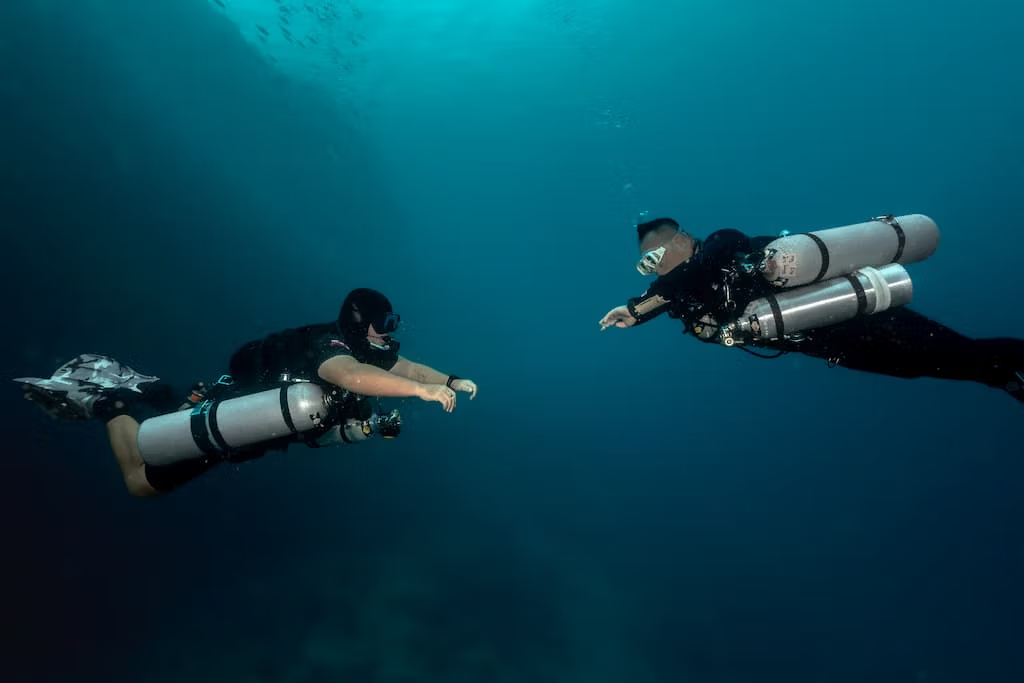
A decompression dive looks different from the moment the planning starts. The extra gear and procedures all exist to answer one question: what happens if something goes wrong when you can’t just surface?
A good deco dive is almost boring to watch. That calm, unhurried control is exactly the point.
Hanging on the Line
So what does it feel like? After the deep part of the dive, you begin a slow, staged ascent, stopping at each planned depth and simply waiting as your computer counts down. You might switch to a deco cylinder, hang off a line, and watch the blue while your body quietly does its work.
Those final minutes can feel long, but they’re not wasted time. They’re the most important part of the dive, the patient tax you pay for going deep. Rush them and you undo everything. Respect them and you surface safe and grinning.
This Is Trained Territory
One thing to be crystal clear about: decompression diving is not something to drift into by accident. For recreational divers, the no-stop limits exist precisely so you never find yourself with a ceiling you weren’t ready for. Staying inside them is the whole game.
Crossing into planned deco means proper technical training. With PADI, Tec 40 is the first step across that line, your introduction to limited, carefully planned decompression, with Tec 45 and Tec 50 opening up greater depths and longer stops as you progress. Each stage layers on the gear, the gas planning, and the skills to do it safely.
Bohol, with its deep walls and warm, clear water, is a wonderful place to learn. The deeper reefs here reward divers who’ve put in the training to reach them responsibly.
Curious About Going Deeper?
If decompression diving has caught your imagination, the path starts with the right training. Talk to us about PADI Tec courses in Bohol and we’ll help you take that first step beyond the no-stop line, the safe way.
Ask About Tec Training