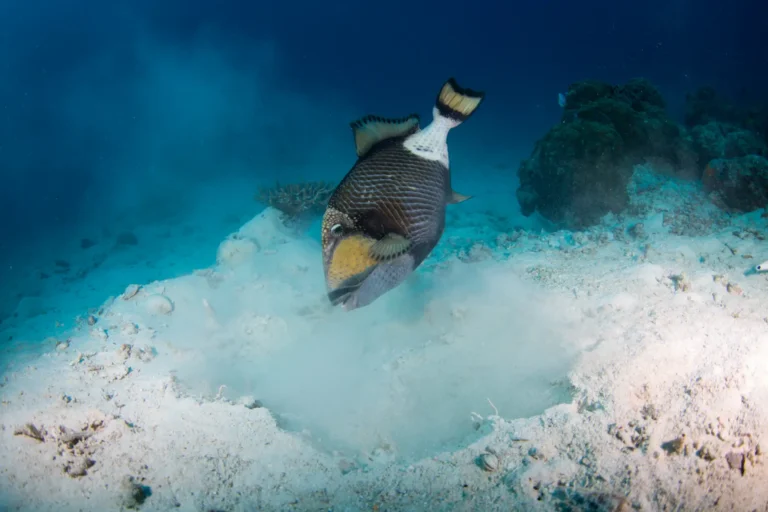
You’re cruising along a reef in Bohol, minding your own business, when a chunky, oval-shaped fish stops what it’s doing and turns to face you. It doesn’t dart off like everything else. It hangs there, watching. Then it tips its head down, raises the little trigger-spine on its back, and starts swimming straight at you.
Welcome to a close encounter with the titan triggerfish, the one reef fish in Bohol that will genuinely stand its ground against a diver.
Don’t panic. Once you understand what’s going on, it’s less “attack” and more “overprotective parent,” and the fix is refreshingly simple.
The bulldozer of the reef
The titan is the biggest of the triggerfish, growing to around 75 centimetres, which is bigger than most people expect a “reef fish” to be. It’s built like a tank, with a set of teeth designed to crush coral, sea urchins, and crustaceans. That same beak that cracks an urchin shell can put a real dent in a fin, a camera housing, or a careless finger.
Most of the time, though, they’re completely occupied doing the reef a favour. They flip over rubble, crunch up urchins, and stir the sand, creating little pockets of habitat for smaller critters. On a normal day, a titan triggerfish wants nothing to do with you.
Why they get feisty
The mood changes during nesting season. Female titans dig a wide, cone-shaped nest in the sand or rubble and guard their eggs with total commitment. Wander too close and you become a threat to be seen off, no negotiation.
This is when divers get buzzed, chased, and occasionally bitten. It isn’t malice. It’s a parent defending its patch. Knowing that doesn’t stop those teeth from hurting, but it does tell you exactly how to handle it.
The trick nobody teaches you: swim sideways, not up
Here’s the single most useful thing to know about an angry titan, and it’s the opposite of your instinct.
The nest sits on the bottom, and the fish defends a territory shaped like a cone that gets wider the higher you go. So if you feel threatened and bolt straight up toward the surface, you’re staying inside the danger zone the whole way. You’re not escaping. You’re just going up the middle of it.
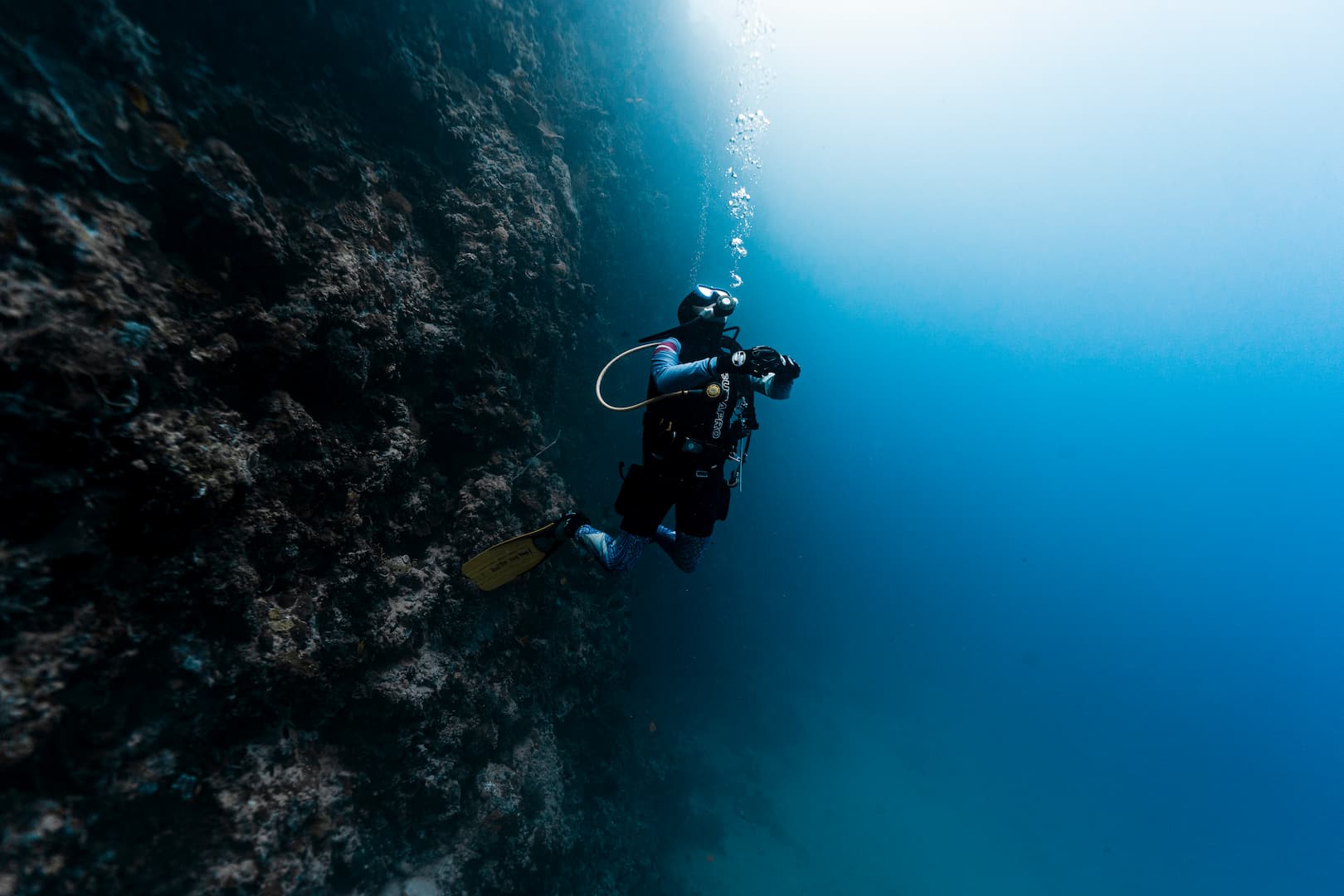
The move is to swim horizontally, low and level, away from the nest. Keep the fish in view, keep your fins between it and you, and calmly fin off along the reef until you’re out of its patch. No thrashing, no sprinting for the surface. Steady and sideways wins.
Respect, not fear
Titan triggerfish deserve the same courtesy as any other misunderstood reef resident. Give a nesting one a wide berth, don’t corner it, and never try to touch or provoke one for a photo. Do that and encounters stay in the “cool story” column instead of the “needed stitches” column.
They’re in good company here. Plenty of Bohol’s most feared animals are far gentler than their reputation, as we cover in our guide to shark encounters in Bohol. Most of the reef’s “scary” residents just want space.
Where you’ll meet them
Titans turn up on reefs all around Panglao, out at Pamilacan, and on the slopes of Balicasag. A good local guide will spot a nesting one before you do and quietly route the group around it, which is exactly the sort of thing that keeps a dive fun and drama-free.
That’s the real value of diving with people who know the reef and its residents by heart. Book a dive with us and we’ll introduce you to the titan triggerfish from a respectful distance, and show you why the reef’s grumpiest bulldozer is one of its most important workers.