How Much Weight Do You Really Need? A Diver’s Guide to Getting Weighted Right
Picture two divers on the same reef. One is dragging along the bottom, fins kicking up sand, constantly puffing air into the BCD and dumping it out again, back on the boat first because they sucked their tank dry fighting to stay off the seabed.
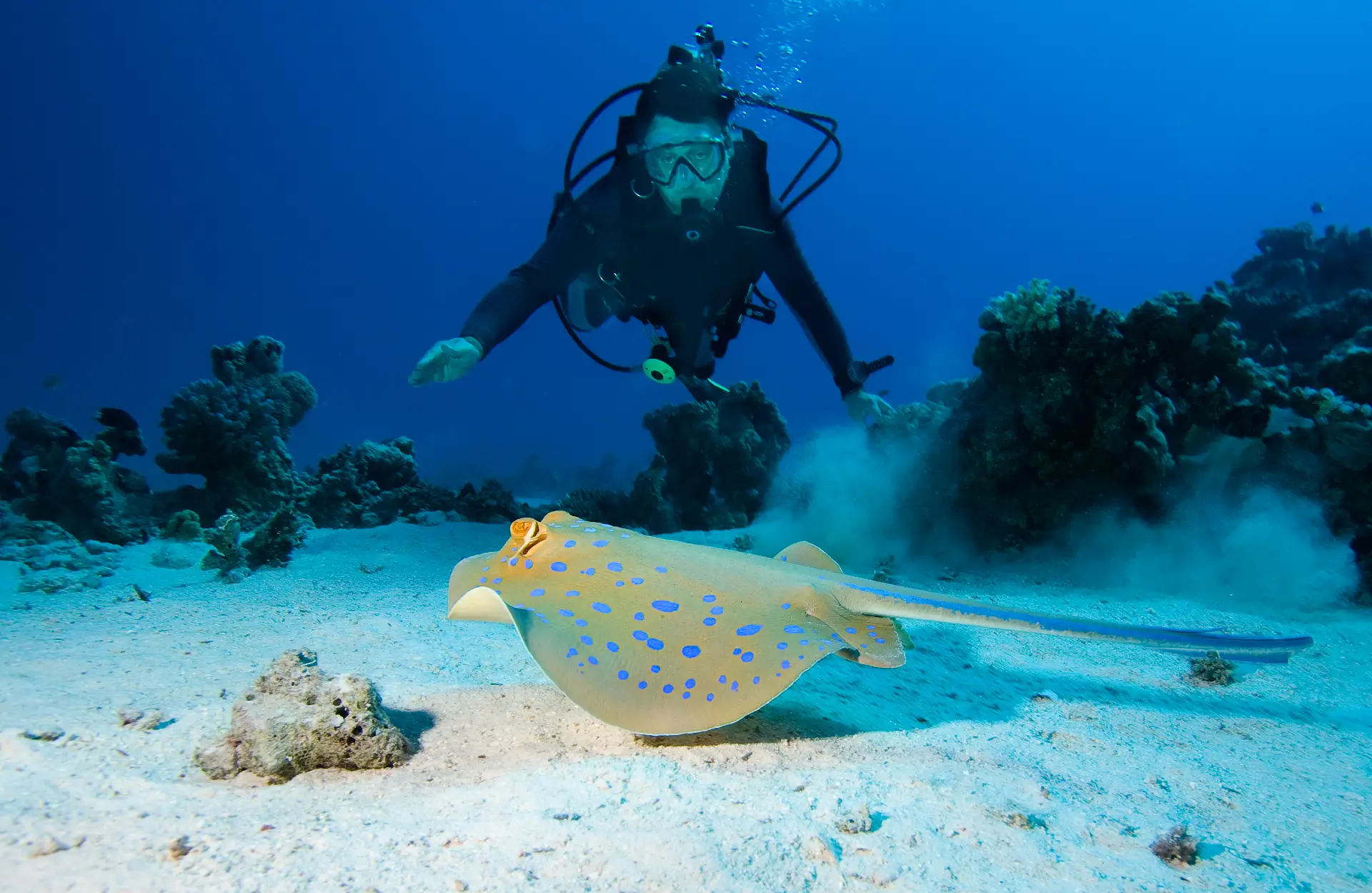
The other hangs weightless in the blue, barely moving, sipping their air, and surfaces with plenty to spare.
The difference between them often isn’t skill or fitness. It’s a couple of kilos of lead. Getting your weighting right is one of the simplest, highest-impact things you can do for your diving, and most divers are carrying too much.
Why Overweighting Is Such a Problem
Piling on extra lead feels safe, especially for newer divers who just want to get down. But it quietly wrecks your dive.
Carry too much and you sink like a stone, so you inflate your BCD to compensate. Now you’ve got a balloon of air on your back that shifts and expands as you move, throwing you off balance and making a stable hover almost impossible. You end up feet-down, plowing through the water instead of gliding, working harder and breathing faster the whole time.
More lead means more drag, more effort, more air burned, and a shorter, more tiring dive. It can also make your ascents harder to control. Being correctly weighted, on the other hand, is what makes good buoyancy feel effortless.
The Weight Check That Actually Works
Forget guessing. There’s a simple in-water check that tells you the truth, and it takes two minutes.
Kit up fully, get in the water somewhere you can’t touch the bottom, and completely empty your BCD. Hold a normal breath and stay still.
Weighted correctly, you’ll float at about eye level, with the water right around your mask. Then breathe all the way out. You should sink slowly.
If you bob up high and can’t sink, you need a little more weight. If you drop straight down even on a full breath, you’re carrying too much. Adjust a kilo at a time until you float at eye level on a held breath and sink gently on the exhale. That’s your number.
Don’t Forget Your Tank Gets Lighter
Here’s the catch a lot of divers miss. As you breathe your tank down, it gets lighter and more buoyant. An aluminum tank in particular turns noticeably floatier when it’s near empty, by roughly two kilos over the course of a dive.
That matters most at the end, during your safety stop, which is exactly when you don’t want to be corking toward the surface on a light tank.
So the gold-standard weight check is done with a near-empty tank. If that’s not practical and you’re checking with a full one, just add about two kilos to account for the air you’ll breathe. Get this right and your safety stop stops being a wrestling match.
What Changes How Much You Need
There’s no universal number, because a handful of things move the dial. Old rules like “ten percent of your body weight” are only a rough starting point, not an answer. The check above is the answer.
The biggest variable you control is your exposure suit. Neoprene floats, so a thick 5mm needs more lead than a 3mm, and a rash guard or dive skin needs barely any. This is why your weighting in warm Bohol will look very different from a cold-water dive back home in a heavy suit.
Saltwater is more buoyant than fresh, so you’ll carry a touch more lead here than you would in a lake or pool. Your tank matters too, since aluminum tanks (the usual rental here) float more than steel ones and need a bit more weight. And your own body plays a part, because a leaner build tends to need slightly more lead than a naturally buoyant one.
Good News for Bohol Divers: Travel Light
Here’s the happy part. Bohol is warm-water, thin-wetsuit diving. Most divers here are in a 3mm or a shorty, which means you need far less lead than you might be used to if you learned somewhere colder.
Less lead means less to lug around, less drag, better air consumption, and easier, more relaxed diving. If you’re arriving with a weighting number in your head from a chilly dive trip elsewhere, expect to shed a fair bit of it here.
Quick Signs You’re Off
You don’t always need a formal check to spot a problem.
If you’re floating feet-down, constantly feeding air into your BCD, or can’t stay off the bottom without effort, you’re probably overweighted. If you can’t descend without swimming down hard, or you float up at your safety stop, you’re likely underweighted.
Once you find your sweet spot, write it down. Log your weight alongside your wetsuit, tank type, and whether it was salt or fresh water. Do that a few times and you’ll walk up to almost any dive knowing your number before you even gear up.
Get Dialed In With Us
Getting weighted right is one of those small tweaks that transforms how diving feels, and it’s something we genuinely enjoy helping divers sort out. Whatever you’ve been carrying, we’ll run a proper weight check with you and trim it to exactly what you need for Bohol’s warm, salty water.
Come dive with us, and let’s get you hovering effortlessly, breathing easy, and staying down longer.