Marine Life
Christmas Tree Worms: The Reef’s Tiny Living Fireworks
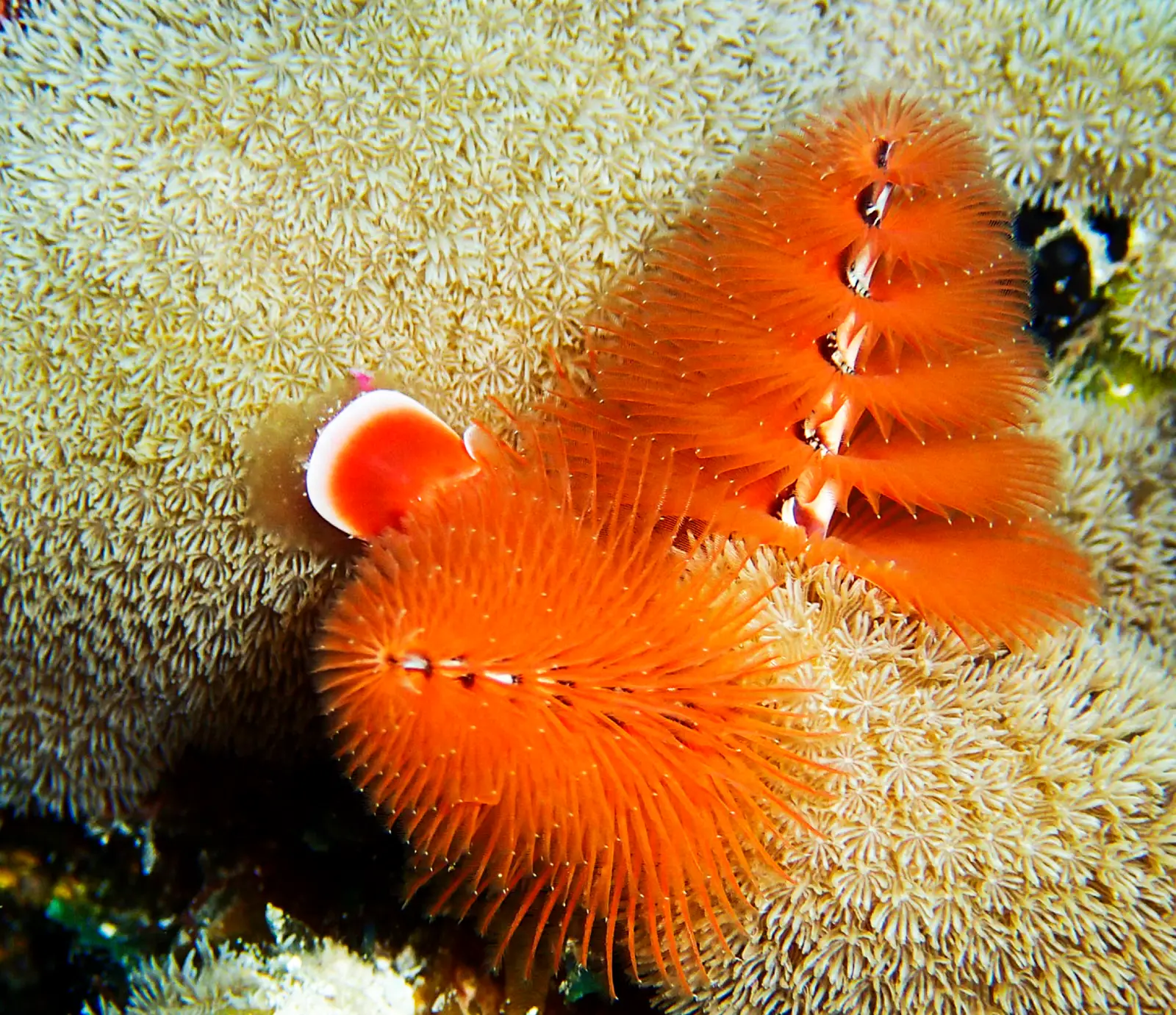
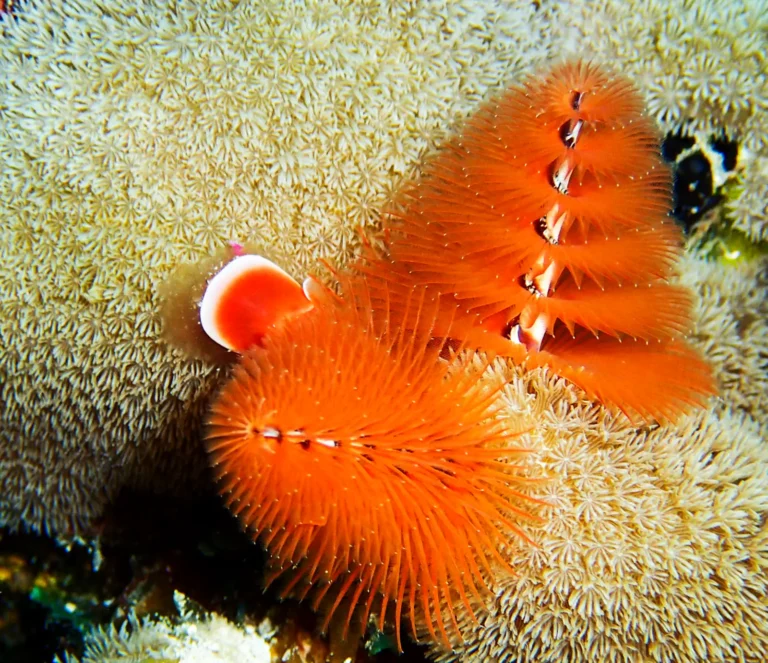
You’re hovering over a coral head in Bohol, and it looks like someone has stuck tiny Christmas trees all over it. Little spirals in red, blue, yellow and white, no taller than your fingernail, sprouting straight out of the hard coral.

Reach a hand toward one and it’s gone. Blink-of-an-eye gone, snapped back into the coral like it was never there. Hold still for a minute and it slowly spirals back out, as if deciding you’re not a threat after all.
That little magic trick belongs to one of the reef’s most charming residents: the Christmas tree worm.
Not a plant, not a tree, definitely a worm
Despite the festive looks, each of those colourful spirals is the business end of a marine worm living inside a tube it bores into living coral. The spirals are its crown, two per worm, and the fine feathery branches do two jobs at once: they filter tiny plankton out of the water for food, and pull oxygen from it like gills. A feeding system and a breathing system in one tidy, gorgeous package.
The worm itself you’ll probably never see. It stays sealed in its tube for its entire life, which can stretch to decades on a healthy reef. All that elaborate colour is just the part that pokes out to eat.
The vanishing act, explained
That disappearing trick is pure survival. Christmas tree worms have light and motion sensors in their crowns, so a passing shadow or a sudden movement reads as “predator,” and they yank themselves back into the tube in a fraction of a second. A little trapdoor seals the entrance behind them.
It’s why so many divers never notice them at first. Kick along too fast, throwing shadows and pushing water, and every worm on the coral head snaps shut before you arrive. Slow down, settle your breathing, and the reef quietly blooms back into colour around you. There’s a whole conversation happening down there if you slow down enough to notice it, which we get into in our post on the secret language of coral.
A partnership written in stone
Christmas tree worms almost always live in living hard coral, and the relationship seems to suit both sides.
Hold still, breathe slow, and let the little fireworks come back out. It’s one of the simplest joys in diving.
A photographer’s favourite
For macro shooters, Christmas tree worms are almost too easy to love. They’re stationary, they come in sense-defying colour combinations, and a single coral head might hold a dozen of them in different shades. The challenge is purely about approach: get close without casting a shadow, control your buoyancy so you’re not fanning the coral, and wait for the crowns to open fully. If you’re weighing what gear to bring, our guide to wide-angle versus macro in Bohol is a good starting point.
Where to find them in Bohol
The honest answer is just about everywhere. Christmas tree worms stud the coral heads on nearly every reef around Panglao and Balicasag, from the shallows down the wall. So next time you’re down here, pick one coral head and just watch it for a while.
Come See the Living Fireworks
Dive Bohol’s reefs with a guide who’ll show you the tiny stuff most people swim right over. Get in touch and let’s go find some living fireworks.
Dive Bohol With Us