The reef changes as the sun drops. The daytime crowd of fish thins out, the light goes soft and gold, and you settle in to hover just above a patch of broken coral. You wait. Nothing. You wait some more.
Then, right as the last light fades, two tiny flecks of electric blue and orange lift out of the rubble, press together, and rise slowly into the water above the reef. A heartbeat later they dart back down and vanish.
You just watched one of the ocean’s most beautiful animals do the most private thing it does. Welcome to night diving in bohol. Where we sometimes get to see the mandarinfish, one of the most magical experiences Bohol has to offer.
Meet the Mandarinfish
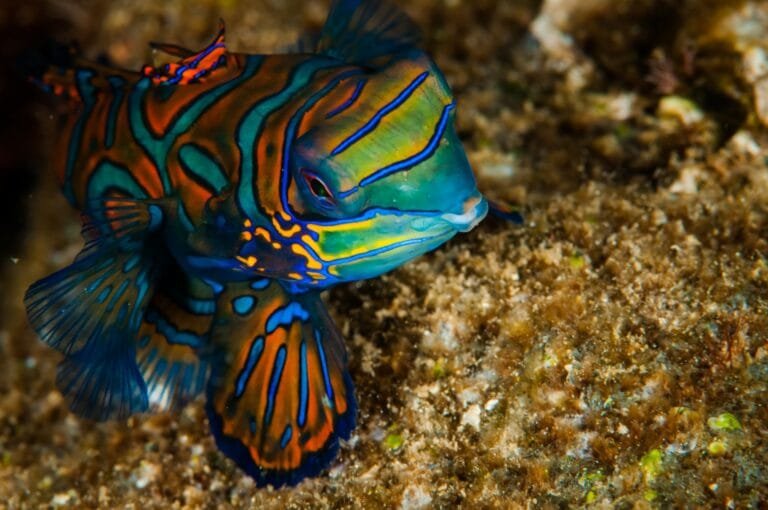
The mandarinfish is small, barely the length of your finger, and almost impossibly colorful. Swirls of electric blue, orange, and green wind across its body like someone let a toddler loose with the brightest paints in the box. Nature rarely goes this bold.
It’s often called a goby, but that’s not quite right. The mandarinfish is actually a dragonet, a different family altogether. And here’s the detail that makes biologists light up: it’s one of only a couple of animals on Earth whose blue color comes from real blue pigment cells in the skin, rather than from tricks of reflected light. That vivid blue is the genuine article.
It has no scales, either. Instead it wears a thin coat of bitter, smelly slime that likely keeps predators and infections at bay. Pretty, but not tasty.
By day you’ll rarely see one. Mandarinfish are shy homebodies that stay tucked deep in rubble and branching coral, picking off tiny crustaceans. To meet them, you have to catch them at the one moment they come out to show off.
Why It Has to Be Dusk
Every evening, as the light drains from the reef, mandarinfish gather to mate. And it’s a genuine spectacle.
Males and females pair up along the coral. When a female is ready, the two press together side by side and rise off the reef in a slow, deliberate ascent, drifting a foot or two up into open water. At the top of the rise they release their eggs and sperm in a tiny cloud, then break apart and drop straight back into the safety of the coral.
The whole ritual lasts only seconds. Blink and you’ve missed it. But hover quietly and you’ll often see it happen again and again, pair after pair, for as long as the light holds.
This is why the timing is everything. The window opens in the last twenty minutes or so of daylight and closes almost as soon as the sun is gone. Show up late and the show’s already over.
How the Dive Works
A mandarinfish dive is a patience game, and a lovely one.
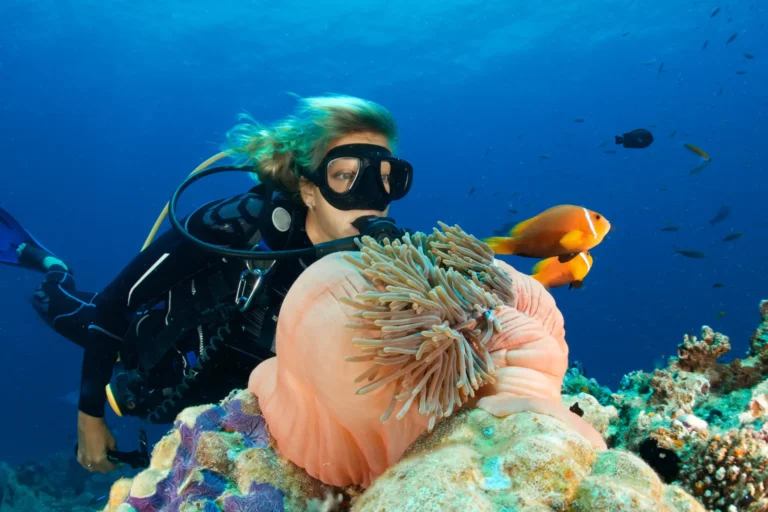
You’ll gear up and drop in with plenty of light still in the sky, then settle into a hover above the coral patch where they live. Good buoyancy matters here. You want to hang motionless just off the bottom without stirring up the sand or bumping the coral, so this is a dive where all those buoyancy skills really pay off.
Then you wait, and you watch. As the reef dims, the mandarins grow bolder, flitting between the coral branches below you. Stay calm and low, and eventually a pair will make their move.
Keep your movements slow and your breathing easy. These fish are skittish, and a sudden lunge or a careless kick sends them straight back into hiding.
Lights, Camera, Respect
Here’s the golden rule of mandarinfish diving: go easy on the light.
A bright dive torch or a barrage of camera strobes can spook the fish and shut the spawning down altogether. Use a dim light, or better still a red filter, which they don’t seem to notice, and keep it pointed away until the action starts. Patience and a soft touch will show you far more than a floodlight ever will.
As a PADI Eco Center, this is exactly the kind of diving we love. The sort that asks you to slow down and let the reef come to you, rather than the other way around. No touching the coral, no crowding the fish, no chasing. Just you, hovering quietly, watching a wild moment unfold on its own terms.
Finding Them in Bohol
Mandarinfish live in sheltered, shallow coral around Panglao, exactly the kind of calm rubble-and-staghorn habitat they favor.
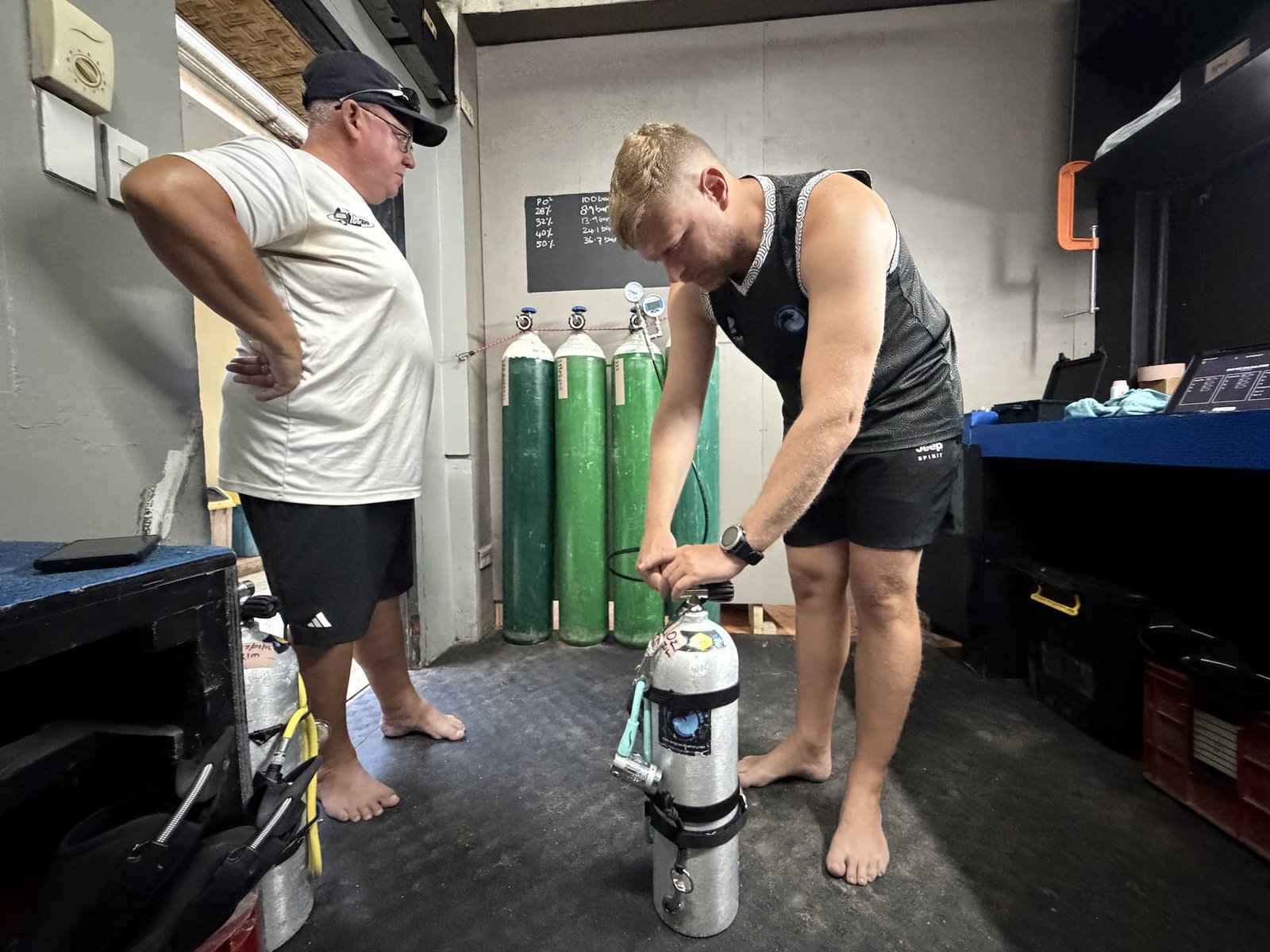
Because the best action happens right at sunset, these dives run on a tight schedule. We time it so you’re in the water and settled before the light goes, giving you the best possible shot at the full performance.
If there’s one dive worth slowing right down for, it’s this one. Come join us for a Bohol dusk dive, and we’ll help you try and meet the reef’s most dazzling little celebrity face to face.