You’re a couple of meters down, the reef spread out below you, and everything’s perfect. Except your right ear. It feels like someone’s pressing a thumb hard against it. You pinch your nose, give a blow, and… nothing. The pressure keeps building.
This is where a lot of dives quietly fall apart. Trouble equalizing is the single most common reason new divers struggle on descent, and it catches out plenty of experienced divers too, usually on the mornings they’ve got a bit of a sniffle.
The good news? Ear problems underwater are almost always fixable, and even more often preventable. Here’s how to keep your ears happy from the surface all the way down.
What’s Actually Going On in Your Ears
Behind your eardrum is a small air-filled space called the middle ear. It’s connected to the back of your throat by a narrow passage, the Eustachian tube.
As you descend, the water pressure around you climbs fast. In the first ten meters alone, pressure doubles. That growing pressure pushes your eardrum inward, and if you don’t add air to the middle ear to balance it, you feel it first as discomfort, then as pain.
Equalizing simply means opening those Eustachian tubes to let a little air up into the middle ear, nudging the eardrum back to neutral. Do it in time and you feel a satisfying click or pop. Leave it too late and the tubes can lock shut under the pressure, which is exactly when people get stuck.
The Golden Rules
Most equalizing trouble comes down to timing, not technique. Get these right and you’ve solved the problem before it starts.
- Equalize early. Give your ears a gentle equalize on the surface before you even start down, and again the moment your descent begins.
- Equalize often. Add a little air every meter or so on the way down, well before you feel any pressure. If you wait until it hurts, you’ve already waited too long.
- Equalize gently. This is the big one. Never blow hard. A forceful blast can damage the delicate structures of your inner ear. Soft and frequent always beats hard and late.
- Descend slowly, feet-first. Going down feet-first helps air rise into your Eustachian tubes, and an unhurried descent gives you time to keep up. If there’s a mooring or descent line, use it to control your speed.
Techniques to Try
There’s more than one way to clear your ears, and it’s worth knowing a few, because what works for one diver doesn’t always work for another.
The classic is the Valsalva: pinch your nose and gently try to blow air out through it. Easy to learn, but it can be harsh if you overdo it, so keep it soft.
Swallowing and wiggling your jaw opens the tubes naturally, which is why chewing gum on the boat or throwing in a few big yawns before you gear up can help prime them.
Some divers use the Frenzel technique, pinching the nose and using the back of the tongue to push air up. It’s gentler on your ears and popular with freedivers, though it takes a little practice to get the hang of.
Try combining them. Pinch, blow gently, and swallow at the same time, and you’ll often feel both ears pop clean.
When It Just Won’t Clear
Sometimes one ear digs its heels in. Here’s the drill, and it’s the same every time:
- Stop your descent. Don’t keep sinking and hoping it clears. It won’t, and forcing it can hurt you.
- Ascend a meter or two. Backing off even a little reduces the pressure and gives a stubborn tube the chance to open.
- Try again, gently. Once you’ve cleared, carry on down slowly.
Never push through pain. Pain is the warning sign that your ear is under strain it can’t handle. Diving through it risks a ruptured eardrum, disorienting vertigo, and an ear infection that ends your trip. No dive is worth that.
If it still won’t go after a couple of tries, calmly signal your buddy or guide and call the dive. There’s no shame in it. Even instructors have days their ears say no.
The Reverse Block on the Way Up
Occasionally the trouble shows up on ascent instead. As you rise, the air in your middle ear expands and needs to escape. If a tube is partly blocked, that expanding air gets trapped and presses outward, what divers call a reverse block.
The fix is patience. Slow your ascent right down, stop, and give the air time to vent on its own. Gentle swallowing can help it along. Never rush upward against it.
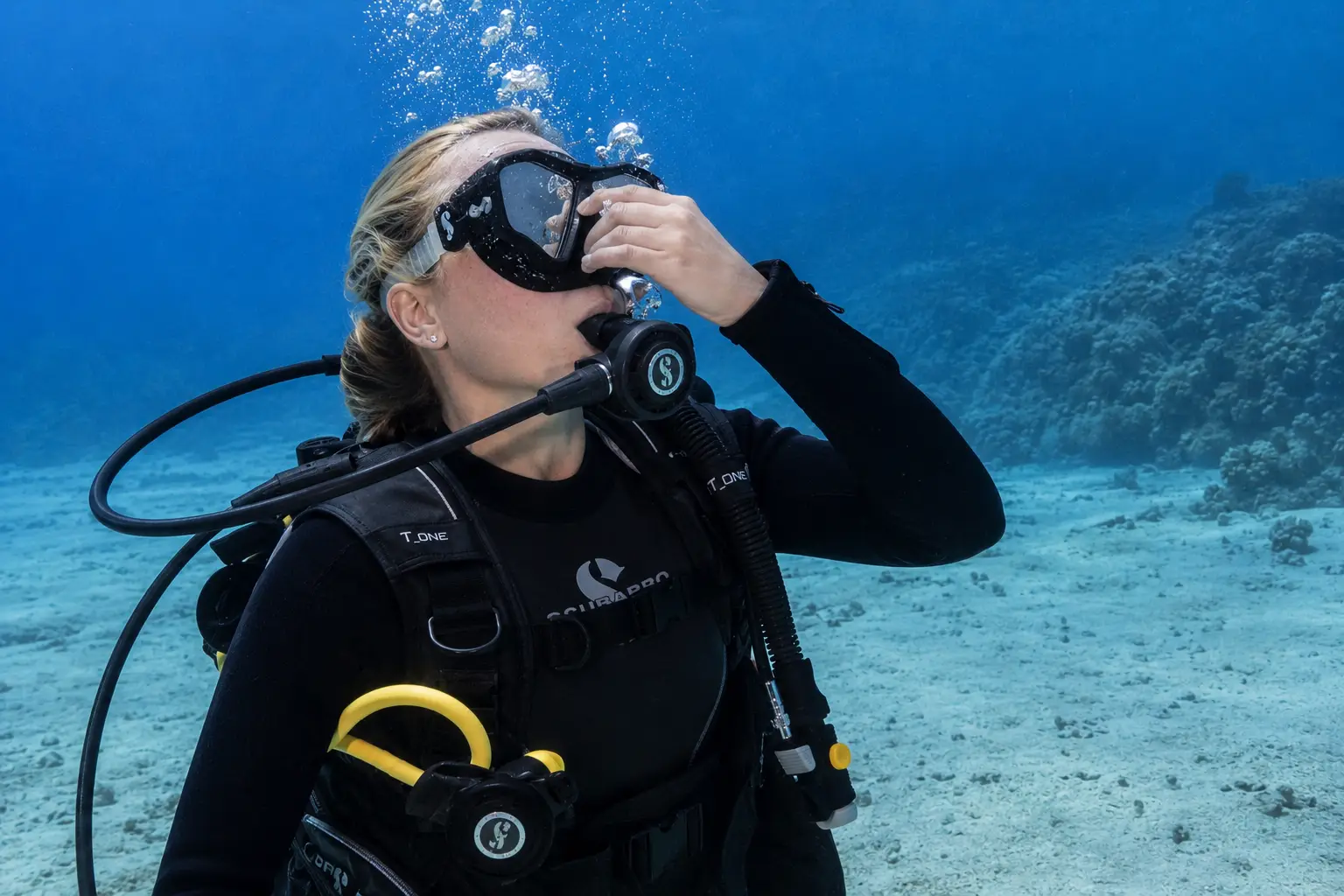
Set Yourself Up Before the Dive
A lot of ear trouble is decided before you ever hit the water.
Don’t dive congested. A cold, allergies, or a blocked nose swells those Eustachian tubes shut, and no technique will beat biology. If you’re stuffy, sit the dive out. Reaching for decongestants is a gamble, because they can wear off at depth and leave you with a reverse block, so talk to a dive-savvy doctor before relying on any medication.
Stay hydrated, go easy on alcohol the night before, and practice equalizing on dry land so it feels second nature when it counts. And if you get pain that lingers after a dive, muffled hearing, or a persistent full feeling, see a doctor before diving again.
We’ll Coach You Through It
Equalizing is a skill, and like any skill it gets easier with good coaching. If your ears have ever given you grief, tell your instructor before the dive. On our courses and guided dives we set an easy pace, use the line, and stay right with you on descent so nobody’s left fighting their ears alone.
Come dive Panglao with us, and we’ll help you get down comfortably and make the most of every meter.