Why Gas Blenders Are the Most Indispensable People in the Shop
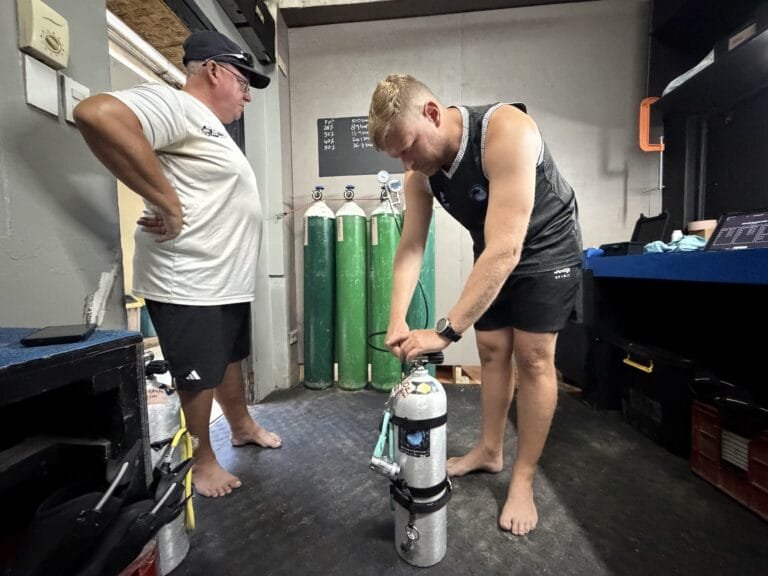
There’s a room at the back of every tec-friendly dive shop that most divers never really look at. A rack of cylinders, a tangle of hoses, an oxygen analyser beeping softly, and someone standing over a gas panel doing quiet, careful maths.
That person is about to make everyone’s day possible. And almost nobody will thank them for it.
Meet the gas blender. The most indispensable person in the shop, and the one you’re least likely to notice.
What a gas blender actually does
Not every tank gets filled with plain air. A gas blender mixes the specific breathing gas each diver needs for the dive they’re about to do.
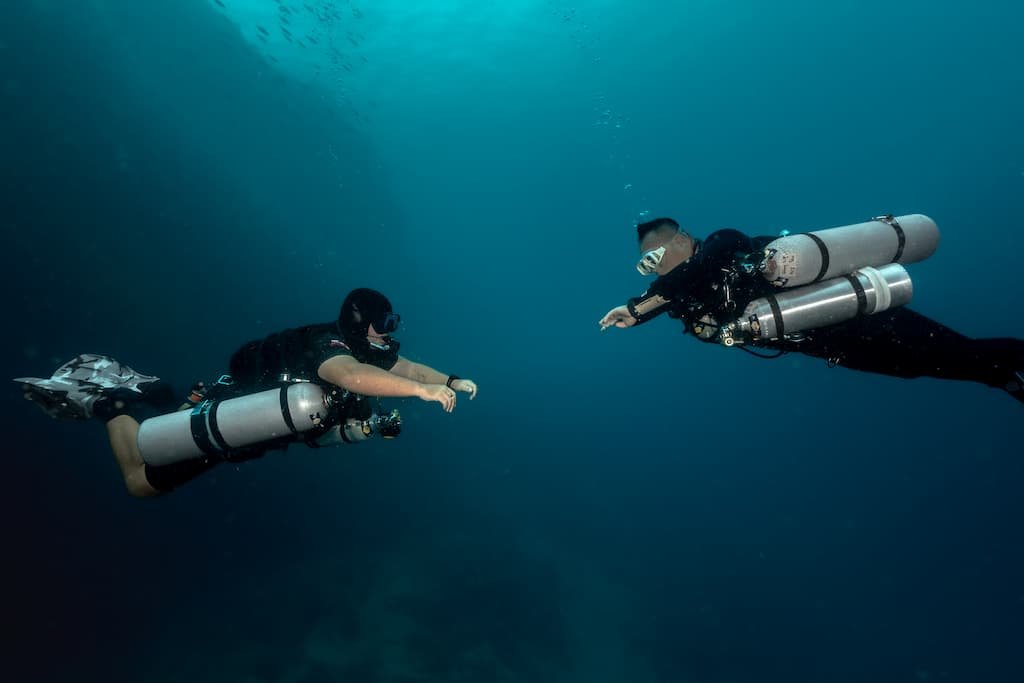
For a lot of divers that means enriched air nitrox, a blend with more oxygen than regular air, which buys you longer no-stop time on those repetitive Balicasag and Pamilacan days. For tec divers going deep, it means trimix: a carefully calculated blend that adds helium to keep your head clear where ordinary air would leave you foggy and slow.
Getting that mix exactly right is the entire job. And “exactly” is not an exaggeration.
Why the shop stops without them
Here’s the thing about gas. Nothing happens without it.
The best tec instructor in the world, the shiniest twinset, the most beautifully planned decompression dive, all of it sits on the bench until there’s correct gas in the cylinders. On a busy morning, the blender is the reason a dozen divers can actually splash on schedule. On a deep expedition, the blender is the reason the dive plan is even physically possible.
It’s a strange kind of importance, because it’s invisible when it goes well. When the fills are perfect, nobody gives them a second thought. When a fill is wrong, it’s suddenly the only thing anyone cares about. A good blender lives in that first world and keeps everyone else there too.
It’s a precision job, and a safety job
The PADI Tec Gas Blender standard asks you to blend to within one percent of the target mix. That’s a tight window, and it matters. A few percent of oxygen in the wrong direction changes your maximum depth and your decompression obligations. Guess, and you’re not just being sloppy. You’re rewriting someone’s dive without telling them.
Then there’s the oxygen itself. Oxygen under pressure is eager to burn, and mixing it near the wrong lubricant, a bit of grit, or a rushed technique is a genuine hazard. This is exactly why oxygen-clean equipment and oxygen service exist, and why a trained blender treats that side of the job with real respect.
So the blender does more than turn valves. They analyse every cylinder, label it, and sign it off, so the diver holding it knows precisely what they’re breathing. That habit of checking, labelling, and never assuming is the quiet backbone of safe tec diving.
How you become the blender
The good news is this is a skill you can learn, and it’s one of the most useful qualifications in the shop.
The PADI Tec Gas Blender course is refreshingly practical. There are no training dives at all. Instead you’ll work through independent study and three hands-on practical application sessions, right where the real work happens: at the panel, with the gas, under an instructor’s eye.
Over the course you’ll learn the advantages and disadvantages of different blending methods, how to blend both enriched air and trimix to within that one percent of target, the potential hazards of handling oxygen and how to manage them, and the steps for oxygen-cleaning equipment along with the requirements for oxygen service. By the end, you’re not guessing. You’re the person others trust to get it right.
The prerequisites are straightforward: you need to be a certified Enriched Air Diver and at least 18 years old. If nitrox is already in your logbook, you’re most of the way to the starting line.
The best job you weren’t thinking about
If you’re building a career in diving, gas blending is a quietly brilliant string to your bow. A divemaster or instructor who can also run the fill station is far more valuable to any operation, because they solve a problem the shop has every single day. It’s the kind of skill that makes you the person a dive center actually needs, not just another certified pro on the list.
It’s also a natural step for anyone drawn to the tec path. Understanding your gas from the inside out changes how you think about every dive you do, and it pairs perfectly with a wider career as a dive professional.
So next time you clip on a perfectly analysed cylinder and drop into the blue without a second thought, spare a thought for the person at the panel who made it possible. Better yet, become them.
Ready to earn the most underrated qualification in diving? Get in touch and let’s get you blending.