Marine Life
Anthias: The Reef’s Orange Clouds and Their Bizarre Sex-Changing Secret
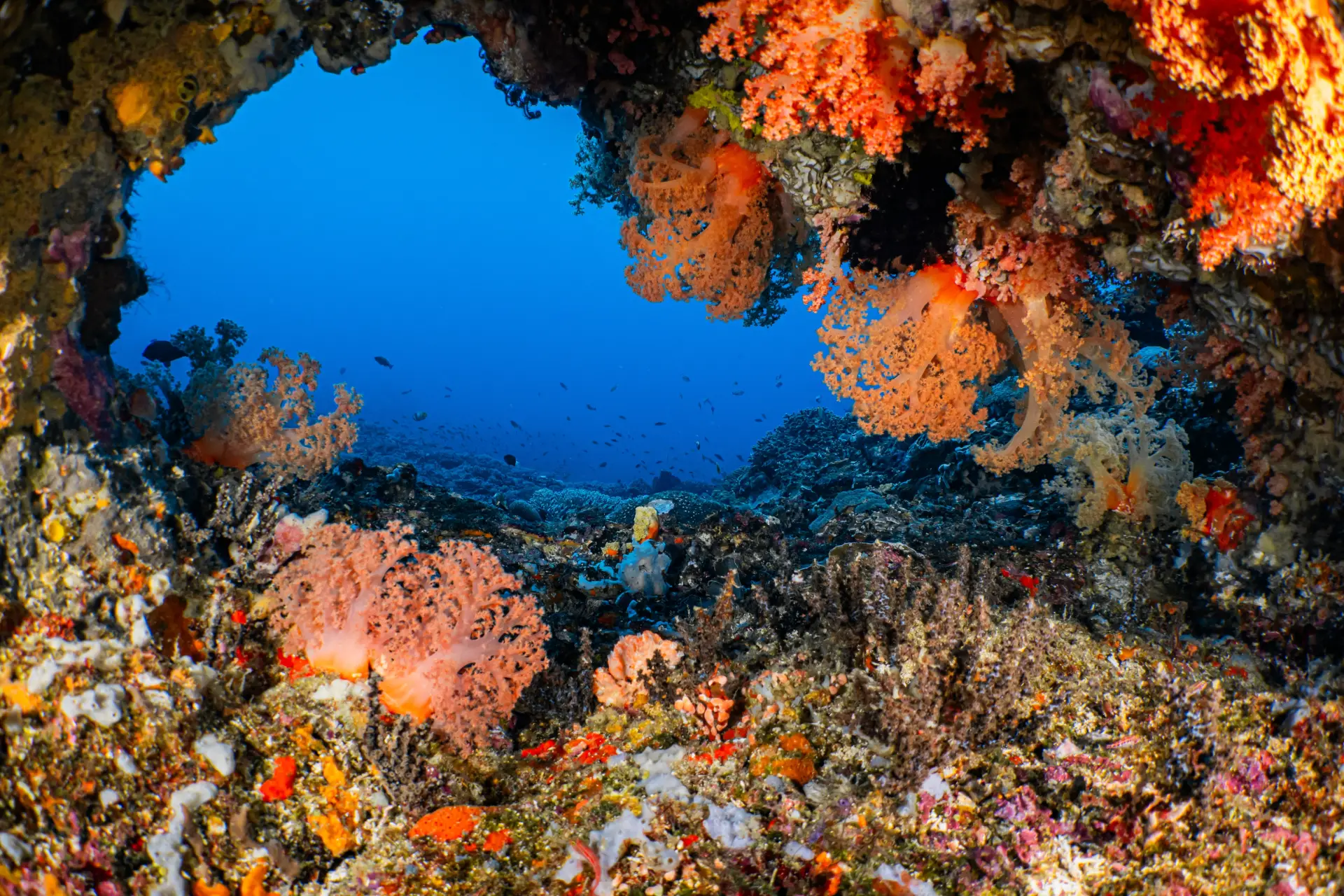
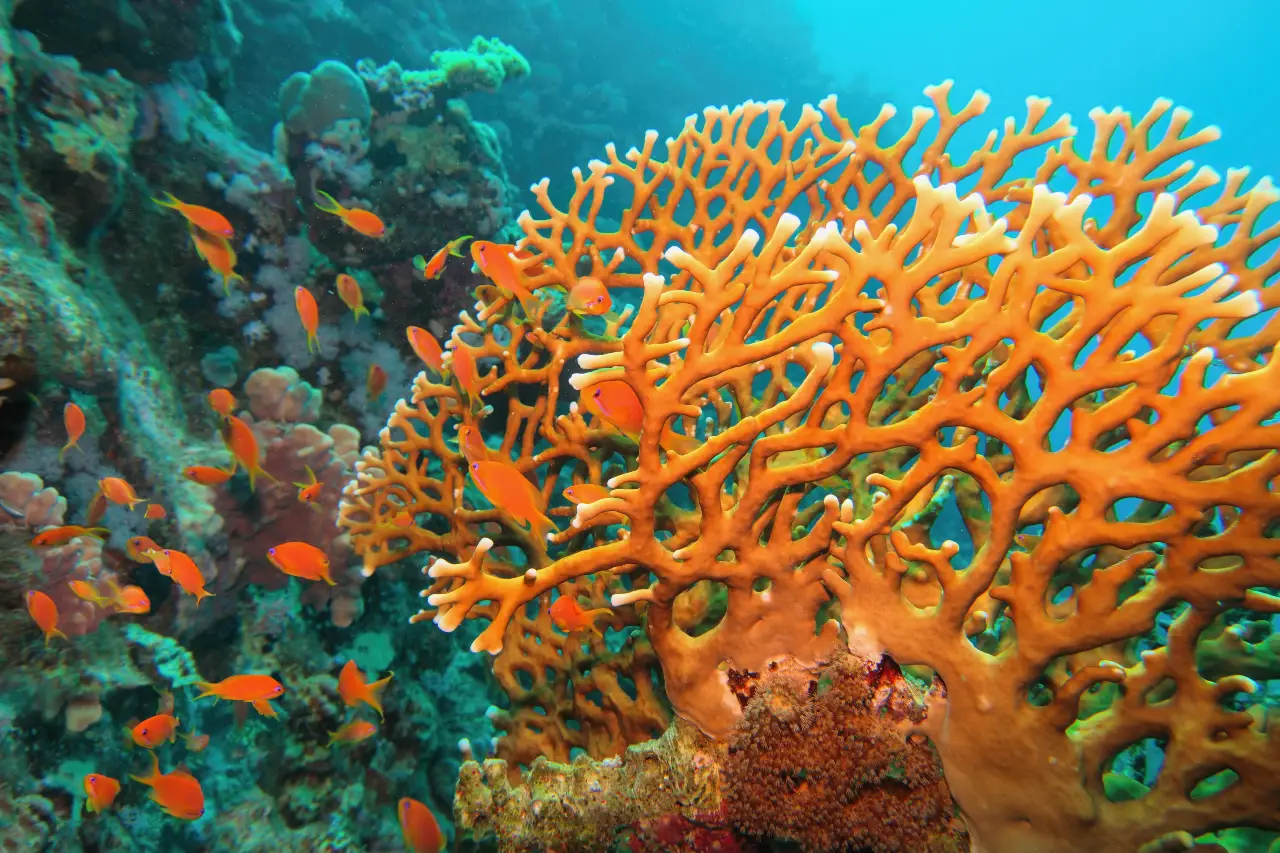
You drop onto the reef and there it is, hanging over the coral like a slow-motion firework. A shimmering cloud of hundreds of tiny orange and pink fish, all facing into the current, all flickering at once. Wave your hand and the whole cloud folds back into the coral in a heartbeat, then pours out again the moment you still.
Those are anthias, and they’re the reason so many Bohol reefscapes look almost too colorful to be real. Most divers glide right past them on the way to something bigger. Slow down, though, and you’ll find one of the strangest social lives on the whole reef.
The Flowers of the Sea
Anthias are small members of the grouper and sea bass family, which comes as a surprise given their giant, toothy relatives. Divers sometimes call them “sea goldies” or the flowers of the sea, and once you’ve watched a wall of them catching the light, the nickname makes perfect sense.
They live in the current for a reason. Anthias are plankton pickers, hovering in open water just off the reef to snatch tiny drifting food as it streams past. That’s why you find the biggest clouds where the water moves, along reef edges and drop-offs, all of them angled into the flow like a crowd watching the same parade.
The moment anything threatening appears, hundreds of them vanish into the coral at once, then trickle back out to feed. It’s this endless in-and-out shimmer that gives a healthy Bohol reef so much of its movement.
Now for the Bizarre Part
Here’s where anthias go from pretty to genuinely astonishing. Almost every anthias in that cloud was born female. And any one of them might not stay that way.
Anthias live in groups ruled by a single dominant male. He’s the flashy one, bigger and more vividly colored, and he spends his days defending a harem of females and showing off with darting display swims. The rest of the cloud is female. It’s a working arrangement, until it isn’t.
When the male disappears
If the dominant male is eaten or removed, the group doesn’t go looking for a replacement. Instead, the largest, most dominant female changes sex. Over a matter of days she transforms into a fully functional male, shifting color, growing larger, and taking over the harem. Biologists call this protogynous hermaphroditism. On the reef, it means the group is never leaderless for long.
It’s a strategy that keeps the colony breeding no matter what the reef throws at it. Lose the male? The system simply promotes from within, and within a week there’s a new king holding court over the same patch of coral.
How to Tell Who’s Who
Once you know the roles, a cloud of anthias turns into a story you can actually read underwater. Look closely and you’ll start to pick out the cast.
Suddenly that “background” cloud of orange fish becomes one of the most fascinating dramas on the reef, playing out right in front of your mask.
Where to Find Them in Bohol
The good news is you barely have to look. Anthias are all over Bohol’s reefs, and the walls and slopes with a bit of current are where they gather thickest. The drop-offs at Balicasag are a reliable bet, with clouds of them draped over the coral as you drift along.
They also make a wonderful photography subject, though a tricky one. That constant flitting means patience wins. Hang still, let them settle and stream back out around you, and you’ll come away with far better shots than if you chase the cloud.
Come See the Orange Clouds
Next time you’re drifting a Bohol wall, take a minute with the anthias. Watch for the big magenta male holding court, and see if you can spot a female on her way to becoming the next king. We’ll show you exactly where to look.
Dive Bohol With Us