Dive Theory Demystified: How to Pass the Five DM and IDC Exams
You can swim your 400 meters. You can hover motionless while you thread a hose back into a regulator. You’ve got the watermanship, the fitness, the calm. Then someone slides a physics exam across the table and asks you to explain why a balloon shrinks on the way down, and your stomach drops faster than it ever did on a Balicasag wall.
Sound familiar?
Here’s the secret most candidates figure out too late: it’s the theory, not the swim, that actually rattles people on the road to going pro. The good news is that dive theory is completely learnable. You don’t need to be a physicist. You need a bit of structure, a bit of practice, and to stop treating the exams like a trap.
What you’re actually being tested on
Dive theory breaks into five subject areas, and they follow you from Divemaster all the way to instructor level:
- Physics
- Physiology
- Equipment
- The Recreational Dive Planner (RDP) and dive tables
- General skills and the dive environment
At the Divemaster level you’ll sit exams on these topics. At the Instructor Examination they come back as a standardized Dive Theory exam. Either way the bar is the same: 75% in each area. Miss it, and your instructor reviews what you got wrong until it clicks, then you retake. Nobody’s trying to fail you.
Let’s walk through what each one really asks of you.
Physics: it’s mostly just three laws
Physics scares people because of the word, not the content. Strip it back and most of what you need lives in a handful of gas laws.
Boyle’s law explains why your BCD, your lungs, and that balloon all change volume with depth. It’s the reason a runaway ascent is dangerous. Dalton’s law is partial pressures, the thing behind oxygen toxicity limits and why nitrox has a depth ceiling. Henry’s law covers gas dissolving into your body under pressure, which is the whole basis of decompression theory. Add buoyancy (thank you, Archimedes) plus a little on light, heat, and sound underwater, and you’ve basically covered it.
Once you connect each law to something you’ve actually felt on a dive, it stops being abstract.
Physiology: your body under pressure
Physiology is physics applied to you. How you breathe and circulate gas, what causes decompression sickness and nitrogen narcosis, why you lose body heat many times faster in water than in air, how oxygen and carbon dioxide behave in your system.
This is the section that makes you a safer dive pro, not just a certified one. When you can explain why you ascend slowly and breathe continuously, you brief it better and you spot trouble in your divers sooner.
Equipment: how your gear actually works
You use regulators, BCDs, exposure suits, and dive computers every day. This section asks you to understand them. How a regulator drops tank pressure to something you can breathe, why a sealed first stage matters when you drop through a cold thermocline off Panglao, how buoyancy and exposure gear behave at depth.
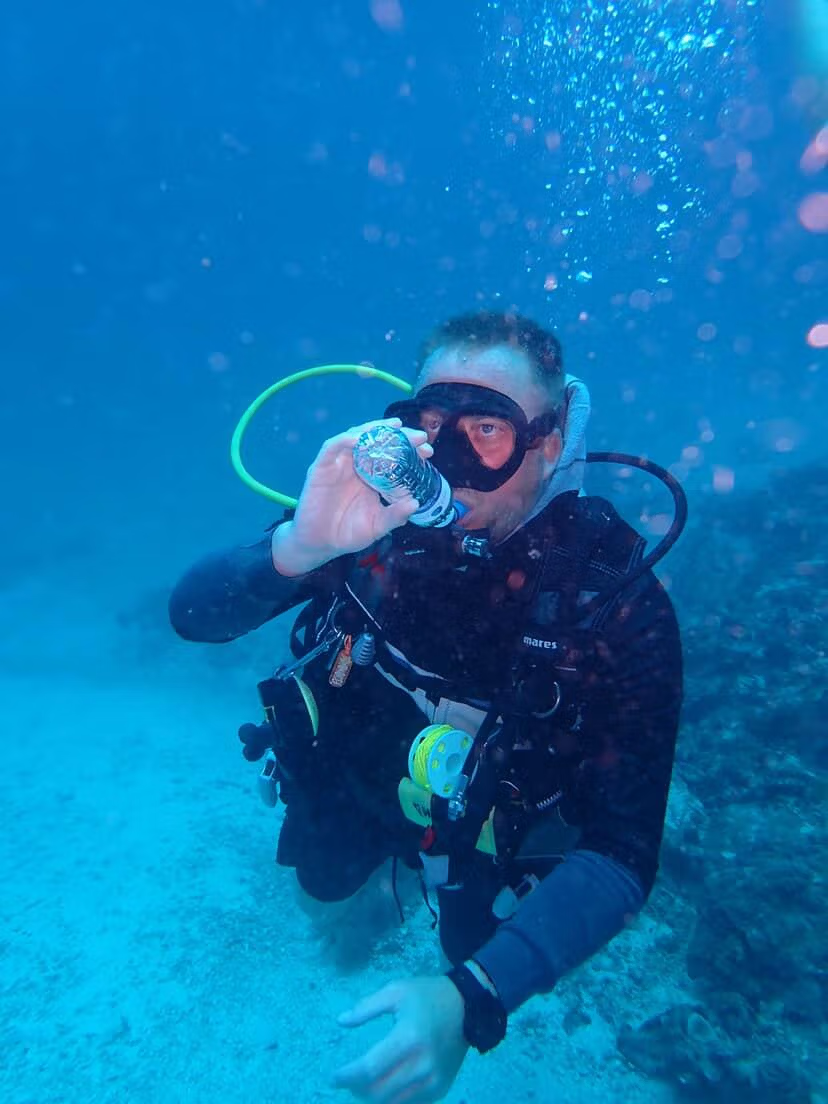
It’s the most intuitive of the five, especially once you’ve handled a lot of kit loading boats off Alona Beach.
The RDP and tables: practice, not theory
This one is pure repetition. Pressure groups, no-decompression limits, surface intervals, multilevel dives, whether you’re running the table or the eRDPML.
Nobody memorizes the RDP. You learn the procedure, then you run problems until the steps are automatic. Honestly, an afternoon of practice problems does more here than a week of re-reading the manual.
Skills and environment: the practical glue
The last area covers dive skills, problem management, and the aquatic world you’re guiding people through: tides, currents, thermoclines, and the marine life you’ll be pointing out on every dive. If you’ve been paying attention on your fun dives around Balicasag and Napaling, a lot of this is already in your head.
How to actually study for it
A few things that work for nearly everyone.
Start with PADI’s Dive Theory eLearning or the Encyclopedia of Recreational Diving, and don’t binge it. An hour a day beats a panicked all-nighter every time. Do every practice question you can get your hands on, because the exams reward familiarity with the format as much as the facts. When you miss one, don’t just circle the right answer; make yourself say out loud why it’s right.
And lean on your instructors. We’ve walked hundreds of candidates through this, and we know exactly where physics and physiology tend to snag people.
Most divers who insist they’re “just not good at theory” simply hadn’t practiced enough yet. That’s a fixable problem, not a personality trait.
Ready to go pro in Bohol?
The exams are one piece of a much bigger, genuinely fun journey from diver to dive professional. If you’re weighing up a Divemaster course or IDC here in Bohol, come talk to us. We’ll tell you honestly what to expect, theory and all, and help you build a study plan that fits around your dives.