What You Need To Know About DPV Diving in Bohol
Let’s be honest: every scuba diver has had that moment. You are kicking against a mild current, watching a sea turtle effortlessly glide past you, and you think, “I wish I had a motor.”
Or perhaps you grew up watching James Bond effortlessly zip through the ocean on an underwater scooter and thought it looked like the ultimate way to explore a reef.
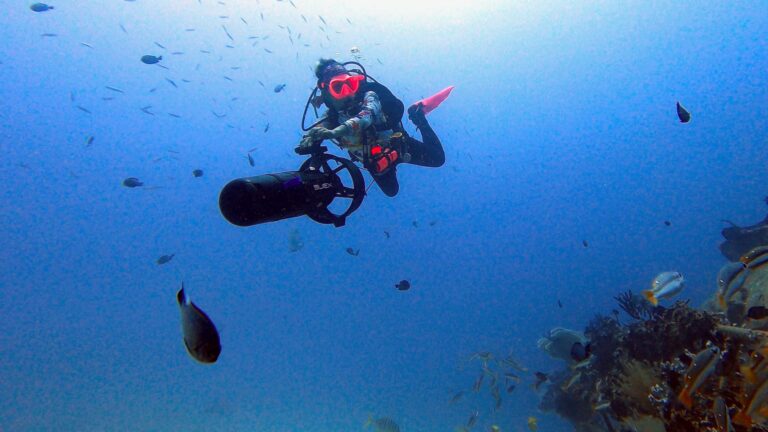
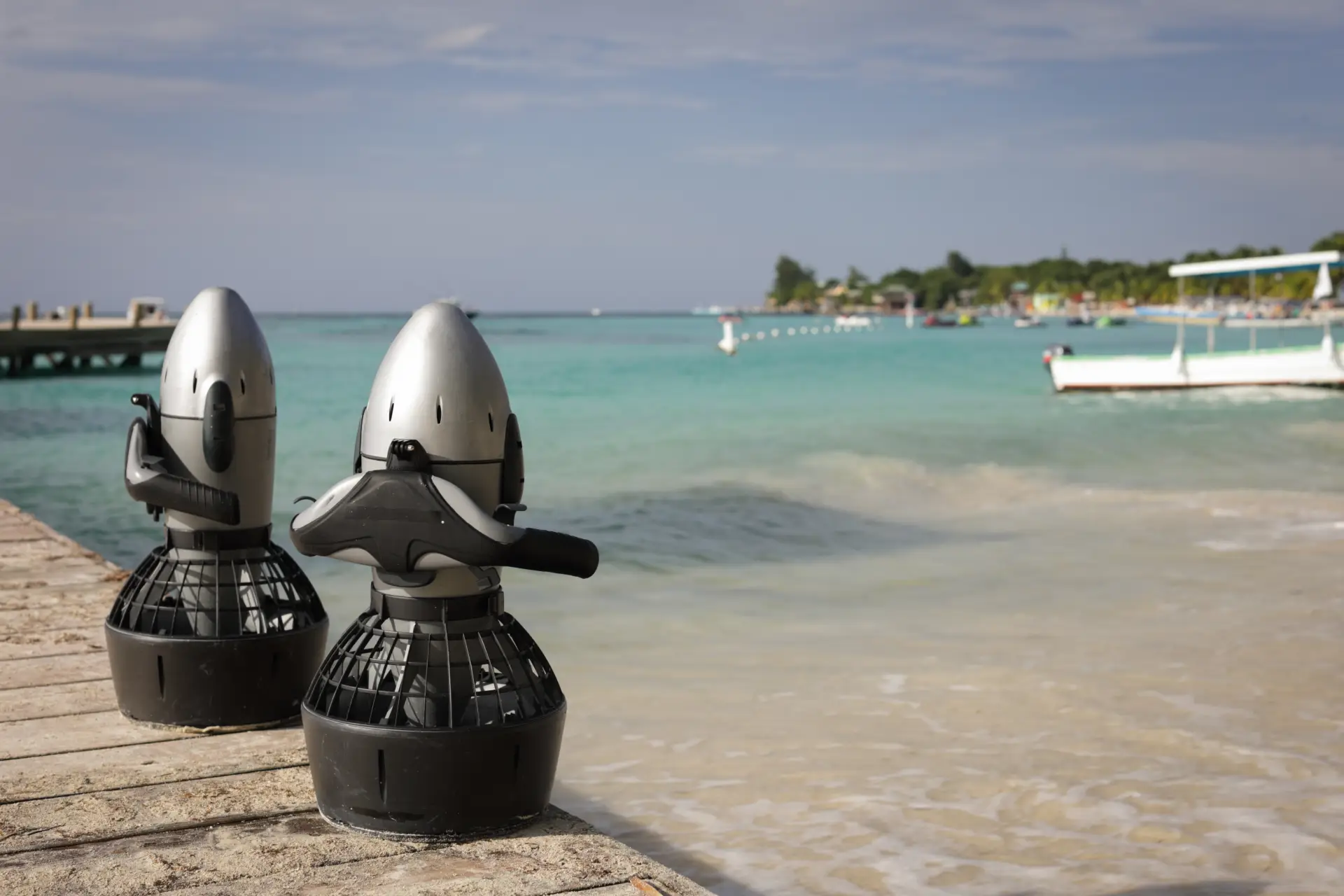
Well, it isn’t just movie magic. Dive Propulsion Vehicles (DPVs), commonly known as underwater scooters, are becoming increasingly popular in recreational diving. They offer an exhilarating mix of speed, extended range, and pure underwater fun.
But strapping yourself to a motorized propeller underwater isn’t quite as simple as just pulling a trigger and holding on. If you are heading to the Visayas and want to add some serious speed to your logbook, here is everything you need to know about DPV diving in Bohol, and how you can earn your wings with Sierra Madre Divers.
The Massive Benefits of Scootering
Why do divers love DPVs? It boils down to three massive advantages:
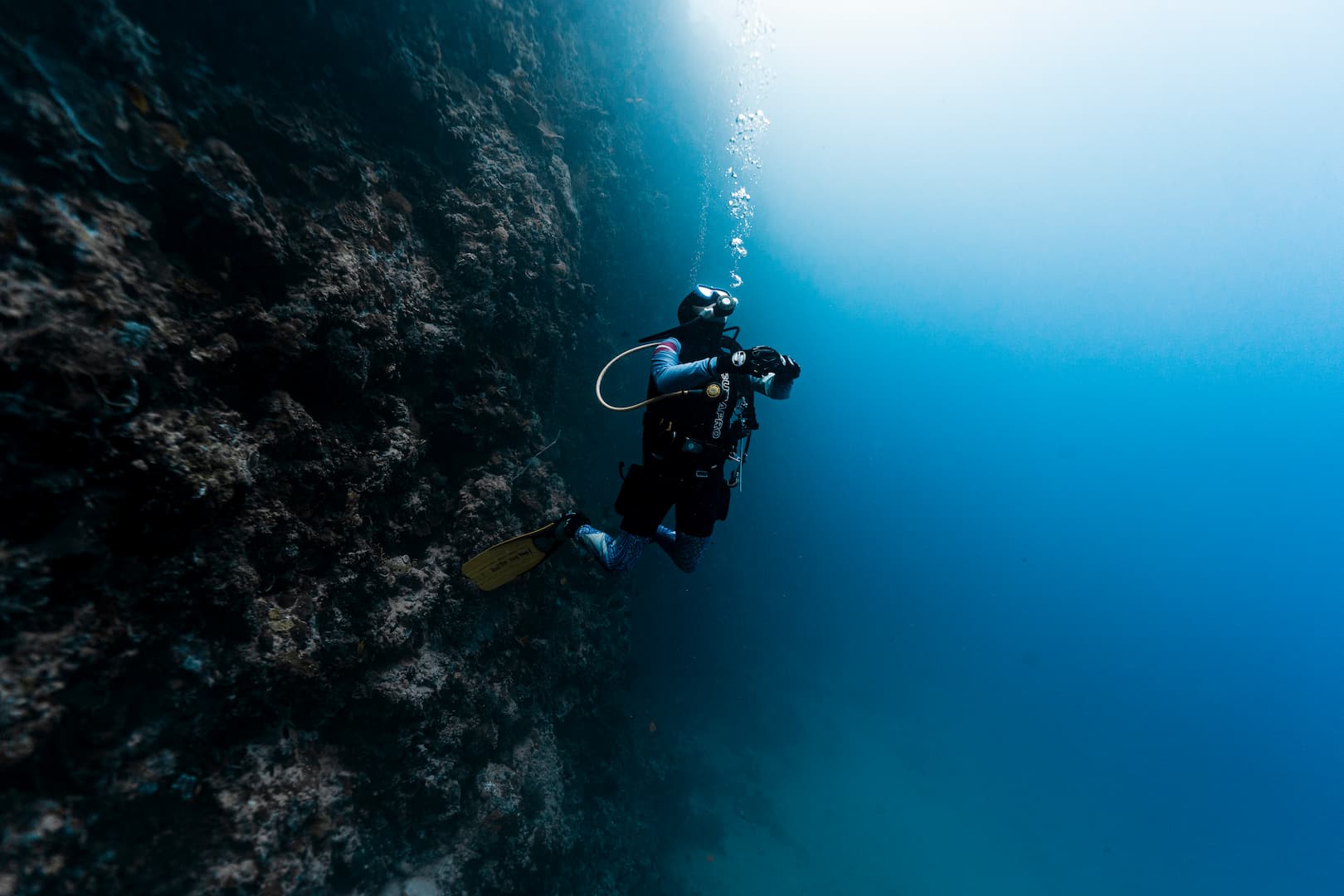
- Covering Serious Ground: The reefs along Panglao Island, particularly sites like Doljo Point, feature massive, sprawling walls that stretch for kilometers. On a standard dive, you might only see a small fraction of it. With a DPV, you can cruise along the wall at three times the speed, allowing you to explore entire reef systems on a single tank.
- Saving Your Air: Finning takes energy. Energy consumes oxygen. When you let a DPV do all the physical work, your heart rate drops, your breathing slows down significantly, and your bottom time gets a massive extension.
- Beating the Current: While we don’t recommend taking a scooter into a ripping, dangerous drift, a DPV makes navigating moderate currents a breeze. Instead of exhausting your legs kicking up-current to see a specific coral block, you simply squeeze the trigger and glide right up to it.
The Reality Check: It Requires Real Skills
It is easy to look at a scooter and think it is just a toy. But introducing a motor into your dive profile fundamentally changes your physics and safety protocols. You cannot just rent a DPV without training.
Here is why DPV diving requires dedicated respect and rock-solid foundational skills:
- The Ascent Danger: This is the most critical factor. If you accidentally point your scooter slightly upward and pull the trigger, you can shoot up 5 meters in a matter of seconds. This violates safe ascent rates and puts you at extreme risk for lung over-expansion injuries or decompression sickness. Flawless buoyancy control is an absolute prerequisite before you ever touch a scooter.
- The Silt-Out: DPV propellers generate a powerful wash behind them. If you ride too close to the sandy bottom of Alona Beach, you will kick up a massive cloud of silt, destroying the visibility for anyone swimming behind you and potentially damaging fragile corals.
- Task Loading: You are now managing your buoyancy, your depth, your air consumption, your buddy’s location, and operating a motorized vehicle. It requires high situational awareness.
The PADI DPV Diver Specialty
Because of the safety factors involved, you need to be certified to use one. The PADI Dive Propulsion Vehicle Diver specialty course is the perfect way to learn the ropes.
During the course (which typically takes just one or two days and includes two open water dives), the instructors at Sierra Madre Divers will teach you:
- Pre-dive Preparation: How to properly assemble, seal, and test the battery compartments to avoid flooding the scooter.
- Maneuvering: How to steer using your body weight, rather than fighting the handles.
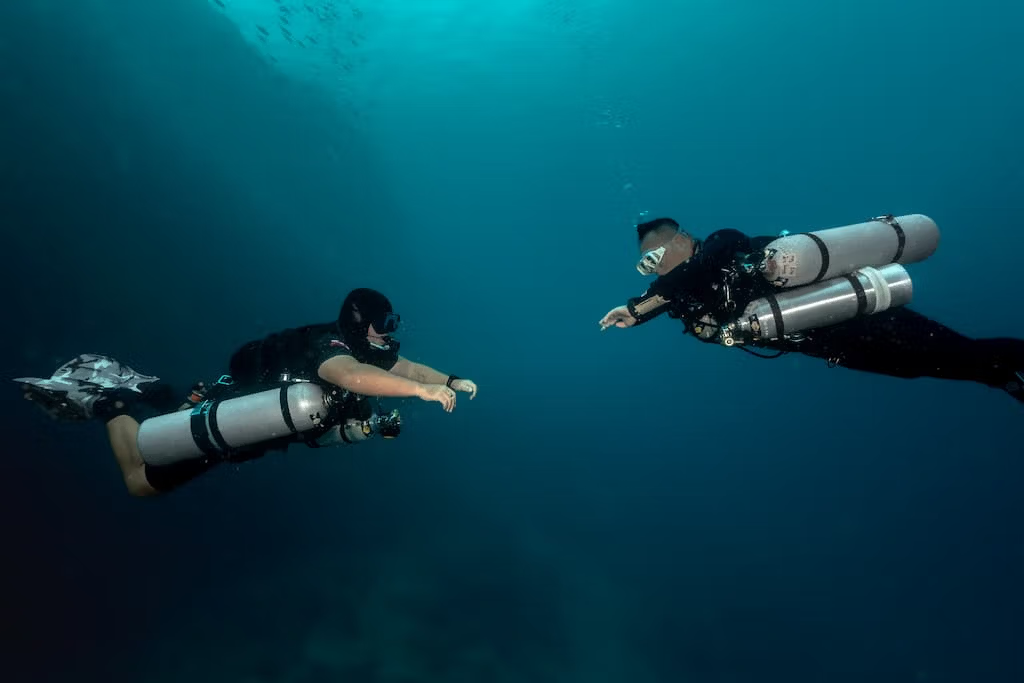
- Buddy Procedures: How to stay together when you are moving at high speeds, and what to do if a scooter fails.
- Emergency Handling: What to do if the throttle gets stuck in the “on” position (a runaway scooter).
Where Can You Ride in Bohol?
Bohol offers some spectacular environments for scootering, but it is important to note that DPVs are not allowed everywhere.
Many of the Marine Protected Areas (MPAs), such as the inner sanctuary of Balicasag Island, strictly prohibit motorized vehicles to protect the resting turtles and prevent accidental coral strikes.
However, the sheer, endless drop-offs of Doljo Point or the expansive, gently sloping reefs along the northern side of Panglao are absolute playgrounds for DPVs. You can drop down, find your perfect depth along the wall, and cruise feeling like a fighter pilot flying through an underwater canyon.
Ready to Fly?
If you already have excellent buoyancy control and you are ready to completely change the way you explore the ocean, adding the DPV specialty to your trip is an unforgettable experience.
It takes the physical exertion out of diving and replaces it with pure, unadulterated fun. Contact Sierra Madre Divers today to inquire about our PADI DPV Diver courses and rentals, and let’s get ready to fly through the Bohol Sea!