The Best Time of Year to Do Your PADI IDC in Bohol
Deciding to become a PADI Open Water Scuba Instructor (OWSI) is one of the most exciting choices you will ever make. It is the moment you transition from a passionate hobbyist to a professional educator, ready to share the underwater world with others.
But once you have decided to “Go Pro,” the next immediate question is: When should I do it?
Because the Instructor Development Course (IDC) is an intense, two-week program that demands peak performance both in the classroom and in the water, your environment matters. Furthermore, if you plan to work immediately after passing your Instructor Examination (IE), timing is everything.
While we run world-class IDCs year-round at Sierra Madre Divers, every season offers a distinct advantage for professional candidates. Here is our insider’s guide to the best time of year to take your PADI IDC in Bohol, based on weather, class sizes, and the global scuba job market.
September to November: The “Career Strategist” Window
If your primary goal is to get a job as an instructor immediately after you graduate, this is arguably the best time to take your IDC.
- The Job Market Advantage: The peak tourist season in the Philippines (and much of Southeast Asia) runs from December through May. Dive centers spend October and November frantically hiring fresh instructors to prepare for the Christmas and New Year rush. If you pass your IE in November, you can literally walk down Alona Beach with your freshly printed temporary PADI card and secure a job the very next day.
- The Weather: This is the “shoulder season” transitioning out of the Habagat (southwest monsoon). You might experience a few rainy afternoons, but the water remains a warm 28°C (82°F).
- The Vibe: Dive centers are generally a bit quieter before the December rush, meaning you often get highly personalized, undivided attention from your Course Director during your IDC.
March to May: The “Perfect Conditions” Window
The IDC requires you to spend hours in the pool perfecting your demonstration-quality skills, and conducting multiple teaching presentations in the open ocean. If you want the absolute easiest, most comfortable physical conditions for your training, aim for the Philippine summer.
- The Weather: The Amihan winds have died down, leaving the Bohol Sea looking like a flat, glassy mirror. Topside temperatures are hot, and the ocean is a bath-like 29°C to 30°C (84°F – 86°F).
- The Training Advantage: Flat, calm water makes your Open Water teaching presentations significantly easier. You don’t have to fight waves or current while trying to maintain control of your “students” at the surface, allowing you to focus 100% on passing your evaluation. Plus, you will never be shivering while standing waist-deep in the pool during your skill circuits.
- The Job Market: While the high season is winding down in the Philippines, summer in the Northern Hemisphere is just beginning. Graduating in May perfectly positions you to fly to Europe, the Mediterranean, or North America just as their summer dive seasons kick off.
December to February: The “High Energy” Window
This is the peak of the tourist season in Panglao. The weather is cool, dry, and breezy, making it a fantastic time to be topside.
- The Vibe: The dive center will be buzzing with energy. You will be surrounded by real-world courses happening simultaneously, giving you an excellent opportunity to observe working instructors dealing with real students in a busy environment.
- The Networking: Because the island is full of traveling divers and industry professionals, the networking opportunities at the local dive bars post-IDC are incredible.
- The Training Consideration: The water drops to its “coldest” at around 26°C (79°F). Because you spend a lot of time hovering and evaluating during an IDC, rather than swimming and generating body heat, you will definitely want a good 3mm or even 5mm full wetsuit to stay comfortable during those long confined water sessions.
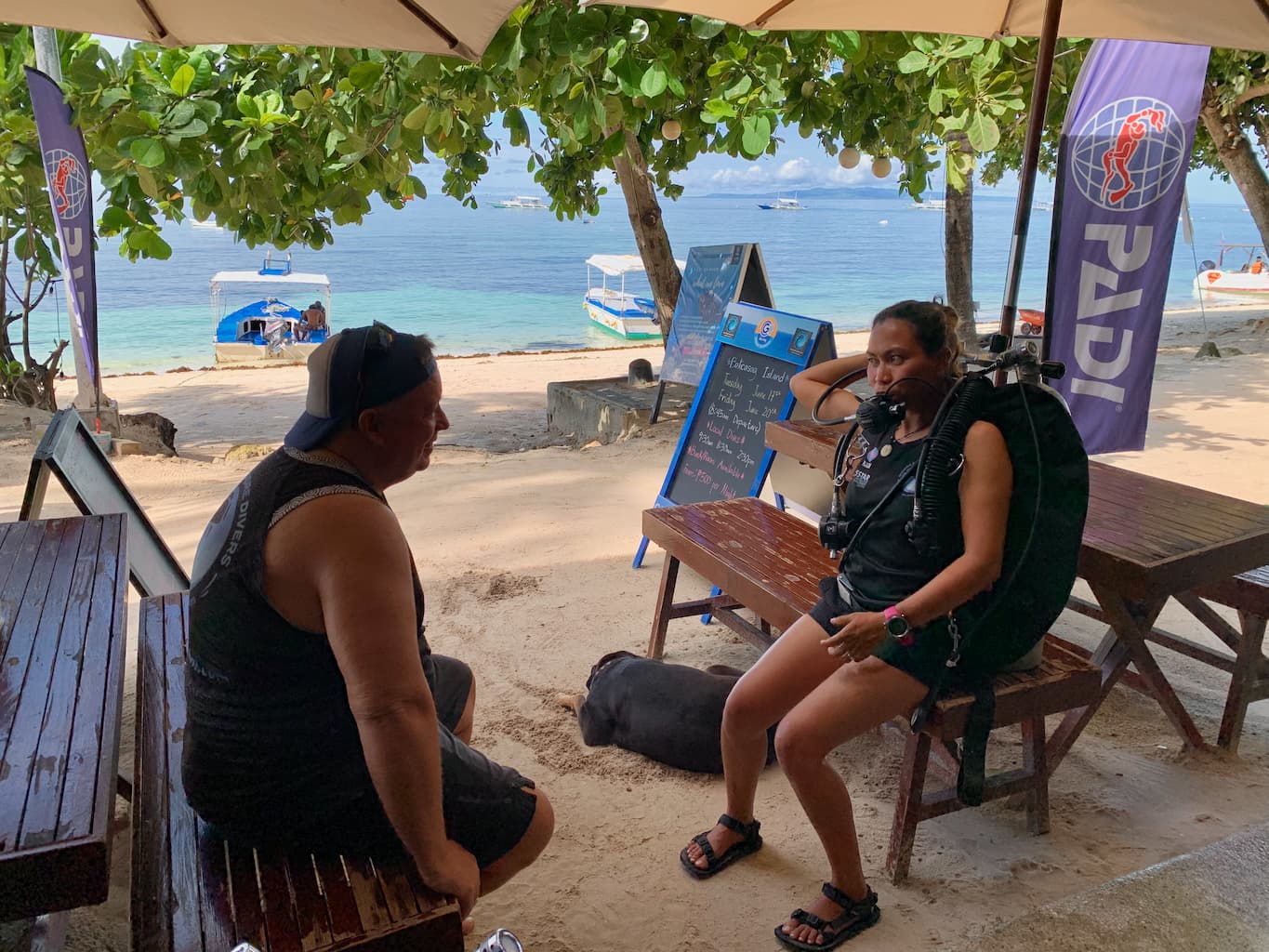
June to August: The “Dedicated Learner” Window
This is the traditional green season (rainy season) in the Philippines. However, because Bohol is sheltered by surrounding islands, we are highly protected from extreme weather.
- The Training Advantage: This is the quietest time of year for tourism. For an IDC candidate, this is a massive bonus. It means small IDC class sizes, incredibly low student-to-Course-Director ratios, and zero crowds at the open water training sites.
- The Cost Benefit: Flights to the Philippines and long-term accommodation rentals in Panglao are typically at their cheapest during these months, allowing you to complete your professional training on a tighter budget.
Ready to Change Your Life?
Ultimately, the “best” time to do your IDC depends entirely on your personal goals. Do you want perfectly flat water? Do you want an immediate job in the tropics? Or do you want small, intimate class sizes?
Whatever your priority, the professional development team at Sierra Madre Divers is ready to help you succeed. We boast a 100% first-time pass rate for our IDC candidates, and our Course Directors are deeply committed to turning you into a highly employable, confident PADI Instructor.
Contact us to get info on our upcoming IDC schedule, and to start planning your transition to the best office in the world!