Built for the Blue: The Physical Traits That Make a Better Dive Pro (And How to Get Them)
Scuba diving is often marketed to vacationers as a zero-impact, relaxing activity. You put on a jacket, inflate it, and float weightlessly over a coral reef while breathing slowly. It’s aquatic meditation.
But if you are planning to cross over from recreational diver to PADI Divemaster or Instructor, you need to accept a hard truth: working in the scuba industry is a highly physical, demanding job.
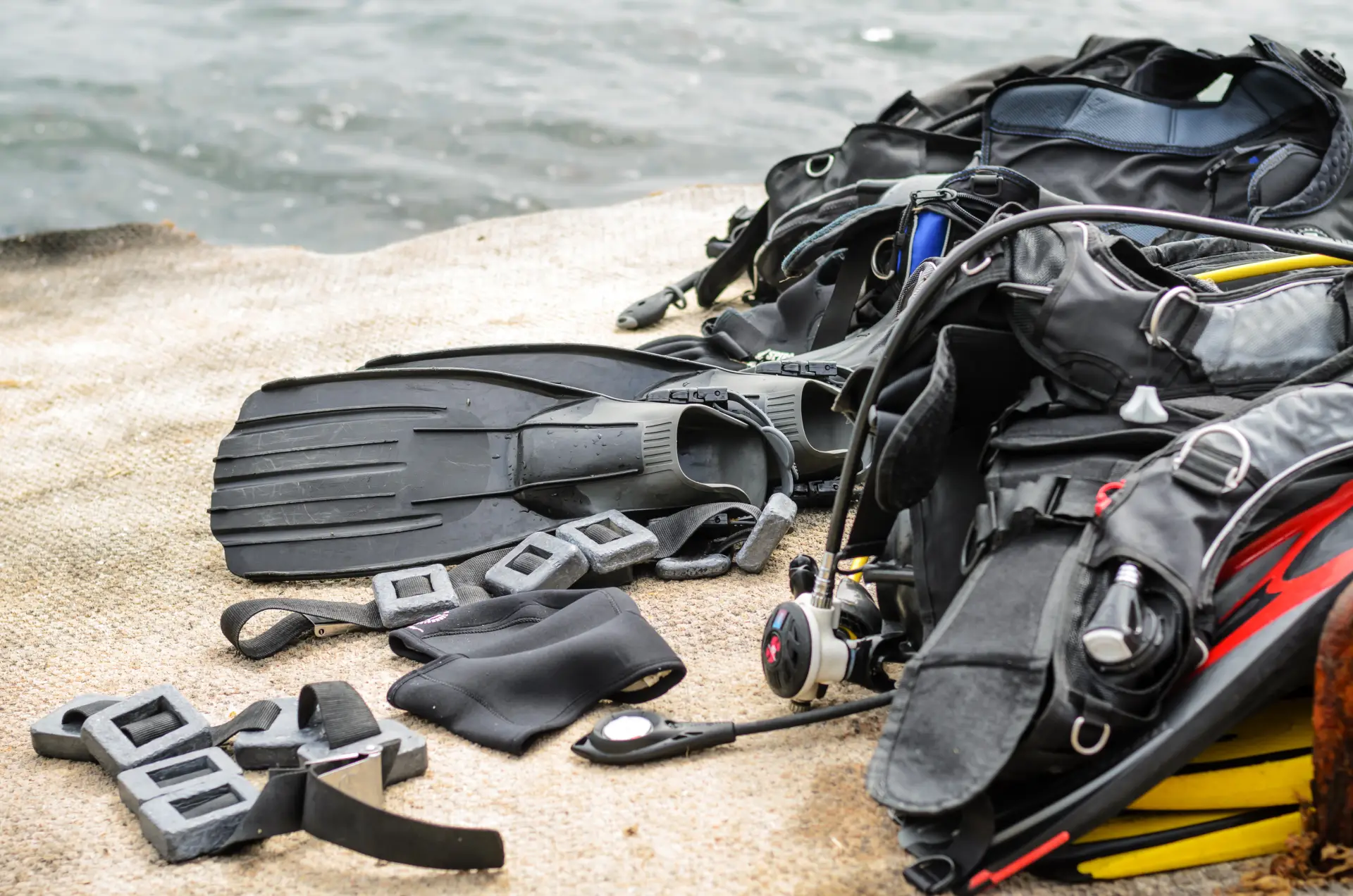
The Instagram version of a dive pro shows someone effortlessly holding a starfish. The reality is carrying three sets of gear up a sandy beach, hauling a 15-liter steel tank onto a rocking Bangka boat, fighting a ripping current to tie off a mooring line, and swimming backward while towing a panicked student to safety.
If you want to have a long, injury-free career in diving—and if you want to look smooth and effortless while doing it—you need to train your body for the environment. At Sierra Madre Divers, we’ve seen how physical fitness transforms good candidates into exceptional professionals.
Here are the four physical traits every dive pro needs to master, why they matter in Bohol, and the specific exercises to help you build them before you start your professional training.
The Trait: Unshakable Core Stability
Why You Need It: In diving, your core is your center of gravity and your engine room. A weak core leads to the dreaded “seahorse” trim—where your legs drop, your chest rises, and you plow through the water diagonally.
When you are demonstrating a perfect hover for your Open Water students, or trying to stay perfectly flat while shooting macro photography of a tiny nudibranch at Arco Point, it is your core muscles that keep you locked in horizontal trim. Furthermore, topside, a strong core protects your lower back when twisting to hand a heavy scuba unit to a guest on a moving boat.
The Exercises to Get It: Forget standard crunches; you need stability and anti-rotational strength.
- The Dead Bug: Lie on your back, arms reaching up, knees bent at 90 degrees. Slowly lower your right arm and left leg toward the floor without letting your lower back arch off the ground. Return to the start and switch sides. This trains your core to remain braced while your limbs are moving—exactly what you do when finning.
- Plank with Shoulder Taps: Hold a standard high plank (push-up position). Keeping your hips perfectly still, lift one hand and tap your opposite shoulder. This builds the anti-rotational strength needed to manage asymmetrical loads (like hauling yourself up a boat ladder with one hand while holding a fin in the other).
The Trait: Cardiovascular Engine (The “Air Guzzler” Cure)
Why You Need It: As a guide, you are the leader of the pack. You cannot be the first person low on air. If a sudden current picks up at Pamilacan Island, your guests will look to you. You need the cardiovascular endurance to swim against that current, manage your group, and still breathe slowly enough to make your tank last an hour.
A high level of cardiovascular fitness lowers your resting heart rate. A lower heart rate means your body uses oxygen more efficiently, which directly translates to a better Surface Air Consumption (SAC) rate. The fitter you are, the less air you breathe, and the less stressed you feel when the ocean throws you a curveball.
The Exercises to Get It:
- Zone 2 Cardio: This is low-intensity, steady-state cardio. Think swimming laps, cycling, or jogging at a pace where you can still hold a conversation. Aim for 45-60 minutes, three times a week. This builds the massive aerobic base required for long, repetitive dive days.
- High-Intensity Interval Training (HIIT) Swimming: Jump in a pool and sprint freestyle for 50 meters, then rest for 30 seconds. Repeat 10 times. This simulates the sudden, intense bursts of energy required to swim against a current or catch up to a student who is drifting away.
The Trait: Lower Body Power (The Frog Kick Foundation)
Why You Need It: Your legs do 99% of the propulsion work underwater. As a dive professional, you will likely upgrade to heavy, stiff rubber fins (like Jet Fins) because they offer maximum control for helicopter turns and back-kicking.
Pushing heavy fins through dense water requires serious leg power. If your glutes and hamstrings are weak, you will rely entirely on your calves, leading to agonizing underwater cramps. Moreover, the frog kick—the mandatory finning technique for pros—relies heavily on the strength of your hips and glutes to push the water backward.
The Exercises to Get It:
- Goblet Squats: Hold a kettlebell or dumbbell vertically against your chest and squat down until your thighs are below parallel, then drive back up. This builds massive strength in your quads and glutes, simulating the motion of standing up under the weight of a scuba tank.
- Glute Bridges / Hip Thrusts: Lie on your back with your knees bent and feet flat on the floor. Squeeze your glutes and drive your hips toward the ceiling. This isolates the exact muscles used at the end of a powerful frog kick.
- Lateral Band Walks: Place a small resistance band around your ankles and take wide, side-stepping strides. This strengthens your hip abductors, which are crucial for the wide, sweeping motion of the frog kick.
The Trait: Bulletproof Shoulders and Upper Back
Why You Need It: While you don’t use your arms much underwater, your upper body takes a massive beating on the surface. You will be reaching behind your head to turn tank valves on and off. You will be pulling yourself (and all your heavy gear) up the vertical boat ladder after a dive at Balicasag. You will be lifting crates of lead weights.
Shoulder injuries are incredibly common in the dive industry. You need a strong, mobile upper back to handle the awkward lifting angles and to counterbalance the heavy weight of the tank pulling backward on your spine.
The Exercises to Get It:
- Pull-Ups or Inverted Rows: There is no better exercise for simulating pulling yourself up a boat ladder. If you can’t do a full pull-up, use gymnastics rings or a TRX suspension trainer to do bodyweight rows, pulling your chest to your hands.
- Farmer’s Carries: Grab two heavy dumbbells or kettlebells, stand tall with your shoulders pulled back and down, and walk for 60 seconds. This builds incredible grip strength, shoulder stability, and traps—essential for carrying twin tanks or gear crates down Alona Beach.
- Band Pull-Aparts: Hold a light resistance band in front of you with straight arms. Pull the band apart until it touches your chest, squeezing your shoulder blades together. This counteracts the “hunched forward” posture that comes from wearing a heavy BCD all day.
Prepare for the Best Job in the World
Being a PADI Divemaster or Instructor is immensely rewarding, but you have to respect the physical demands of the environment. Treating yourself like an aquatic athlete prevents burnout, minimizes injury, and ensures that you have the energy left at the end of the day to actually enjoy the sunset.
If you have the fitness, the passion, and the drive, the ocean is waiting for you. Ready to put your training to the test? Contact the professional development team at Sierra Madre Divers to book your Divemaster Internship or Instructor Development Course in Bohol today.