A Complete Guide to Diving Arco Point (The Hidden Cathedral of Panglao)
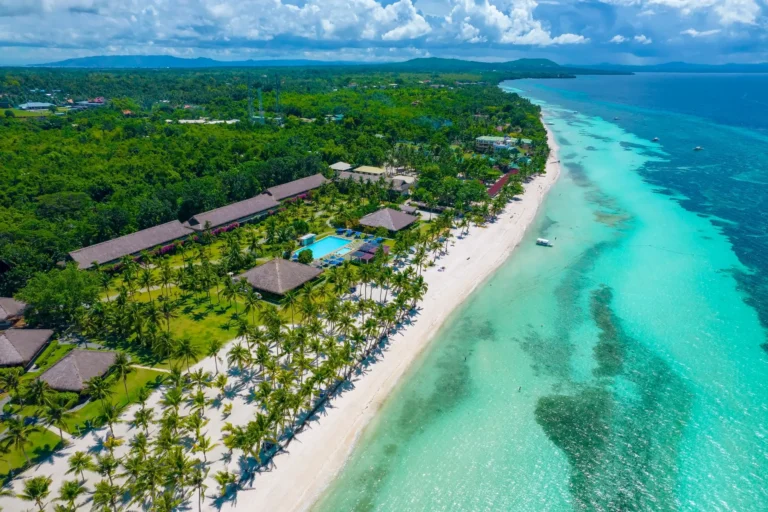
When divers talk about Bohol, the conversation usually revolves around the endless, plunging walls of Balicasag Island or the sweeping, pelagic-rich currents of Pamilacan. But if you spend all your time looking out into the deep blue, you are going to miss the hidden architectural wonders tucked right into the coastline of Panglao Island.
Just a short, relaxing boat ride from Alona Beach lies a dive site that offers a completely different kind of thrill. It is a place of shadows, light beams, and bizarre macro critters.
Welcome to Arco Point, affectionately known by local dive guides as “The Hole in the Wall.”
Whether you are a newly certified Open Water diver looking for your first swim-through or a seasoned underwater photographer hunting for the perfect frogfish portrait, Arco Point delivers. Here is your complete guide to diving the hidden cathedral of Panglao with Sierra Madre Divers.
The Main Event: The “Hole in the Wall”
The defining feature of Arco Point—and the reason it gets its name—is a stunning, natural underwater archway and vertical tunnel built right into the limestone reef.
The dive typically begins on a vibrant, sloping coral garden. As you drift along the wall at a shallow depth of around 8 to 9 meters, your Sierra Madre Divers guide will suddenly turn and swim directly toward the solid rock face. As you get closer, a dark, vertical fissure reveals itself.
This is the entrance to the funnel.
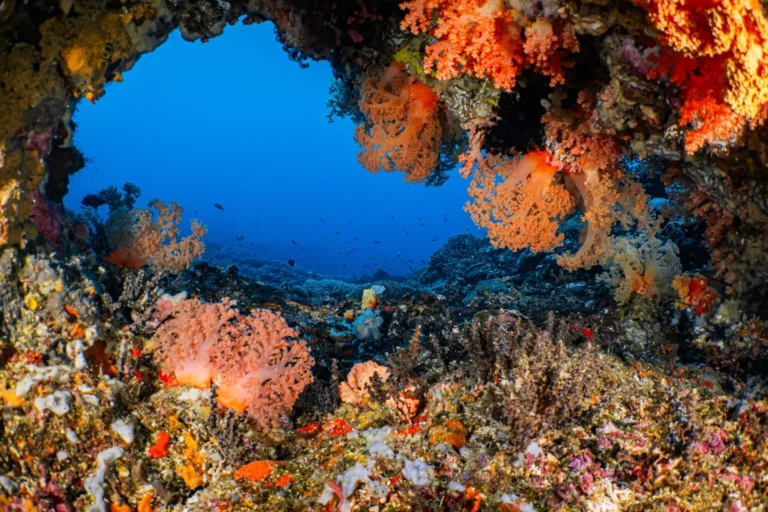
You slowly descend feet-first or head-first into the shaft. The tunnel is wide enough to be completely safe and comfortable, but enclosed enough to give you a thrilling sense of overhead exploration. Inside, the walls are plastered with colorful sponges and hanging soft corals.
As you drop through the tunnel, thousands of glassy sweeper fish and cardinal fish part ways to let you through. When you reach the exit—a wide, arching doorway that spits you out onto the lower reef wall at about 18 meters—you can look back up through the hole. On a sunny day, the beams of light piercing down through the shaft make it look like a flooded, ancient cathedral. It is one of the most photogenic topographical features in Bohol.
The Macro Metropolis
While the swim-through is the main attraction, what you find after you exit the archway is what keeps experienced divers coming back to Arco Point. The wall and the surrounding rubble slopes are a goldmine for macro life.
Because the site is relatively sheltered, the slow pace allows you to hunt for the weird and wonderful.
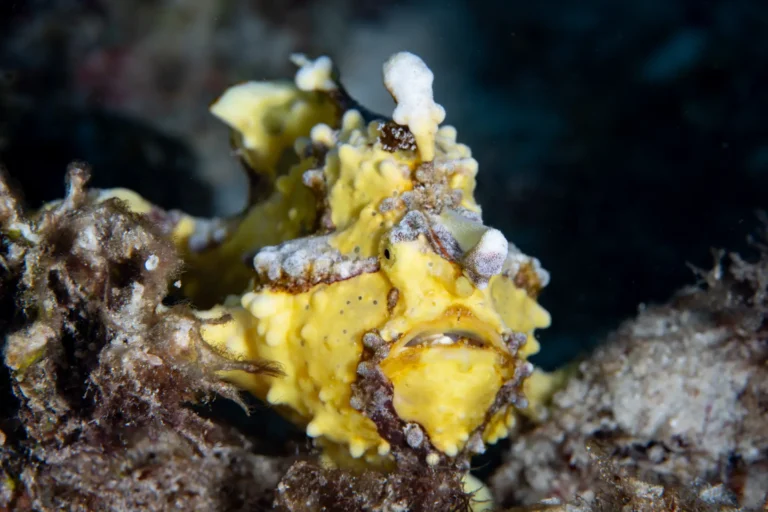
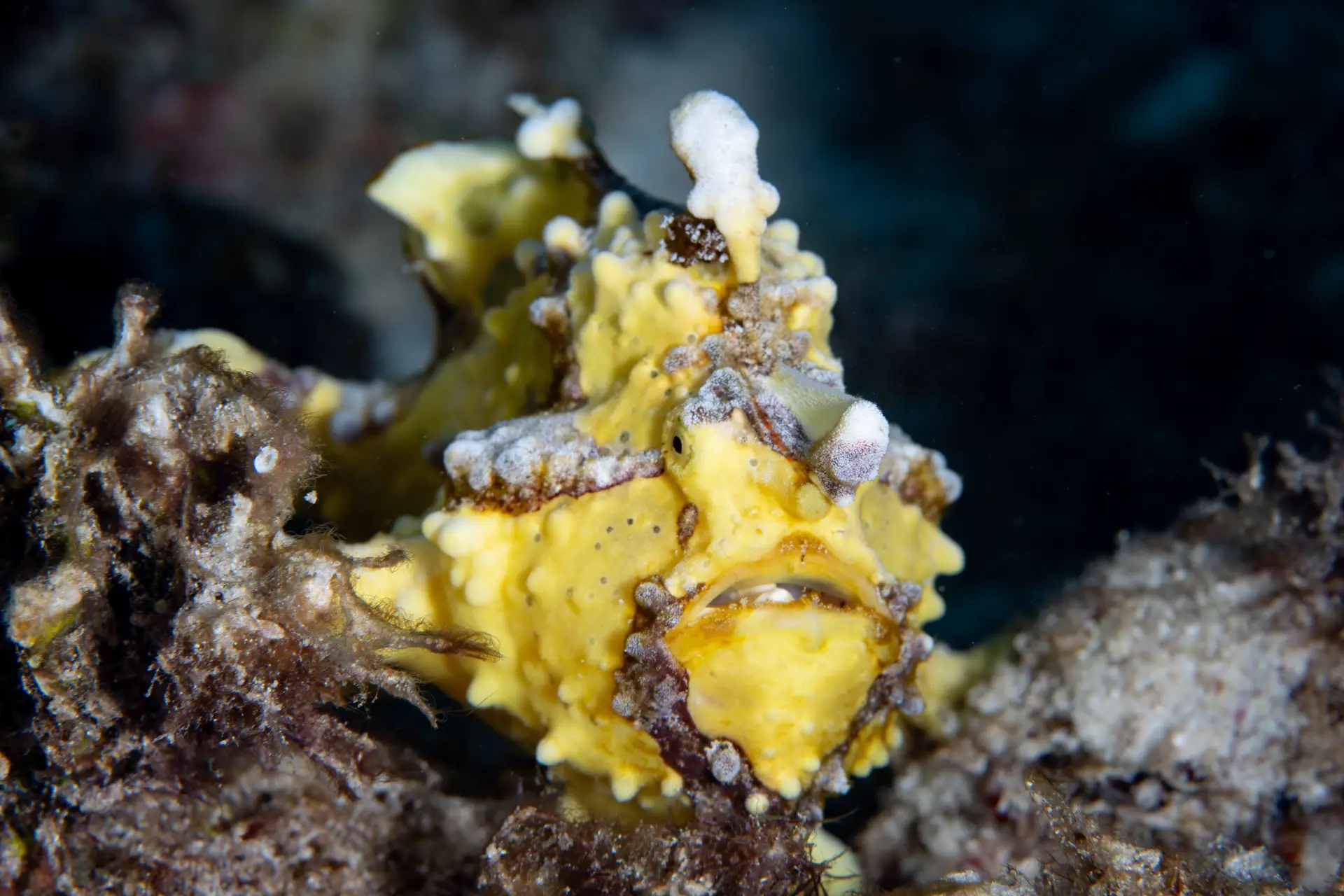
- Frogfish Central: If you read our previous guide on the “grumpy anglers” of the ocean, Arco Point is where you put that knowledge to the test. The sponges along this wall are prime real estate for Painted and Warty Frogfish.
- The Sea Snake Slither: We frequently encounter Banded Sea Kraits gracefully hunting in the crevices of the wall here.
- Nudibranch City: For the sea slug enthusiasts, Arco Point is incredibly diverse. The wall is dotted with brilliantly colored nudibranchs, from the classic Chromodoris to the intricate, frilly Flabellina species.
- Moray Eels: Keep an eye on the small holes and cracks. It is very common to spot the heads of Yellow-Edged Morays, Snowflake Morays, and the beautiful Ribbon Eels poking out into the current.
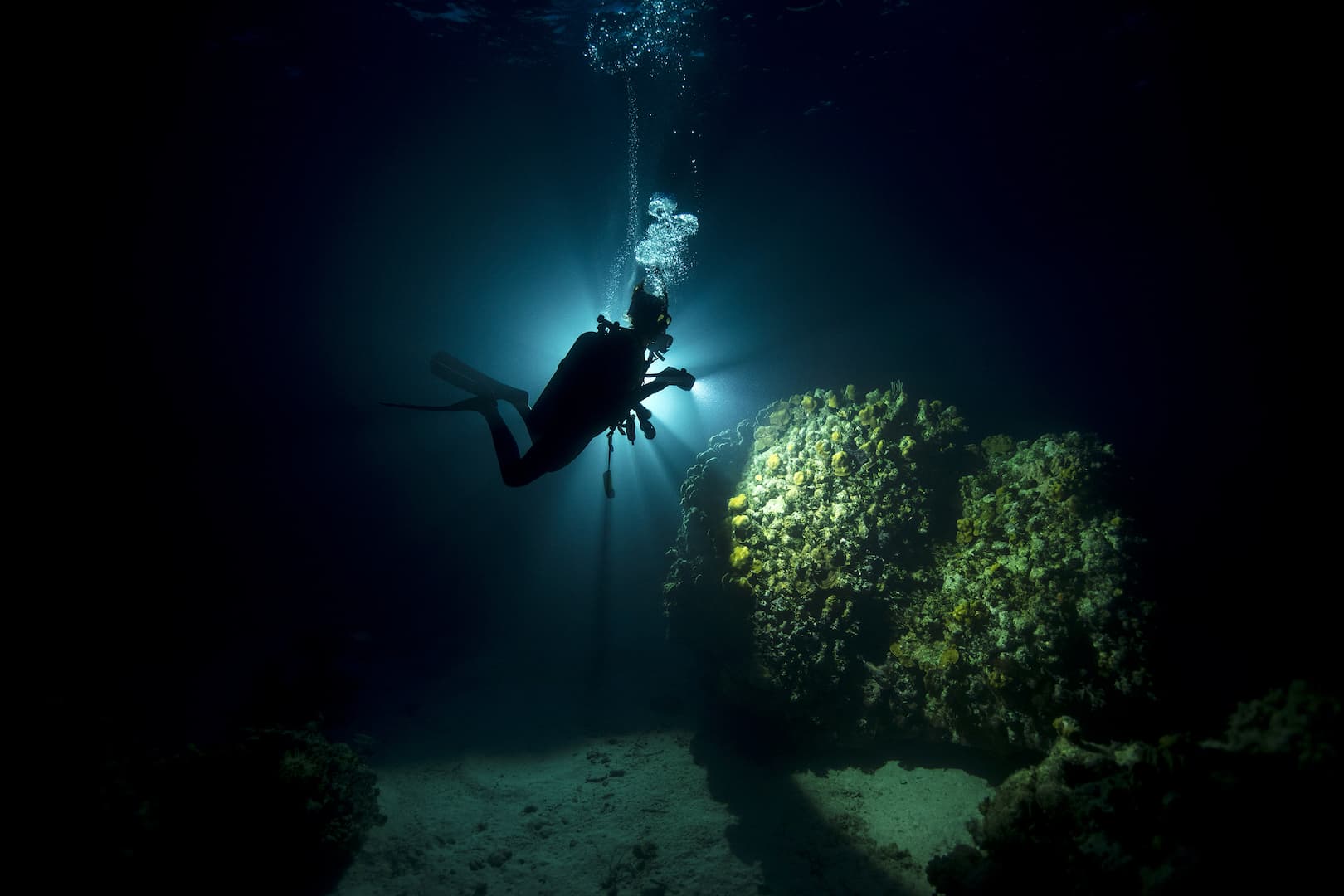
The Perfect Night Dive Studio
Arco Point is fantastic during the day, but it transforms into something entirely different when the sun goes down. Because of its proximity to Alona Beach and its sheltered topography, it is one of our absolute favorite locations for night diving.
When the daytime reef fish go to sleep (often wedging themselves into the exact tunnel you swam through earlier), the nocturnal shift takes over.
- Massive, decorative Sponge Crabs come out of hiding, carrying pieces of live sponge on their backs for camouflage.
- Cuttlefish hover over the sand, flashing iridescent colors under the beam of your dive torch.
- Octopuses emerge from their dens to hunt across the rubble.
If you have never done a night dive, the calm, easy navigation of Arco Point makes it the perfect site to earn your PADI Night Diver specialty.
Who Should Dive Arco Point?
One of the best things about Arco Point is its universal accessibility.
- Beginners: It is a phenomenal site for Open Water divers. The currents are typically mild, the visibility is excellent, and the top of the reef is shallow and brightly lit. The tunnel itself is entirely optional; if you aren’t comfortable with overhead environments, your guide will simply lead you around the outside of the arch to meet the rest of the group at the bottom.
- Photographers: Because the current is usually gentle, it is a fantastic studio for both wide-angle shooters (capturing the light beams in the tunnel) and macro shooters (setting up the perfect strobe lighting for a frogfish without fighting a drift).
- Experienced Divers: Advanced divers will appreciate the slow, meticulous pace. It is the perfect “second dive” of the day after returning from the deeper, high-energy walls of Balicasag or Doljo.
Explore the Hidden Architecture
You don’t always need to travel far offshore to find incredible underwater topography. Sometimes, the best dives are hiding right in the coastline’s shadow.
Whether you want to glide through the cathedral of light or spend an hour hunting for the perfect macro shot, Arco Point is a must-add to your Bohol dive log. Contact the team at Sierra Madre Divers today to schedule your trip, check your buoyancy, and let’s go thread the needle at the Hole in the Wall!