5 Not-So-Obvious Traits That Make a Great Scuba Instructor
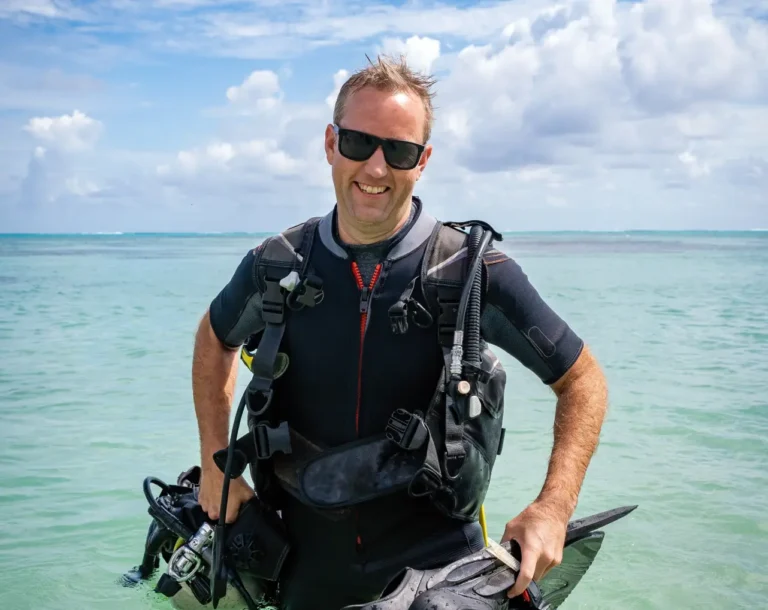
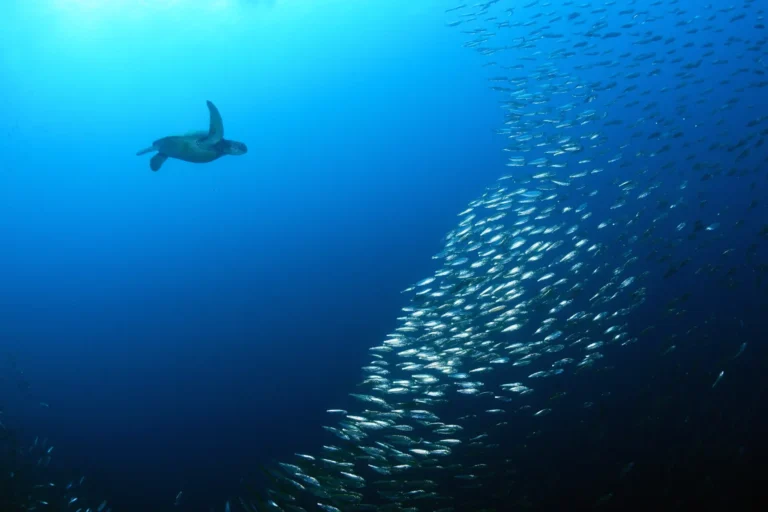
When you picture a PADI Scuba Instructor, a very specific image probably comes to mind. You picture someone deeply tanned, effortlessly cool, and perfectly at home gliding through a school of jackfish. You assume they are incredible swimmers, fearless adventurers, and marine biology nerds.
And you would be right. To be a dive professional, you do need to love the ocean, and you absolutely need to be a master of buoyancy and dive theory.
But here is the industry secret: being a great diver does not automatically make you a great dive instructor.
At Sierra Madre Divers, we have trained and hired countless Divemasters and Instructors. Over the years, we’ve noticed that the professionals who truly change their students’ lives—the ones who turn terrified beginners into lifelong ocean advocates—share a specific set of underlying character traits. And surprisingly, most of them have very little to do with kicking your fins.
If you are thinking about taking the plunge into your Instructor Development Course (IDC) in Bohol, here are five not-so-obvious traits you will need to succeed.
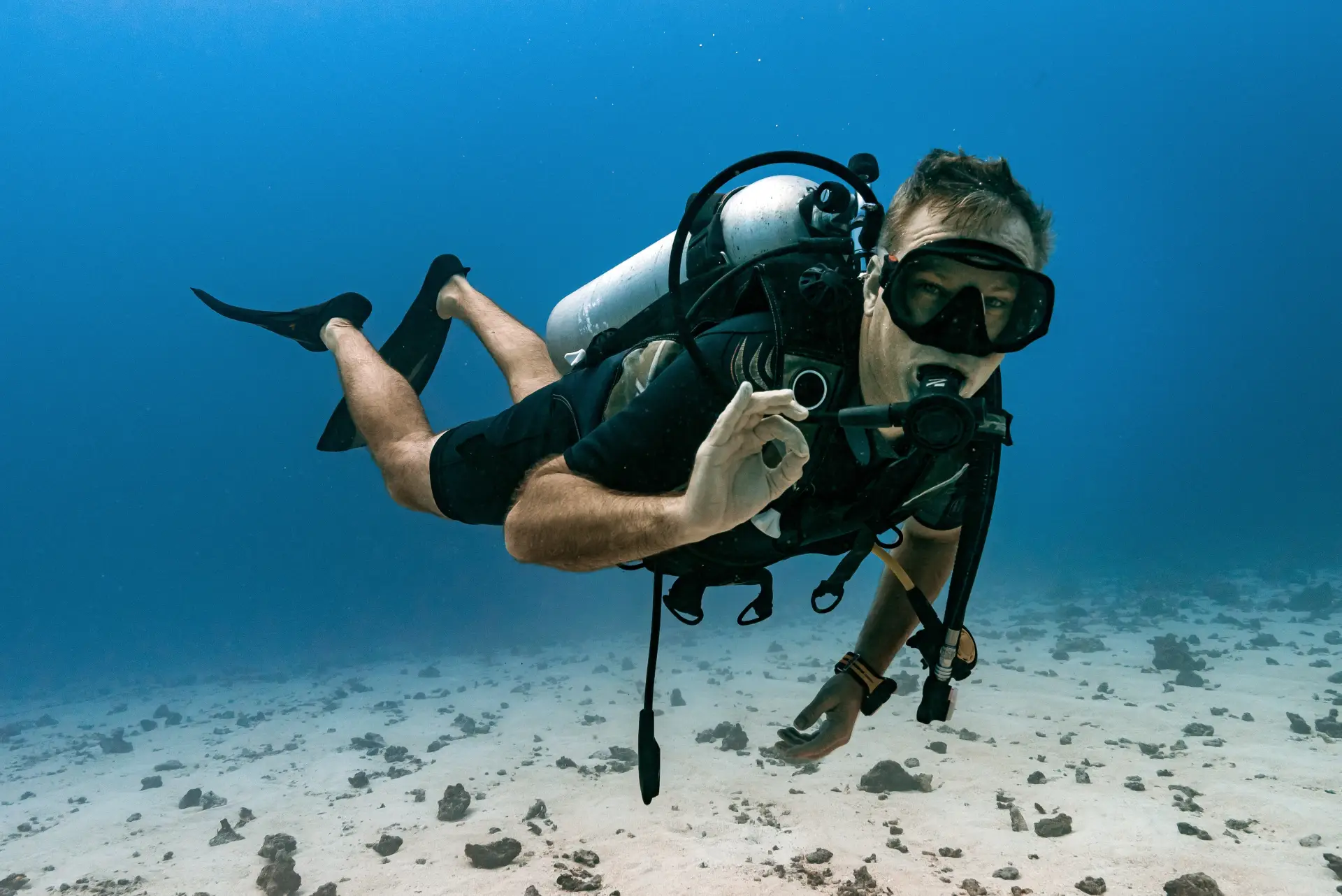
1. You Are a Master of “Micro-Expressions” (The Underwater Psychologist)
A massive part of teaching scuba diving is managing fear. Humans are not naturally designed to breathe underwater. When you take an Open Water student down to 5 meters for the first time, their brain is often screaming at them to bolt to the surface.
A good instructor doesn’t wait for full-blown panic to act. They are highly attuned to micro-expressions and body language.
- The Wide-Eyed Stare: You learn to recognize the difference between a student who is wide-eyed because they just saw a sea turtle, and a student who is wide-eyed because they are hyperventilating.
- The White-Knuckle Grip: You notice when a student is gripping their BCD strap or your arm just a little too tightly.
- The Breathing Rate: You constantly monitor the bubbles. A steady, slow stream of bubbles means a relaxed diver. A rapid, chaotic burst of bubbles means anxiety is building.
Great instructors are highly empathetic underwater psychologists. They know exactly when to push a student to overcome a mental block, and when to hold their hand, look them dead in the eye, and silently communicate: “I’ve got you. You are safe.”
2. You Have an Endless Capacity for Repetition (The Zen Master)
Let’s be brutally honest: teaching the PADI Open Water course involves a lot of repetition.
You are going to teach the “partially flooded mask clearing” skill. You will teach it on Monday. You will teach it again on Wednesday. You will teach it to a teenager who gets it on the first try, and you will teach it to an adult who takes two hours to stop breathing through their nose. Over a five-year career, you might demonstrate how to clear a mask 10,000 times.
A mediocre instructor gets bored. They start rushing the demonstration. They sigh when a student fails on the fourth attempt.
A great instructor possesses the patience of a saint. They understand that while this is their 10,000th time clearing a mask, it is the student’s very first time. They bring the exact same level of enthusiasm, clarity, and patience to the pool on day 1,000 as they did on day one. If you get easily frustrated by repeating yourself, this job will burn you out quickly. If you find joy in the moment it finally “clicks” for your student, you will thrive.
3. You Think Like a Project Manager (The Tetris Wizard)
The Instagram version of a dive instructor’s life is 90% underwater selfies and 10% drinking from a coconut. The reality is 20% diving and 80% complex logistics.
Before the boat even leaves the beach in Panglao, a great instructor has already solved a dozen logistical puzzles.
- Do we have the right O-rings? * Did the vegetarian guest get the right lunch packed?
- Is the student who needs a size XXL wetsuit matched with the right gear?
- How are we loading the boat so the center of gravity is safe, and the first group in the water has their tanks at the back?
When you are leading a group, you are a project manager. You have to anticipate problems before they happen. You are the one who double-checks that the emergency oxygen is on board. You are the one doing “boat tetris” with the gear crates. If you are highly organized, detail-oriented, and good at managing chaotic timelines, you have the hidden superpower required to run a smooth, safe dive operation.
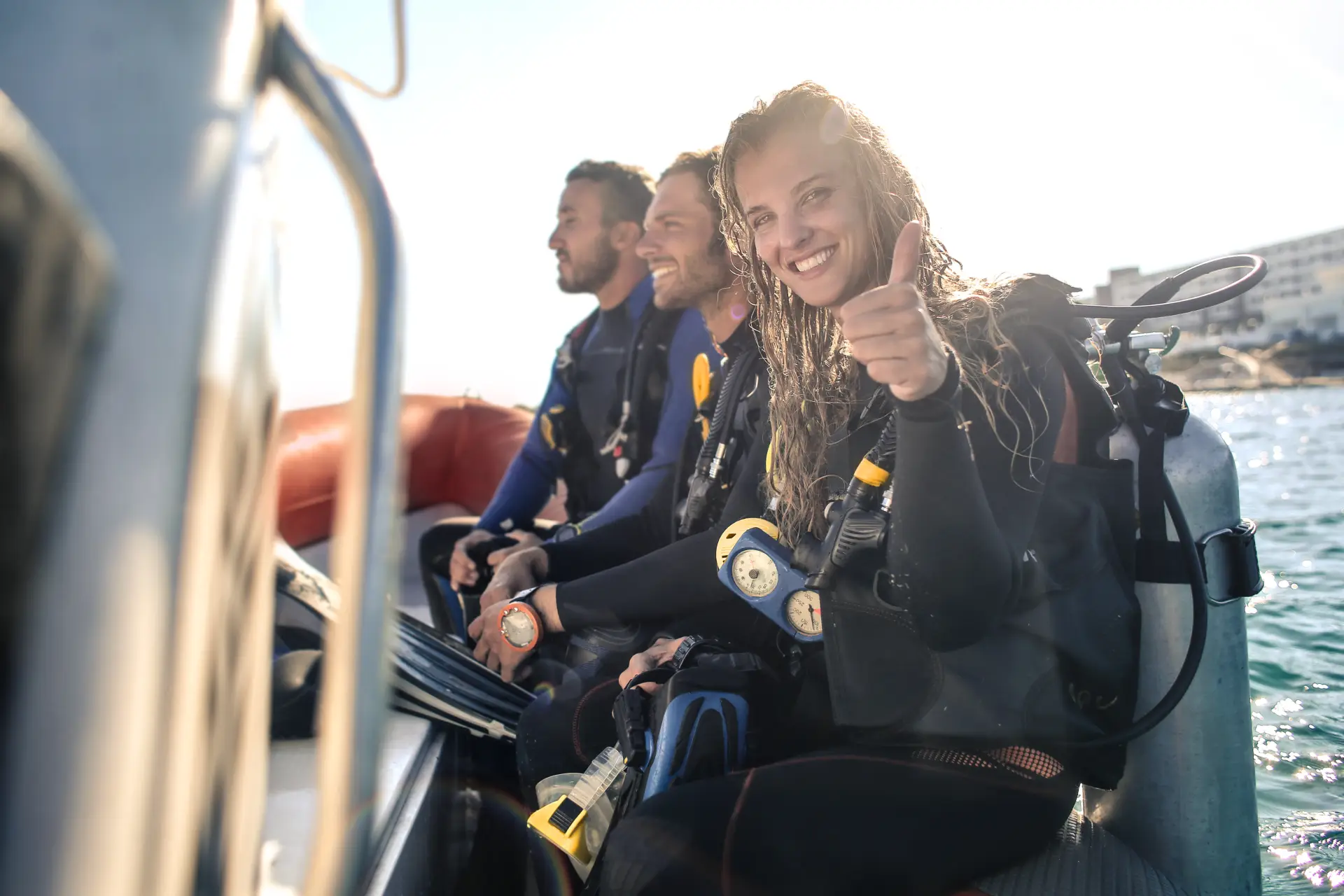
4. You Possess Zero Ego (The Humble Leader)
There is a dangerous stereotype of the “macho” dive instructor—the loud, arrogant guide who swims deeper than everyone else to prove a point, never admits they are cold, and pretends to know the Latin name of every fish in the ocean.
Ego has no place underwater. It gets people hurt.
The best instructors are incredibly humble.
- Willingness to Call It: If the current at Dakit-Dakit is too strong for their students’ skill level, a great instructor drops their ego and says, “We are aborting this dive and going to a calmer site.” They do not let their pride force a bad situation.
- Saying “I Don’t Know”: When a student points to a bizarre nudibranch on the wall at Balicasag and asks what it is, a great instructor doesn’t make up a name. They say, “I have no idea, but let’s look it up in the fish ID book together over a coffee.”
- Scrubbing the Decks: The best instructors don’t think they are “above” the grunt work. Even with a gold PADI Instructor badge, they are still the first ones to pick up a brush to scrub the boat deck or haul a wet tank up the beach. Humility builds respect with your crew and trust with your students.
5. You Are a Captivating Storyteller (The Entertainer)
A typical dive lasts 45 to 60 minutes. A typical dive trip lasts six hours. What are you doing with your guests for the other five hours?
You are entertaining them.
Great instructors are charismatic storytellers. The surface interval is where you earn your tips and turn a one-time customer into a repeat client.
- The Briefing: A good briefing tells people the max depth and time. A great briefing builds suspense. It paints a picture of the Spanish Tower wall, tells the history of the island, and gets the divers vibrating with excitement before they even touch the water.
- The Debriefing: When the dive is over and everyone is shivering slightly on the boat ride back to Alona Beach, the great instructor is the one keeping the energy high. They are laughing about the funny thing a crab did, helping people log their dives, and making every single guest feel like they just completed a National Geographic expedition.
You don’t need to be a stand-up comedian, but you do need the social stamina to be “on,” engaging, and warm, even when you are tired.
The Real Reward
Being a dive instructor is physically demanding, logistically complex, and requires immense emotional intelligence. It is not just a holiday; it is a profound responsibility.
But when you combine these five traits, the reward is unmatched. You get to be the person who introduces someone to 71% of the planet they have never seen before. You get to change their lives.
Do you have what it takes? If you are nodding along to this list, the ocean needs you. Contact the professional development team at Sierra Madre Divers today to learn more about our Divemaster Internships and Instructor Development Courses in Bohol.