The Pro’s Toolkit: Gear Every Divemaster Needs to Own to Work in the Industry
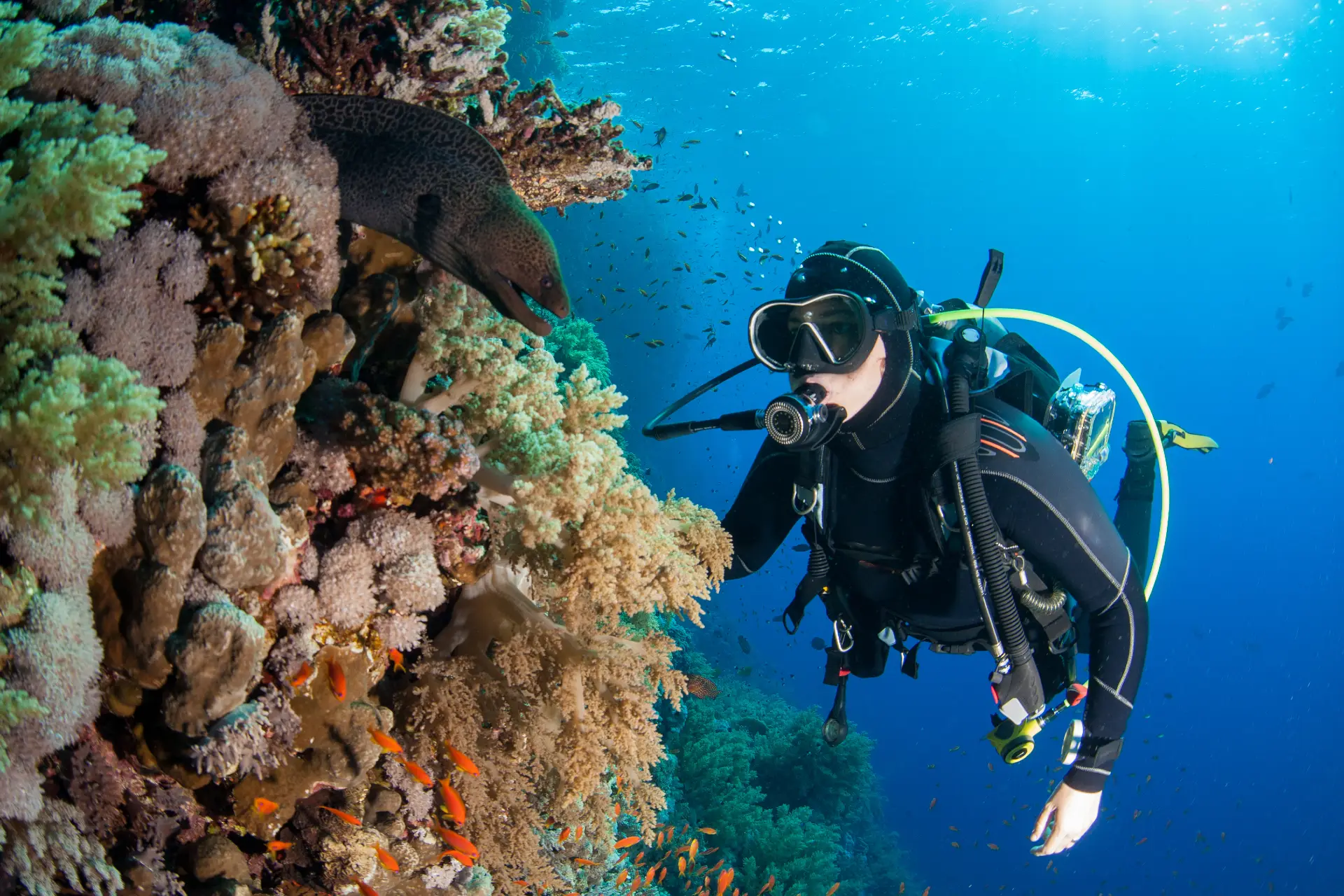
There is a distinct moment in every diver’s life when they cross the invisible line from “enthusiastic hobbyist” to “dive professional.” It usually happens during your PADI Divemaster training.
Suddenly, you aren’t just responsible for yourself anymore; you are responsible for a group. You are demonstrating skills, managing logistics, deploying surface marker buoys in sweeping currents, and acting as an underwater problem-solver.
When you make this leap, you quickly realize something fundamental: rental gear is no longer going to cut it.
As a recreational diver, lightweight travel gear is great. As a working Divemaster, your equipment is your office, your uniform, and your toolbox. It needs to be durable, reliable, and functional day in and day out.
If you are planning to join us in Bohol for your Divemaster Internship at Sierra Madre Divers, or if you are gearing up to find your first job in the industry, here is the definitive guide to the gear you must own to be taken seriously as a working professional.
1. The Life Support: Regulators and BCDs
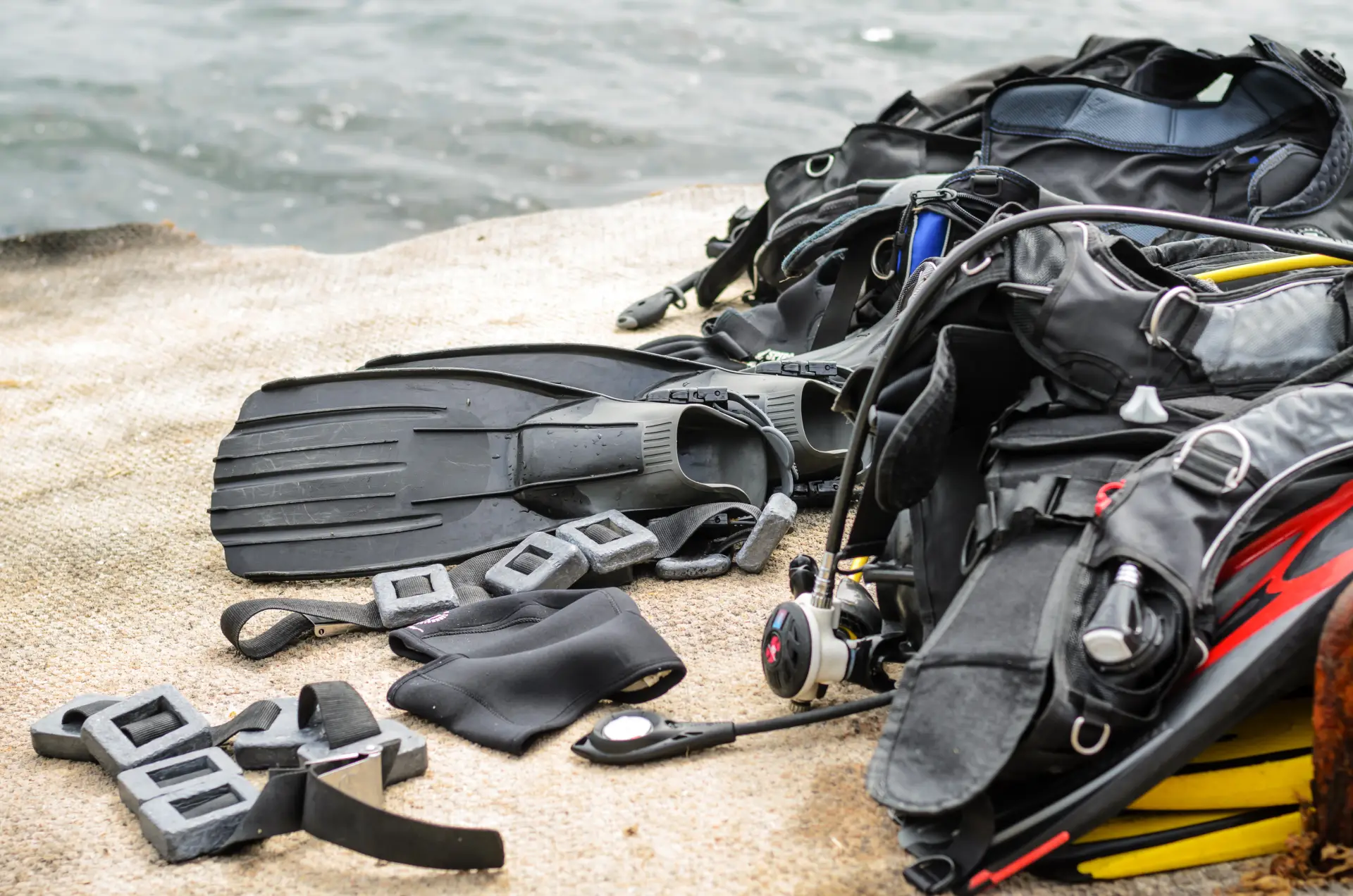
When you dive three to four times a day, six days a week, your core life support equipment takes an absolute beating. Salt, sun, and constant use will destroy cheap gear in a matter of months.
The Regulator: Serviceability is King As a pro, you don’t necessarily need the most expensive titanium regulator on the market, but you do need a “workhorse.”
- The Golden Rule: Buy a brand that can be serviced anywhere in the world. If you are working on a remote island and your O-ring blows or your first stage starts free-flowing, you need to be able to fix it. Brands like Scubapro, Apeks, and Aqualung are industry standards because spare parts are ubiquitous from the Philippines to the Caribbean.
- DIN vs. Yoke: While yoke valves are common in Southeast Asia, investing in a DIN regulator with a yoke adapter is the professional standard. It provides a more secure, high-pressure seal and is mandatory if you ever decide to transition into Technical Diving later in your career.
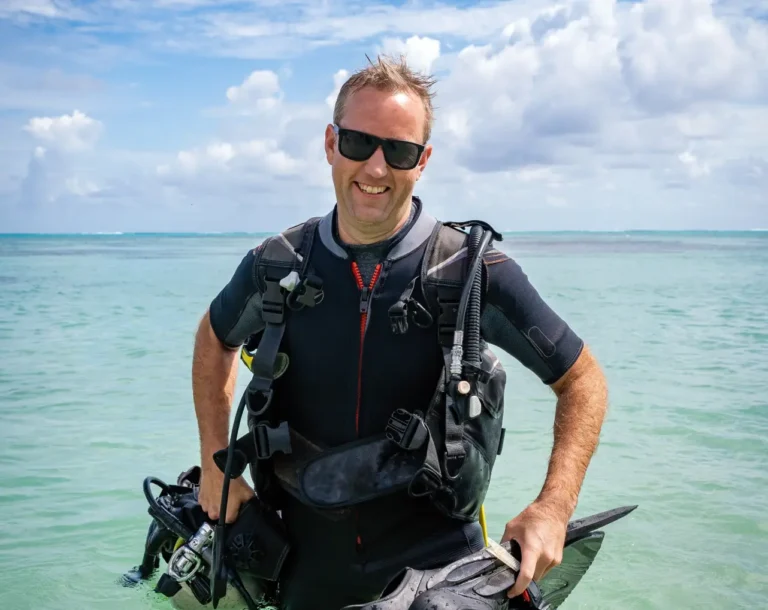
The BCD: D-Rings and Durability Your BCD is no longer just for neutral buoyancy; it is a utility belt.
- Backplate and Wing vs. Jacket: Many modern professionals are moving away from traditional jacket BCDs to Backplate and Wing systems. They are infinitely customizable, incredibly durable (a stainless steel backplate will outlive you), and they leave your chest completely free of clutter.
- Hardware: Whether you choose a wing or a jacket, you need heavy-duty, stainless steel D-rings. Plastic clips will snap when you try to clip off a heavy stage tank or haul yourself onto a boat.
- Pockets: You need accessible pockets or D-rings to store your professional accessories (more on that below).
2. The Command Center: The Dive Computer
When you are guiding, your dive computer is the most important piece of electronics you own. You are not just monitoring your own no-decompression limits (NDL); you are managing the profiles of an entire group.
- Readability: You need a screen that you can read instantly, at a glance, in bright sunlight or the dark depths of a night dive. High-contrast OLED or color screens are highly recommended.
- Conservatism: Because you are diving repetitively, day after day, your body absorbs a lot of nitrogen. You need a computer that allows you to adjust the conservatism algorithms to keep yourself safe over a long season.
- The Battery Factor: If your computer dies, you cannot work. Period. Invest in a computer with a user-changeable battery (keep spares in your dry bag) or a highly reliable rechargeable system.
3. The Workhorses: Fins and Exposure Protection
Your legs and your skin are your primary tools. Protect them.
The Fins: Ditch the Splits Lightweight, flexible travel fins or split fins are great for a calm vacation, but they are a liability for a working Divemaster.
- Power and Control: If a guest panics on the surface and you need to tow them back to the boat against the current at Pamilacan Island, you need stiff, powerful fins. Look for heavy-duty rubber fins (like the Scubapro Jet Fin, Apeks RK3, or similar models).
- The Frog Kick: These stiffer, shorter fins are explicitly designed for the frog kick, back-kicking, and helicopter turns—the exact techniques you must master to maneuver around fragile reefs and your students.
- Spring Straps: Rubber heel straps snap. It’s not a matter of if, but when. Spring straps or bungee straps are practically indestructible and allow you to don and doff your fins with one hand while holding the boat ladder in rough seas.
The Wetsuit: Your Daily Armor Even in the warm 28°C (82°F) waters of Bohol, diving multiple times a day will eventually drain your core temperature.
- The 3mm Full Suit: A full-length 3mm wetsuit is the industry standard for tropical professionals. It keeps you warm on your third dive of the day, but more importantly, it protects your arms and legs from accidental scrapes, stinging hydroids, and the sun.
- Pockets (Again): Many pros glue neoprene thigh pockets onto their wetsuits to hold wetnotes or a spare mask, keeping their BCD streamlined.
4. The Professional Toolkit: The “Pocket Stuff”
This is what truly separates the pros from the amateurs. If you show up to a job interview without these items, you will not be hired.
- Delayed Surface Marker Buoy (DSMB) and Spool: This is non-negotiable. As a guide, you must be able to deploy a DSMB from depth (usually 5 meters/15 feet) to signal the boat captain that your group is ascending, especially on drift dives. Buy a high-quality, high-visibility orange or yellow DSMB with an open bottom and an over-pressure valve. Pair it with a simple finger spool (at least 15-20 meters of line).
- A Cutting Tool: Forget the giant, Rambo-style strapped-to-the-calf knives. They are a snag hazard and look intimidating to students. A small, sharp line-cutter (like an Eezycut Trilobite) mounted on your computer strap or BCD waistband is far more effective for cutting tangled fishing lines.
- A Spare Mask: Masks break. Straps snap. If a student’s mask breaks underwater, the dive is over unless you can hand them a spare. Always carry a cheap, low-profile backup mask in your BCD pocket.
- Wetnotes or a Slate: Communication underwater is vital. Hand signals only go so far. A waterproof notebook (wetnotes) allows you to write detailed instructions to a struggling student, draw a map of the dive site, or write down the name of that rare nudibranch you just found.
5. The Unseen Essential: Save-a-Dive Kit
A working Divemaster is part guide, part mechanic. You need a small dry box containing the essentials to fix minor gear failures on the boat so you don’t have to cancel a dive.
- Contents: Assorted O-rings, a multi-tool or wrenches, zip-ties, spare mask straps, spare fin straps, silicone grease, and a mouthpiece. It costs $30 to build but is worth its weight in gold when you save a guest’s dive.
Invest in Your Career
Buying all of this equipment at once can feel daunting, but remember: you are not buying toys; you are buying the tools of your trade. Good gear makes your job easier, keeps your students safer, and lasts for years.
If you are ready to put this gear to the test and turn your passion into a profession, there is no better place to start than Bohol. Contact Sierra Madre Divers today to learn more about our comprehensive PADI Divemaster Internships. We don’t just teach you how to guide; we teach you how to thrive in the industry.