Learn to Dive
Learn to Dive in Your Own Language in Bohol
Picture yourself kneeling on the sand at six metres, brand new to all of this, and your instructor turns to run through the next skill. Now imagine every word of that briefing, and all the theory beforehand, delivered in the language you actually think in. That’s a completely different kind of calm.
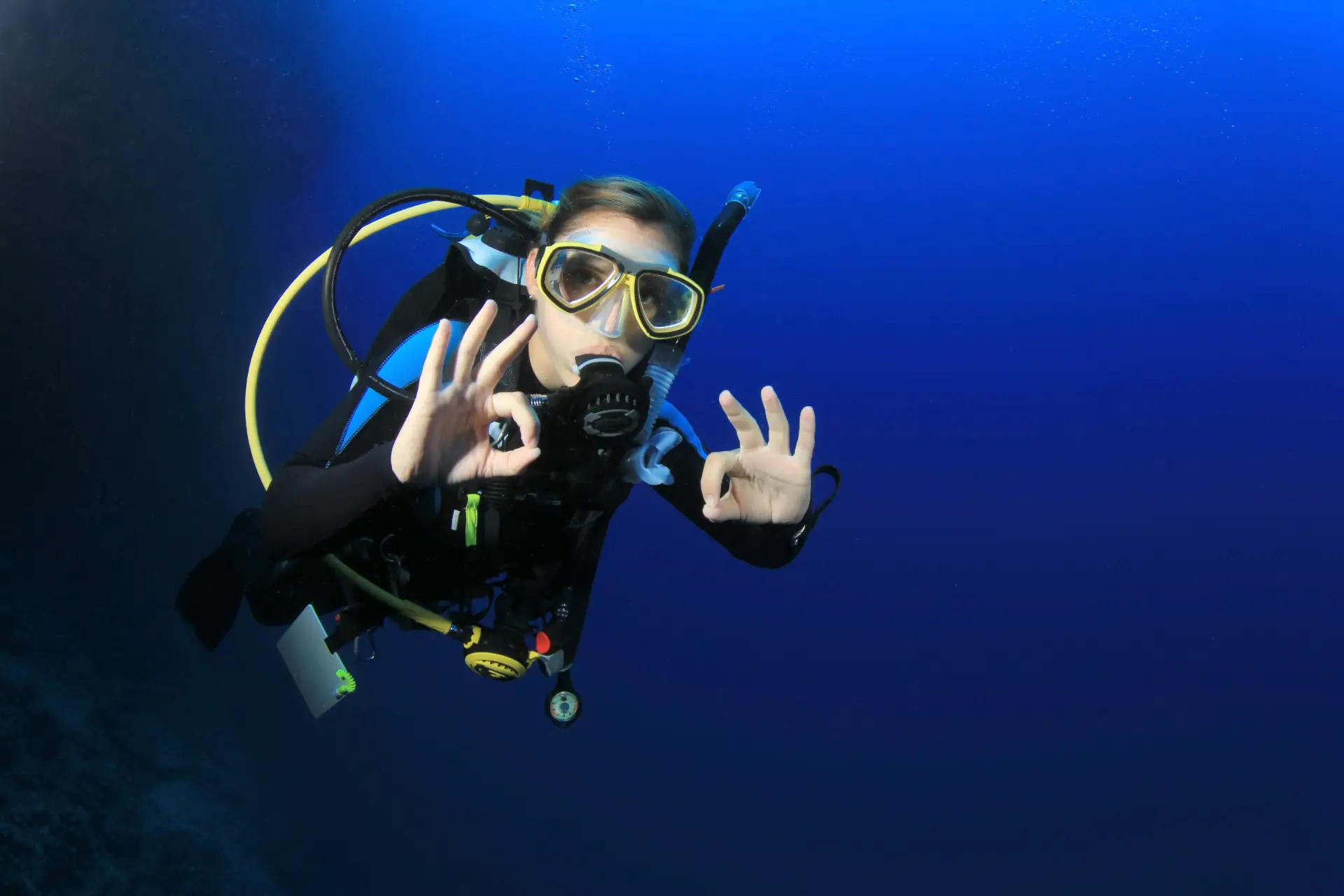
Learning to scuba dive is part physical and part mental. You’re taking on new theory, pressure, buoyancy, gas, the safety rules that keep you alive, while your body gets used to the strange magic of breathing underwater. Doing all of that in your second or third language adds a layer of effort at exactly the moment you’d rather relax and enjoy it.
That’s why, at Sierra Madre Divers, we teach in the language you’re most comfortable in. Right now our instructor team can run courses in eight of them.
The languages we speak
However you’d say hello, there’s a good chance you’ll hear it back on our dive deck:
That spread covers a huge share of the divers who find their way to Alona Beach, and it means a lot of people get to learn this sport without translating it in their heads first.
It’s a safety thing, not just a comfort thing
Underwater, clear communication is everything. Understanding your briefing, your dive plan and your instructor’s hand signals without stopping to mentally translate means you respond faster and stay calmer when it matters. In a tense moment at depth, the difference between “I think I understood that” and “I know exactly what to do” is enormous. That’s why we treat teaching in your own language as part of diving safely, not a luxury add-on.
It shows up in the classroom too. Dive theory covers real physics and physiology, and it’s far easier to truly understand it, rather than just memorise it for the quiz, when it’s explained in your first language. If you’re curious what that theory involves, we broke it down in our guide to demystifying dive theory.
Especially if you’re nervous
Plenty of people arrive for their first course a little anxious, and that’s completely normal. Breathing underwater for the first time is a genuine leap of faith. A familiar voice makes that leap feel smaller. When the person guiding you speaks your language, you can ask the “silly” question, admit you’re nervous, and actually hear the reassurance land the way it was meant to.
Comfortable students learn faster and have more fun, and they tend to fall in love with diving instead of just surviving the course. We see it every week.
Diving should feel like freedom, not a language exam.
Bohol brings the world together
One of the joys of diving here is just how international Panglao is. On any given day the boat to Balicasag might carry divers from Manila, Hong Kong, Madrid, Stockholm and Milan, all chasing the same turtles and walls. Being able to brief each of them properly, in their own language, is part of what lets such a mixed group share a brilliant day underwater and surface grinning.
It also means that whether you’re booking a first-timer’s Open Water course or working your way up the ladder, you can do it without language ever being the thing that holds you back.
Dive in the Language You Think In
Tell us which course you’re after and which language you’d like to learn in, and we’ll match you with the right instructor. Whatever language you dream in, we’d love to get you underwater in Bohol.
Dive Bohol With Us