The Big 5: Marine Species You Can Expect to See While Diving Balicasag
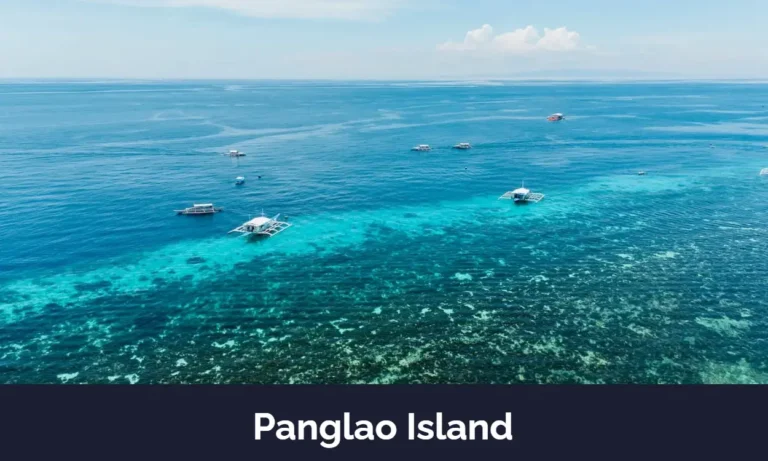
When divers climb aboard our bangka boats at Alona Beach and hear we are heading to Balicasag Island, the energy on the deck immediately shifts.
Balicasag is the undisputed crown jewel of Bohol diving. Because it has been a protected Marine Sanctuary for decades, the sheer volume of life here is staggering. It is one of the few places in the Philippines where you can look closely at the reef wall for microscopic macro critters, only to turn around and see a massive pelagic school blocking out the sun.
If you are packing your dive bag and heading to the Visayas with Sierra Madre Divers, here is your underwater checklist. These are the top five iconic marine species you can expect to encounter while drifting along the legendary walls of Balicasag Island.
1. The Resident Sea Turtles (Green & Hawksbill)
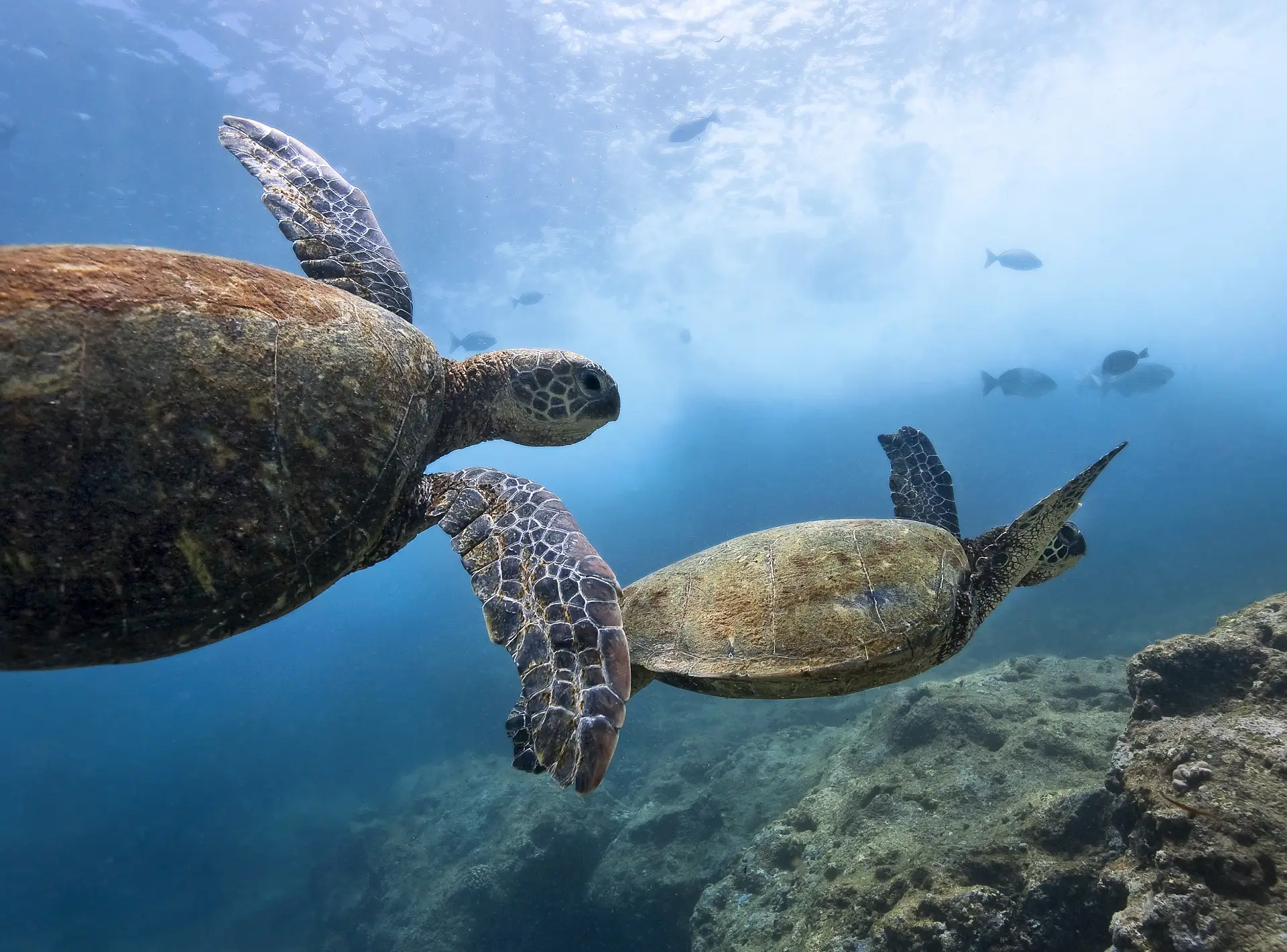
If Balicasag had an official mascot, it would undoubtedly be the sea turtle. The shallow sea grass beds and vibrant coral plateaus at the top of the reef wall provide an endless buffet for these ancient reptiles.
- The Experience: You don’t have to look hard to find them. It is incredibly common to lose count of how many turtles you see on a single dive at sites like Turtle Point or Black Forest. Because they are strictly protected within the sanctuary, they are completely unbothered by scuba divers.
- What to Look For: We primarily see Green Sea Turtles (which have smoother, rounded shells) and the critically endangered Hawksbill Sea Turtles (distinguished by their pointed, beak-like mouths and serrated shell edges). Watch them gracefully graze on the reef, but remember the golden rule: keep your distance and never touch!
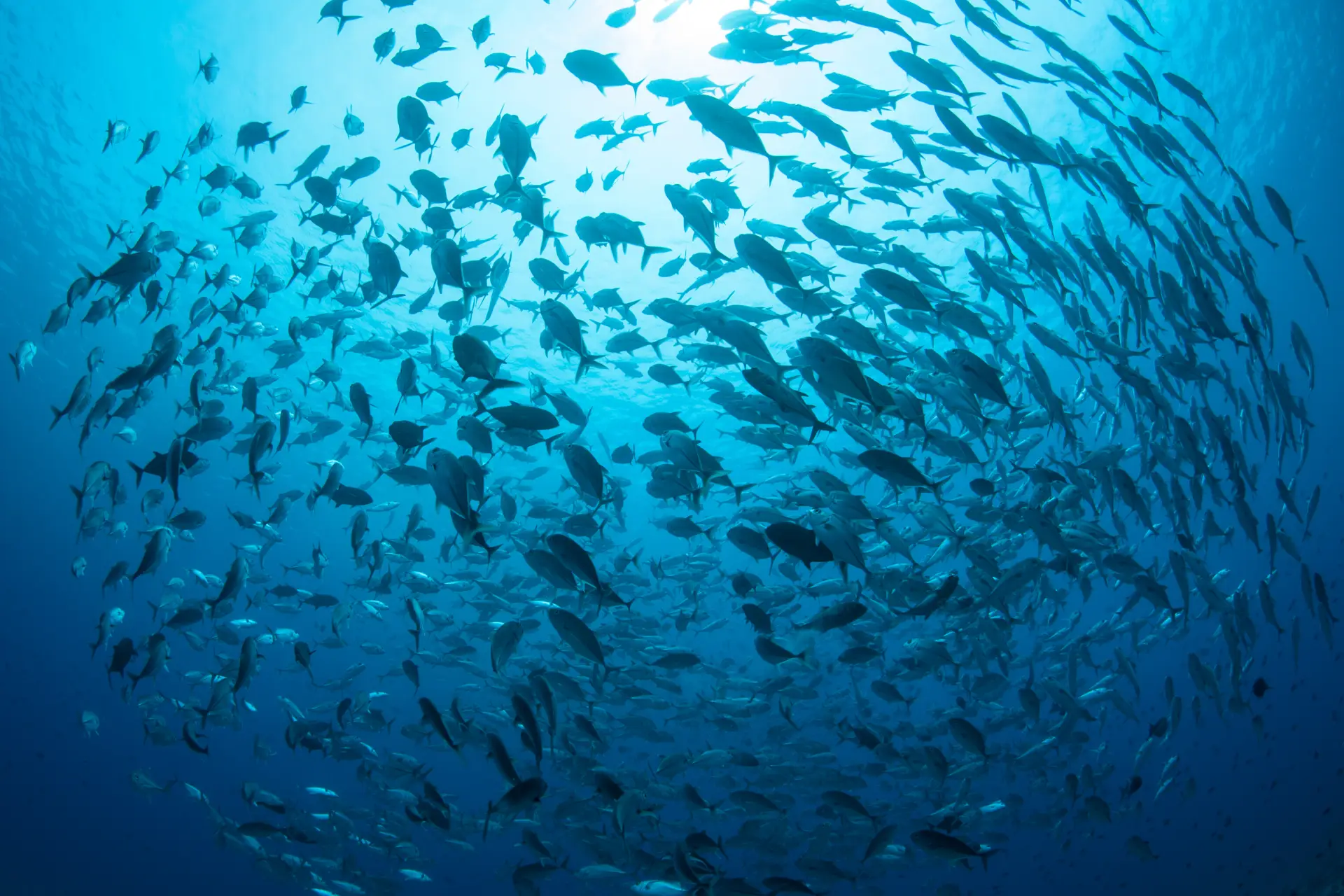
2. The Jackfish Tornado (Bigeye Trevally)
This is the encounter that underwater photographers travel across the globe to capture.
- The Experience: As you drift along the drop-off, your dive guide will point out into the blue. At first, it looks like a dark, shifting cloud. As you get closer, the cloud resolves into thousands upon thousands of silver Bigeye Trevally (locally known as Jackfish).
- The Behavior: They school in a massive, swirling formation that resembles an underwater tornado. If you move slowly and control your breathing, the school will often engulf you, creating a mesmerizing, 360-degree wall of silver fish reflecting the sunlight. It is a humbling and awe-inspiring moment.
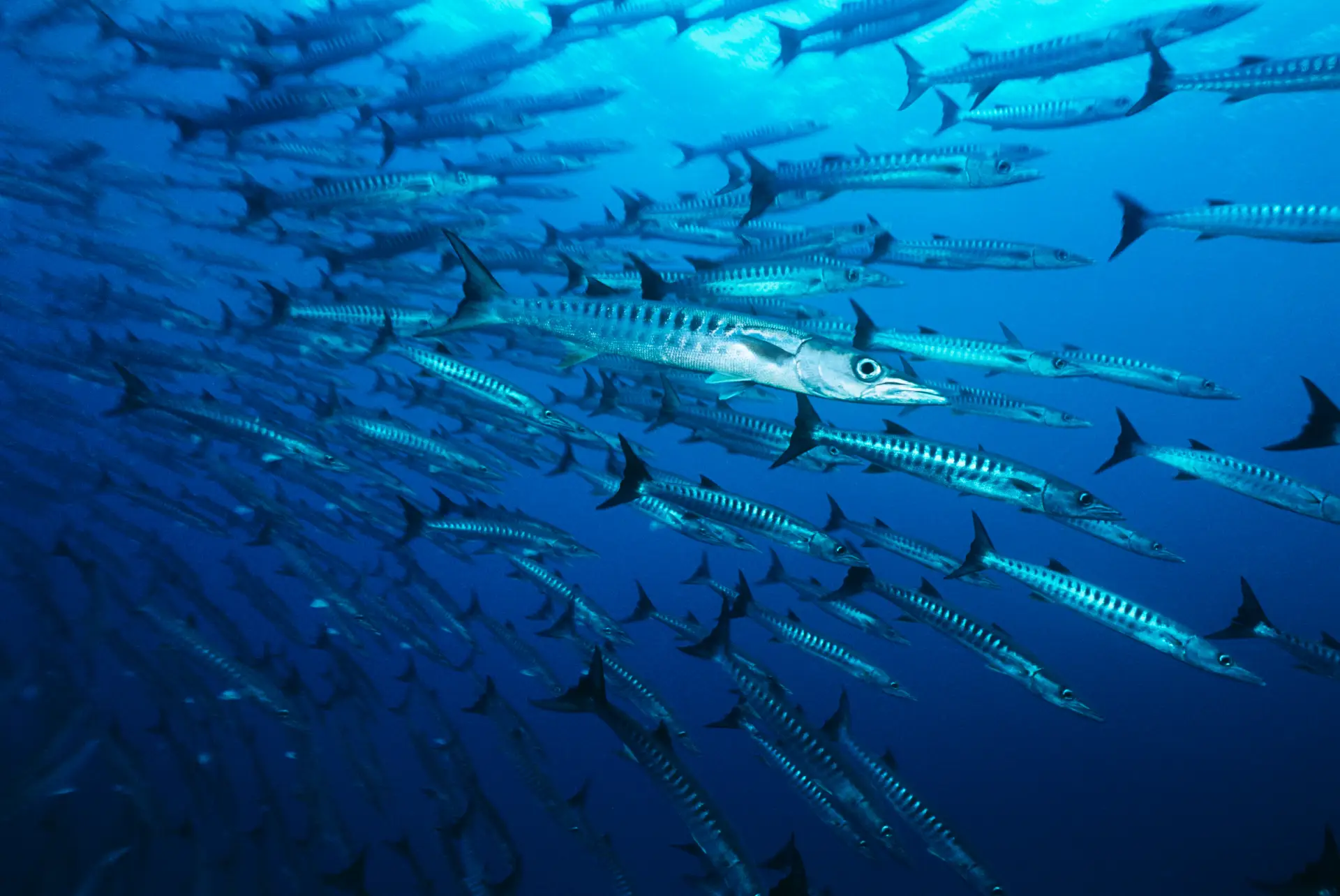
3. Schooling Barracuda (Chevron & Blackfin)
While the jackfish get most of the fame, the barracuda schools of Balicasag are equally impressive—and a bit more intimidating.
- The Experience: Usually spotted hanging out slightly deeper off the wall or riding the currents at the edges of the island, these sleek, torpedo-shaped predators are a thrilling sight. We frequently encounter large schools of Chevron or Blackfin Barracuda.
- The Behavior: Unlike the chaotic swirling of the jackfish, barracuda schools are highly disciplined. They tend to hover in uniform, motionless formations, facing directly into the current, waiting for prey to drift by. Their prominent teeth give them a fierce look, but they pose no threat to respectful divers.
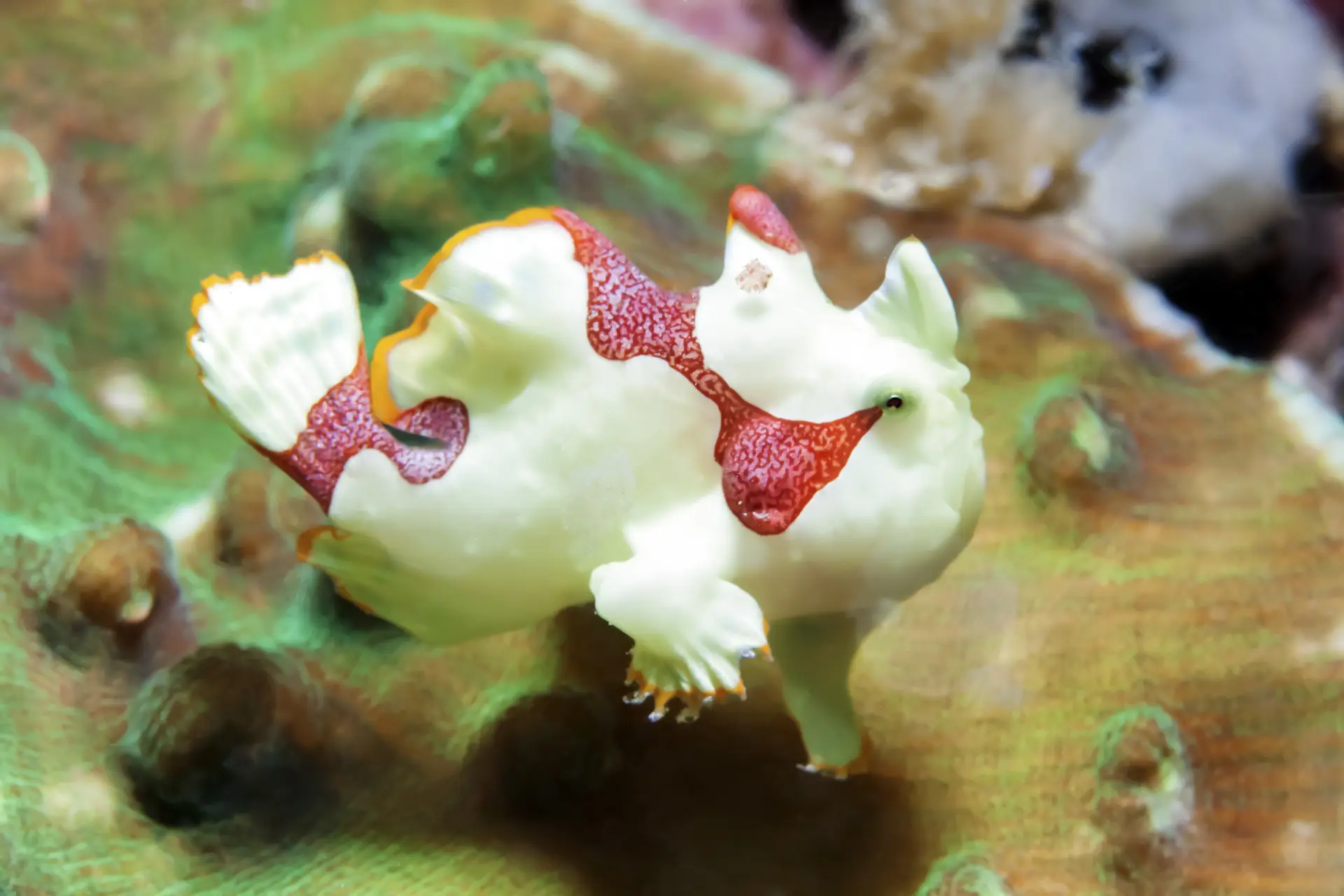
4. The Masters of Camouflage: Frogfish
Balicasag isn’t just about the big pelagics; the walls are a treasure trove for macro enthusiasts. Among the most sought-after prizes are the resident frogfish.
- The Experience: You will rarely spot a frogfish on your own. They are the ultimate masters of disguise, evolving to look exactly like the sponges and corals they sit on. Luckily, the eagle-eyed divemasters at Sierra Madre Divers know exactly which barrel sponges and crevices these grumpy-looking ambush predators like to call home.
- What to Look For: Depending on the site, we often spot Giant Frogfish, Painted Frogfish, and the incredibly textured Warty Frogfish. Watch closely: instead of swimming, they “walk” across the reef using their modified pectoral fins, and use a built-in “fishing lure” on their heads to attract smaller fish.
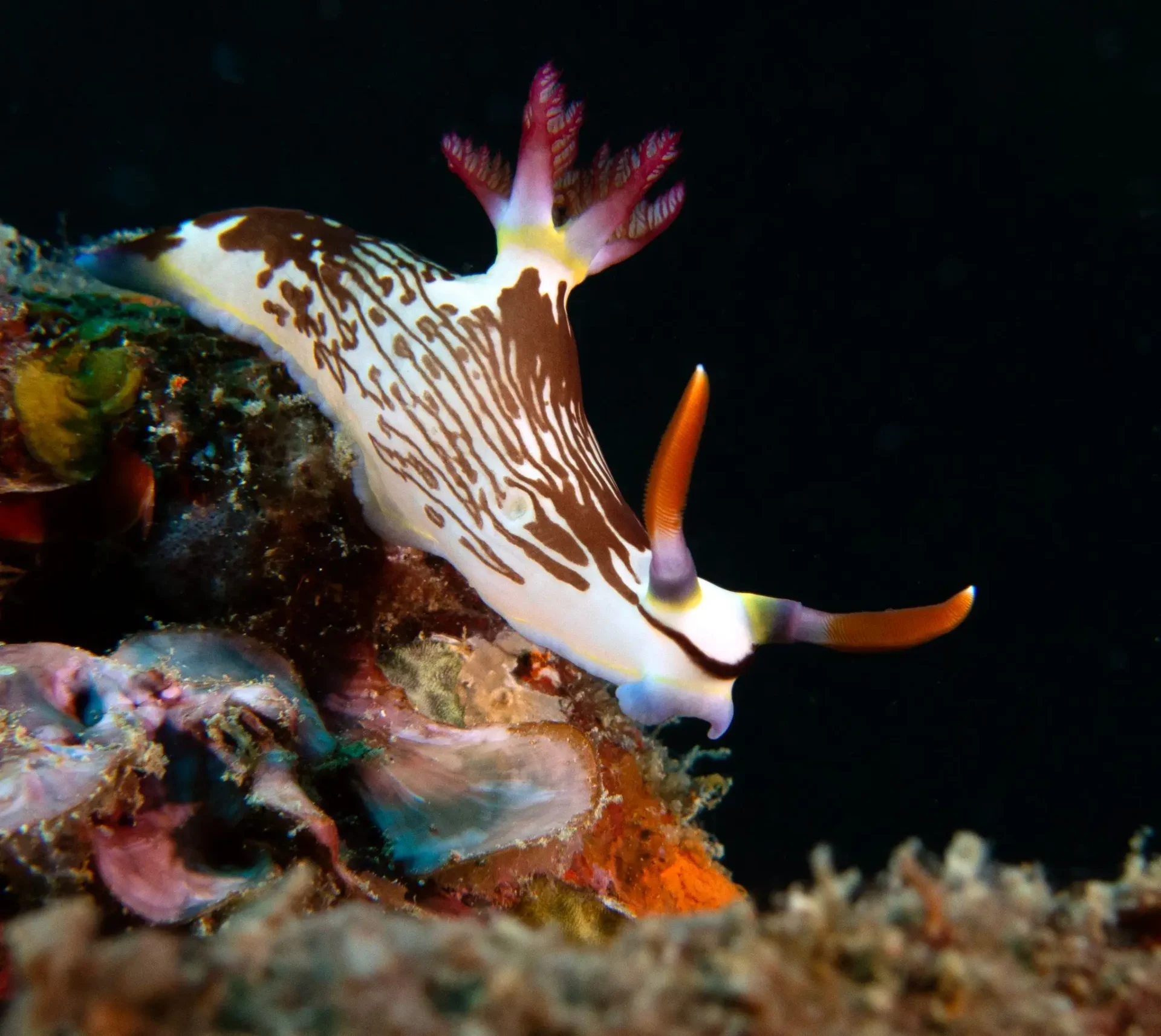
5. Nudibranchs: The Jewels of the Reef
If you love vibrant colors and bizarre biology, the walls of Balicasag will not disappoint. The sheer vertical drops are plastered with an insane diversity of soft corals, providing the perfect habitat for sea slugs.
- The Experience: Nudibranchs (pronounced noodi-branks) are essentially shell-less marine snails, but they come in neon, psychedelic color patterns that warn predators of their toxicity.
- What to Look For: Keep your eyes on the small ledges and hydroids. You can expect to see the classic, blue-and-yellow striped Chromodoris, the frilly and delicate Flabellina, and if you are very lucky, the elusive “Pikachu” nudibranch (Thecacera pacifica). They are slow-moving and highly photogenic, making them the perfect subject to practice your underwater macro photography.
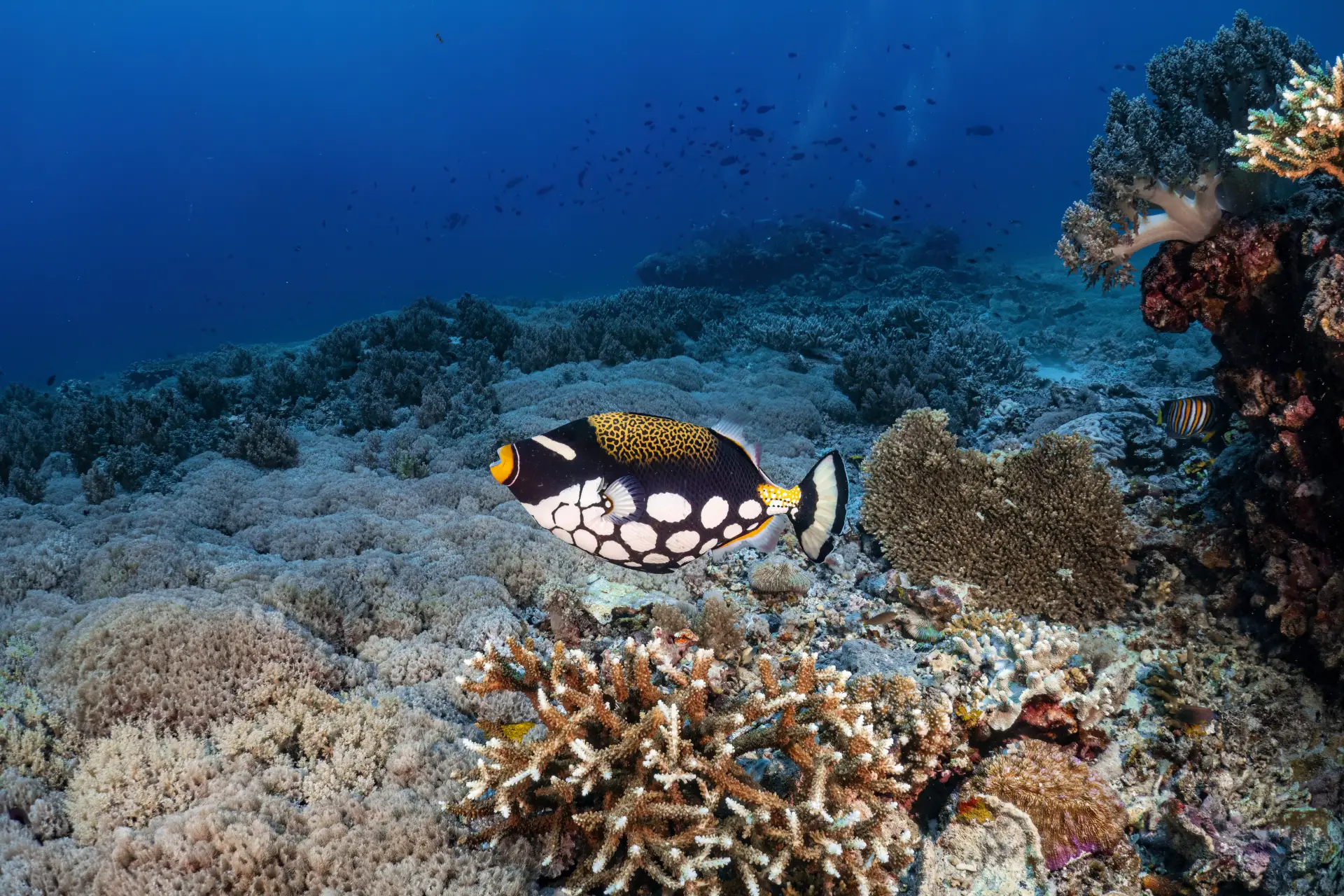
Bonus Warning: The Triggerfish
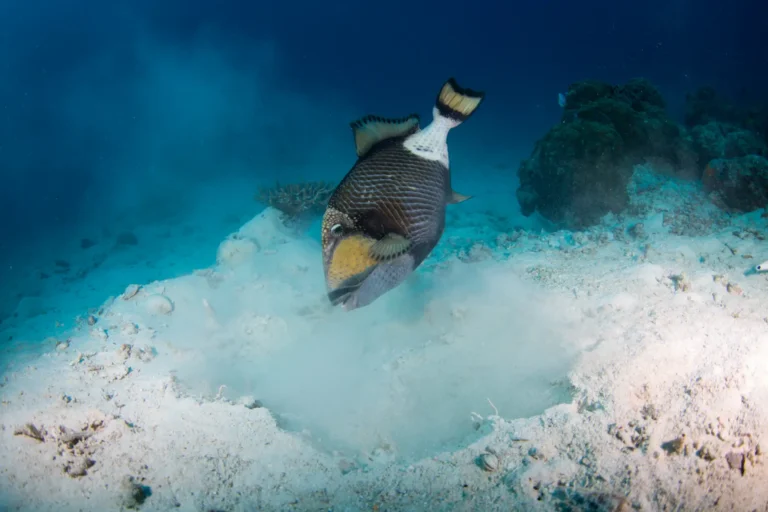
We can’t talk about Balicasag without mentioning the local “security guards.” During their nesting season (typically between May and July), the Yellow-Margin Triggerfish and Titan Triggerfish become incredibly territorial. If you see one aggressively guarding a crater in the sand, give it a wide berth! If you accidentally swim into their cone-shaped territory, they will not hesitate to chase you away by taking a nip at your fins.
Ready to Build Your Logbook?
From massive, swirling tornados of silver to the tiniest neon sea slugs, diving Balicasag Island is an absolute sensory overload. Because it is a highly regulated sanctuary, permits sell out extremely fast.
If you want to cross these iconic species off your bucket list, contact Sierra Madre Divers today to secure your passes and book your ultimate Bohol diving adventure!