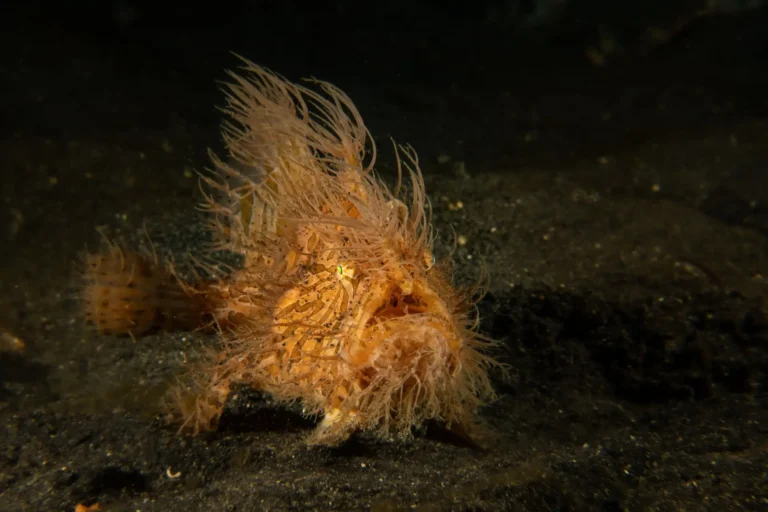
The Ocean’s Grumpiest Angler: Why Finding a Frogfish is the Ultimate Bohol Dive Trophy
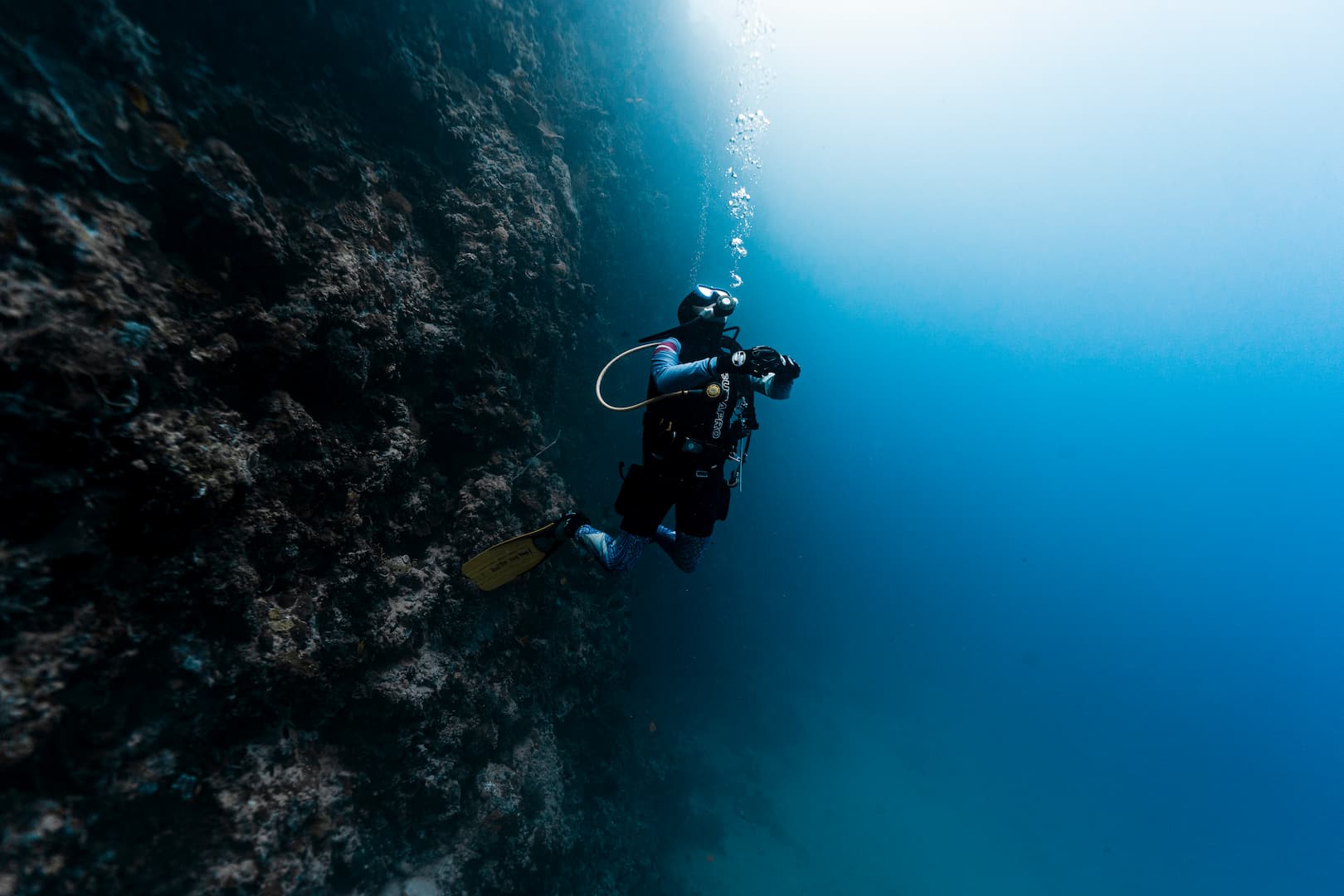
You are hovering perfectly buoyant at 15 meters along the wall at Arco Point. Your Sierra Madre Divers guide is pointing frantically at a yellow, lumpy sea sponge. You stare at it. You squint. You look at the guide, confused. They point again, closer this time.
You stare harder at the sponge. Suddenly, the sponge shifts its weight. A tiny, frowning mouth opens, and a highly unamused eye swivels to look at you.
Congratulations. You have just been outsmarted by a Frogfish.
For macro diving enthusiasts and underwater photographers visiting Bohol, the frogfish is the holy grail. They are bizarre, incredibly ugly in the cutest way possible, and possess biological superpowers that defy logic. Finding one feels like winning an underwater treasure hunt.
But what exactly are these grumpy-looking lumps of the reef, and how do they survive? Here is a deep dive into the fascinating, strange, and high-speed world of the frogfish, and why the Bohol Sea is one of the best places on earth to hunt for them.
1. The Ultimate Masters of Disguise
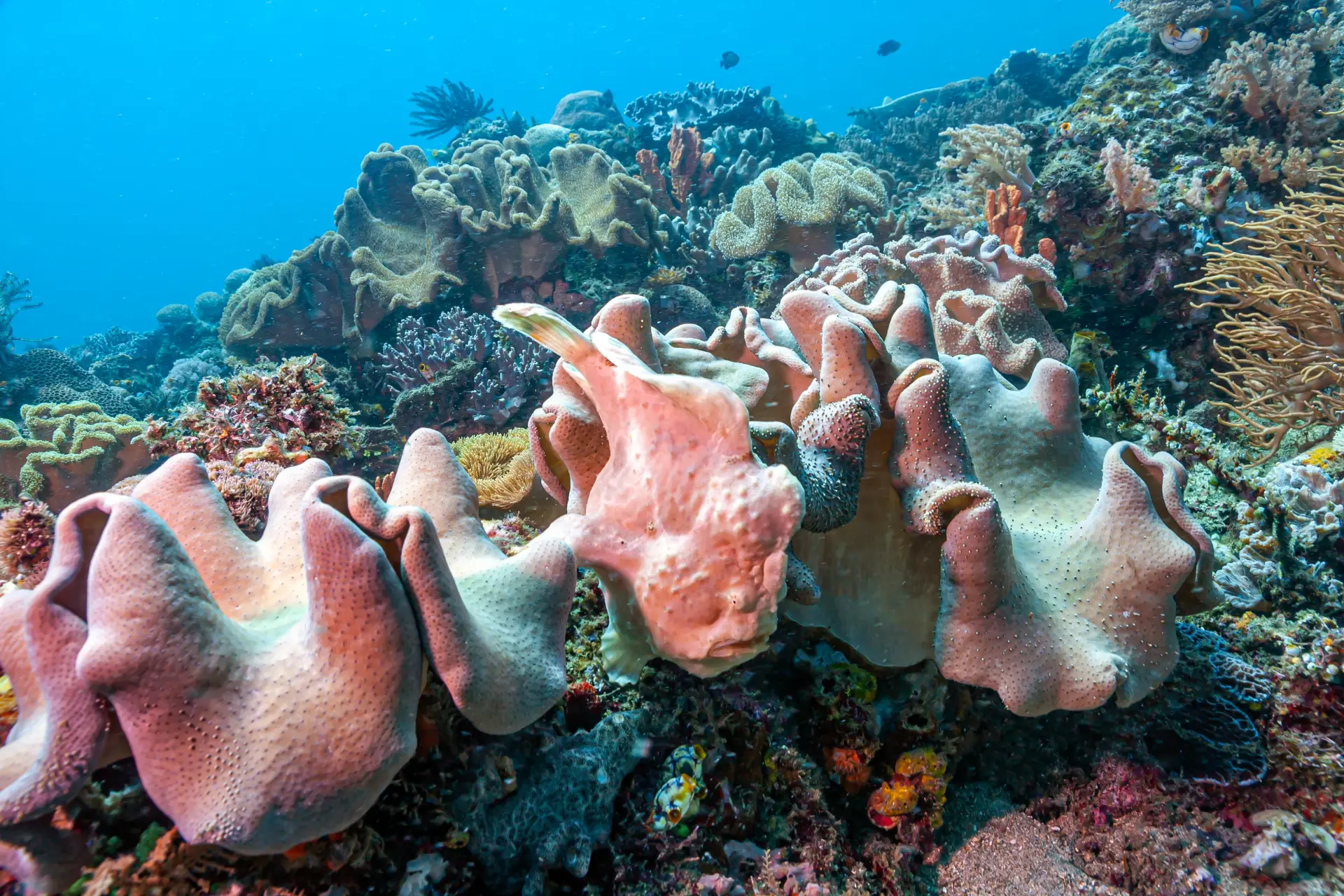
If camouflage were an Olympic sport, the frogfish would win gold every time. They belong to the anglerfish family (Antennariidae), but unlike their terrifying deep-sea cousins, frogfish live on shallow, sunlit coral reefs. Because they are terrible swimmers (more on that later), they cannot outrun predators. Instead, they rely on absolute invisibility.
A frogfish doesn’t just blend in; it becomes its environment.
- Texture and Color: They can change their color to perfectly match the sponges, corals, or algae they live on. But it goes beyond color—their skin is covered in warts, bumps, and fleshy appendages (called spinules) that perfectly mimic the texture of a toxic sea sponge or a patch of fuzzy algae.
- The Waiting Game: They are the ultimate oceanic couch potatoes. A frogfish will find a good spot on the reef and simply sit there, completely motionless, for days or even weeks at a time. They even let algae grow on their skin to enhance their disguise.
2. They Have a Built-In Fishing Rod
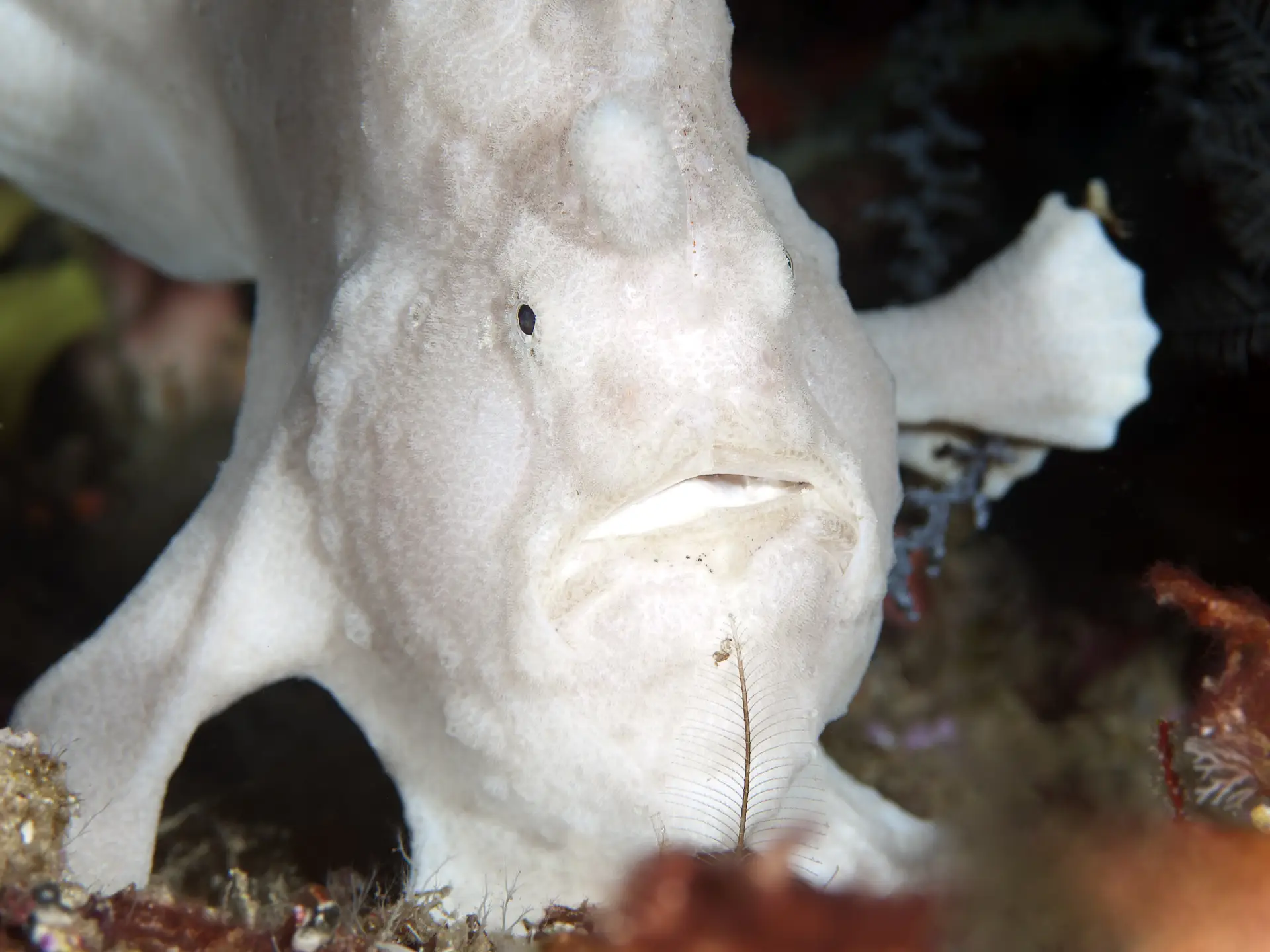
Frogfish are carnivores, but since they are too slow to chase down a meal, they have to bring the meal to them. They do this using one of the most incredible adaptations in the animal kingdom: a built-in fishing rod.
The first spine of their dorsal fin has evolved into a highly specialized appendage called the illicium (the rod), topped with a fleshy lure called the esca (the bait).
- The Bait and Switch: Depending on the species of frogfish, the lure might look exactly like a small, wriggling worm, a tiny shrimp, or even a small fish.
- The Cast: When a hungry reef fish swims by, the frogfish remains perfectly still but begins to flick and twitch its “fishing rod.” The unsuspecting victim swims in to eat the “worm,” completely unaware that the giant yellow sponge behind it is actually a mouth.
3. The Fastest Jaw in the West
The frogfish might live its life in slow motion, but when it is time to eat, it executes the fastest strike of any vertebrate on the planet.
When the prey gets close enough to the lure, the frogfish attacks. But it doesn’t bite; it vacuums. It expands its oral cavity to up to twelve times its normal resting volume in a fraction of a millisecond.
This massive, instant expansion creates a powerful vacuum that literally sucks the prey—and the water surrounding it—into the frogfish’s mouth. The strike happens in about 6 milliseconds. To put that into perspective, it takes a human roughly 300 milliseconds to blink an eye. The frogfish’s attack is so fast that the victim is swallowed whole before its brain even registers that the sponge moved. They can even swallow fish that are twice their own size!
4. The Fish That Prefers to Walk (and Jet Propel)
If you watch a frogfish move, you will quickly realize it doesn’t swim like a normal fish. Because they lack a swim bladder (the organ that helps most fish maintain buoyancy), they are heavier than water.
- Walking: Over millions of years of evolution, their pectoral and pelvic fins have evolved into sturdy, jointed, limb-like appendages. They use these “arms and legs” to literally walk or hobble across the ocean floor and climb up coral heads.
- Jet Propulsion: If a frogfish is startled and absolutely must swim to escape, it uses a bizarre method of jet propulsion. It gulps water into its mouth and violently forces it out through its small, tube-like gill openings (which are located behind its “legs”). This shoots the chunky fish forward in a clumsy, comical, but surprisingly effective burst of speed.
Where to Find Frogfish in Bohol
Bohol’s diverse underwater topography—specifically the abundance of massive sponges and intricate wall structures—makes it a global hotspot for frogfish spotting. We regularly encounter several species here, including the Giant Frogfish (which can grow to the size of a football), the vibrant Painted Frogfish, and the bumpy Warty Frogfish.
If you want to cross this master of disguise off your bucket list, here are the sites we target at Sierra Madre Divers:
- Arco Point (The Hole in the Wall): The rubble slopes and the wall surrounding the famous tunnel are prime frogfish real estate. This is where we often find the smaller, brightly colored Painted Frogfish hiding among the tunicates.
- Doljo Point: Remember those Giant Barrel Sponges we mentioned in our Doljo guide? Those are the favorite armchairs of the Giant Frogfish. You can often find them wedged deep into the folds of the sponge, looking like just another lumpy piece of the coral.
- Kalipayan (Happy Wall) Night Dives: While they hunt during the day, they are often easier to spot at night. Under the beam of a dive torch, their colors (especially the bright reds and yellows) pop against the dark reef, and you might even catch them actively “fishing” with their lures.
The Ultimate Test for Your Dive Guide
Finding a frogfish requires patience, an understanding of marine biology, and an incredibly trained eye. You can swim past a dozen of them and never know they were there.
This is where the local expertise of the Sierra Madre Divers guides truly shines. Our team dives these reefs every single day. We know which specific sponge a resident frogfish likes to sleep on, and we know how to spot the subtle curve of a grumpy mouth hidden in the rubble.
Ready to play the ultimate game of underwater hide-and-seek? Book your next dive package with us, pack your macro lens, and let’s go find the grumpiest angler in the ocean.