Take the Weight Off Your Back: Why the PADI Tec Sidemount Course is a Game-Changer
When most people picture a technical diver, a very specific image comes to mind. You picture someone weighed down by a massive, rigid, incredibly heavy set of double steel tanks strapped to their back, trudging slowly toward the water like an astronaut preparing for a moonwalk.
For decades, the back-mounted twinset was the only way to carry the redundant gas needed for technical diving. But the diving world is evolving rapidly, and a sleek, modern alternative is taking the tec community by storm.
Welcome to the world of Sidemount Diving.
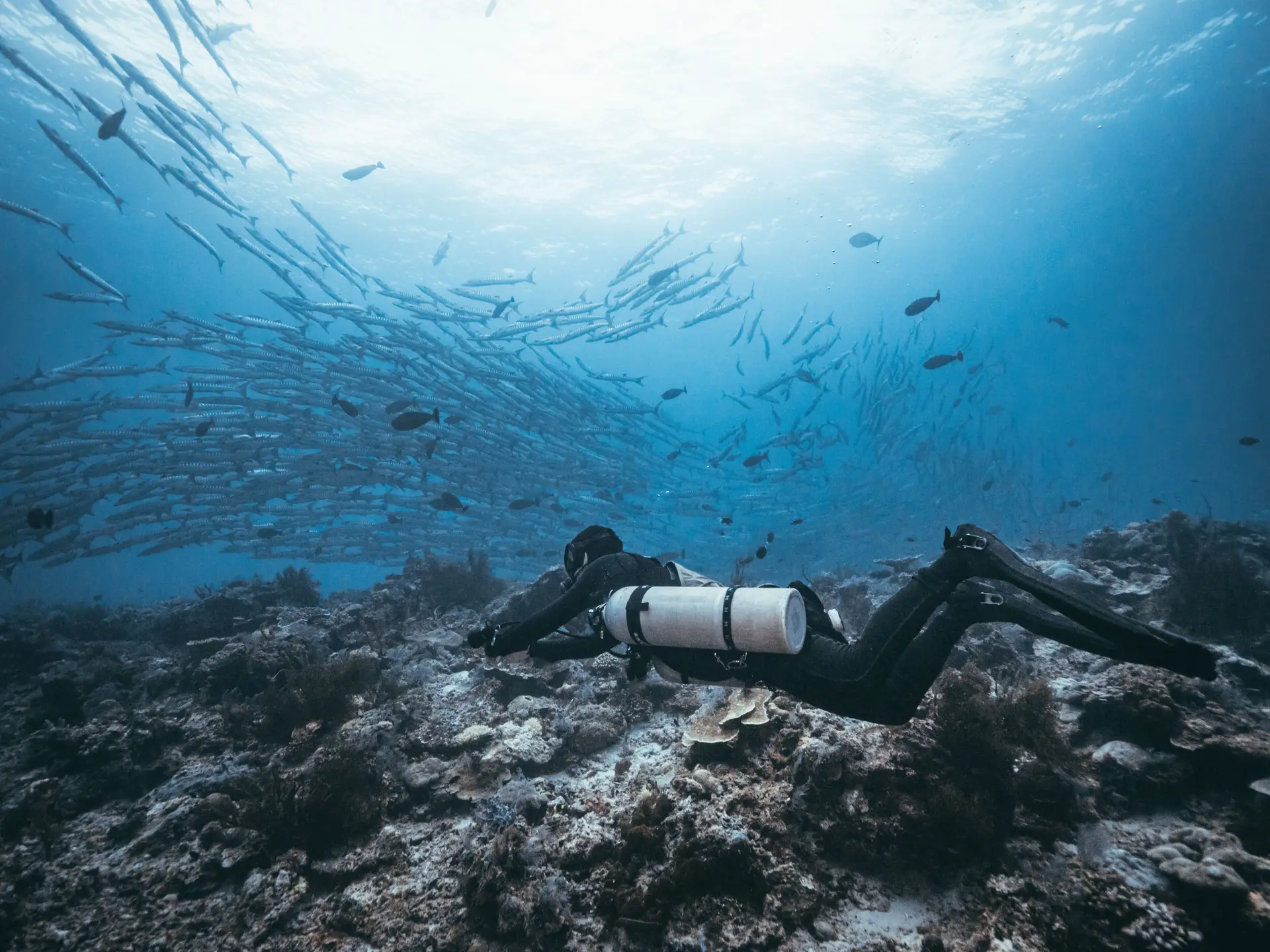
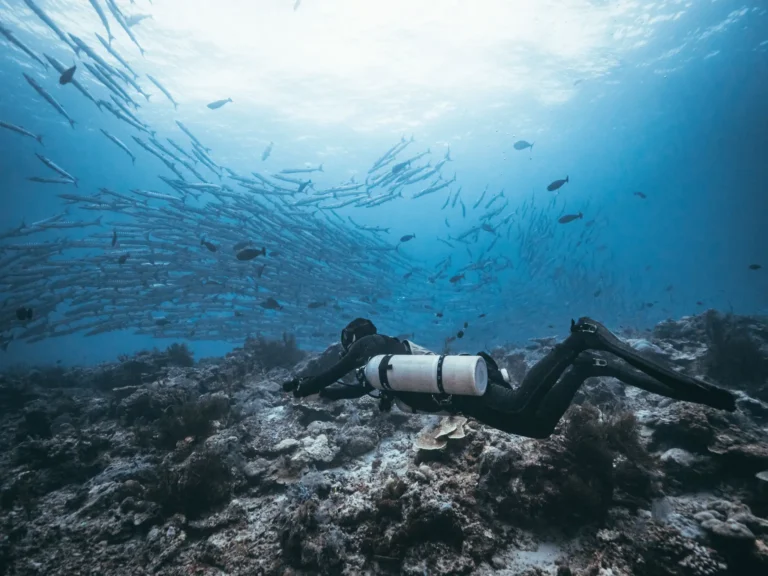
Instead of carrying tanks on your back, sidemount allows you to configure your cylinders alongside your torso, tucked neatly under your arms. It is a configuration that was originally designed by cave divers to squeeze through impossibly tight restrictions, but it has now become one of the most popular ways to dive in the open ocean.
If you are looking to take your first steps into technical diving, or if you are an experienced diver looking for a more comfortable way to carry redundant gas, the PADI Tec Sidemount Diver course at Sierra Madre Divers is the perfect place to start. Here is why taking the tanks off your back will completely revolutionize your diving experience.
1. Goodbye Back Pain: The Topside Logistics
Let’s be honest: scuba gear is heavy. If you have any history of lower back pain or knee issues, carrying a traditional twinset across a moving boat deck can be a miserable, and sometimes dangerous, experience.
This is where sidemount shines, especially in the Philippines.
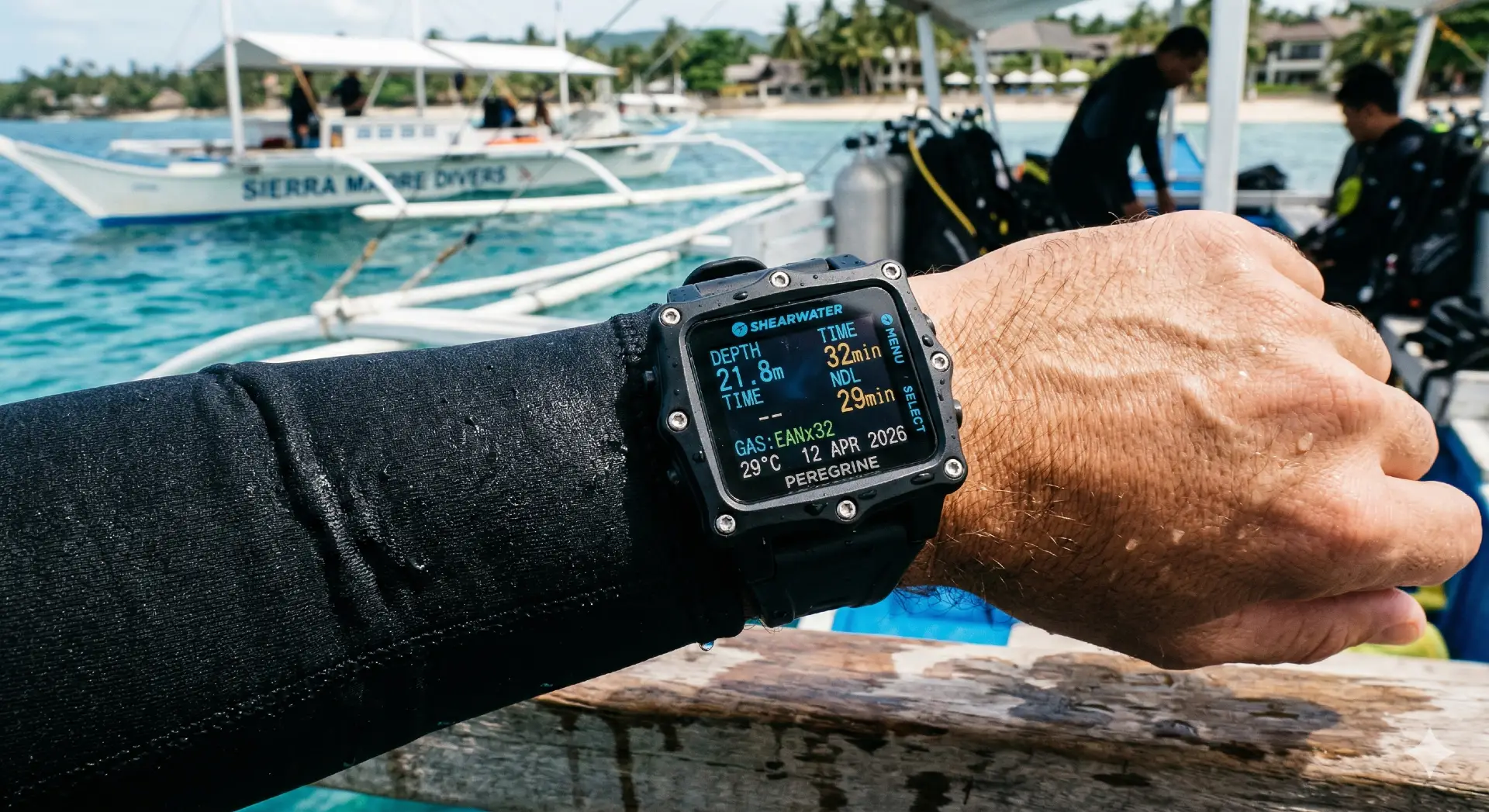
In Bohol, we dive from traditional bangka boats (outrigger boats). While these boats are incredibly stable on the water, navigating their narrow walkways with a heavy twinset on your back requires serious balance.
With sidemount, the topside logistics are completely transformed. You wear a lightweight, minimalist harness to the edge of the boat. Once you are seated at the exit point—or even floating comfortably in the water—the boat crew hands you your cylinders one by one. You simply clip them to your harness and descend. At the end of the dive, you unclip the tanks in the water, hand them up, and climb the ladder with virtually no weight on your back. It is a game-changer for physical comfort.
2. The Ultimate “Superman” Trim
When you strap a heavy cylinder to your back, your center of gravity shifts upwards. To maintain a flat, horizontal position (proper trim), you often have to rely heavily on your BCD and counter-weights.
In sidemount, the tanks are positioned on the sides of your body, perfectly aligning with your lungs and your natural center of buoyancy. This creates an incredibly stable, balanced profile.
When you dive sidemount along the deep walls of Balicasag Island, you feel like Superman flying through the water. Because there is no tank behind your head, you can look straight up without bumping your valves. Because the tanks are tucked under your armpits, your profile is incredibly streamlined, meaning you create less drag, swim faster with less effort, and significantly improve your air consumption.
3. Unmatched Safety and Valve Access
One of the core principles of technical diving is redundancy. If a piece of equipment fails, you need a backup, and you need to be able to fix the problem fast.
In a traditional back-mounted twinset, your tank valves and first-stage regulators are located behind your head. If a regulator starts free-flowing, you have to reach backward, blindly feel for the correct knob, and attempt to shut it down—a drill that requires a lot of shoulder mobility and practice.
In sidemount, your valves and first stages are located right in front of you, beneath your armpits.
- You can actually see your equipment.
- If a regulator free-flows, you can identify which one it is instantly.
- Shutting down a valve takes seconds and requires no awkward reaching.
This visual confirmation and immediate accessibility drastically reduce the stress of handling underwater emergencies, making you a much safer, more confident diver.
4. The Perfect Gateway to Tec
The PADI Tec Sidemount Diver course is not just a standalone specialty; it is the ultimate foundation for the rest of your technical diving career.
If your goal is to eventually take the PADI Tec 40, 45, and 50 courses to execute deep decompression dives, you can choose to do all of that training in a sidemount configuration. Learning the complexities of decompression theory and gas planning is much easier when you are already supremely comfortable and balanced in your gear.
Course Prerequisites: You don’t need to be an elite tec diver to start this course. You just need to be a PADI Advanced Open Water Diver with at least 30 logged dives (though we highly recommend having your Enriched Air/Nitrox certification as well).
Redefine Your Profile with Sierra Madre Divers
During your 3-to-4-day course with us, you won’t just learn how to clip on tanks. Our expert TecRec instructors will teach you the intricate art of customizing your harness, routing your hoses for a perfectly clean profile, and mastering the specific finning techniques required to glide effortlessly through the water.
The dramatic drop-offs and clear waters of Panglao offer the perfect training ground to test your new skills and experience the freedom of an unburdened back.
Are you ready to streamline your dive? Contact the technical team at Sierra Madre Divers today to book your PADI Tec Sidemount course and experience the ocean from a completely new angle.