Ditching the Blue Blur: Why Bohol is the Ultimate Classroom for Your PADI Underwater Photography Course
We have all seen it. A diver surfaces with a massive smile, practically vibrating with excitement. “Did you see that turtle?!” they yell, scrambling onto the boat. They excitedly grab their underwater camera—maybe a brand-new GoPro, maybe a compact rig in a shiny housing—and pull up the footage to show the group.
We crowd around the tiny screen. And what do we see? A blurry, aggressively blue smudge that might be a turtle, or might be a rock, surrounded by a blizzard of white particles.
Capturing the magic of the underwater world is incredibly difficult. Water absorbs light, steals colors, and magnifies particles. You cannot simply point and shoot the way you do on land. To get those crisp, colorful, magazine-quality shots, you need to understand the unique physics of water and how to manipulate light.
That is exactly what the PADI Digital Underwater Photographer (DUP) specialty course is designed to teach you. But where you take this course dictates how successful you will be.
If you want to master your camera, you need a classroom with perfect lighting, cooperative subjects, and calm conditions. Here is why the reefs of Bohol, guided by the team at Sierra Madre Divers, provide the perfect environment to transform your blurry blue smudges into framed masterpieces.
1. The “Studio” Conditions: High Visibility and Calm Waters
Imagine trying to learn how to drive a manual transmission car during a hurricane. That is what it feels like trying to learn underwater photography in a ripping current with three meters of visibility.
When you are learning to balance your ISO, aperture, and shutter speed underwater, you need time and stability.
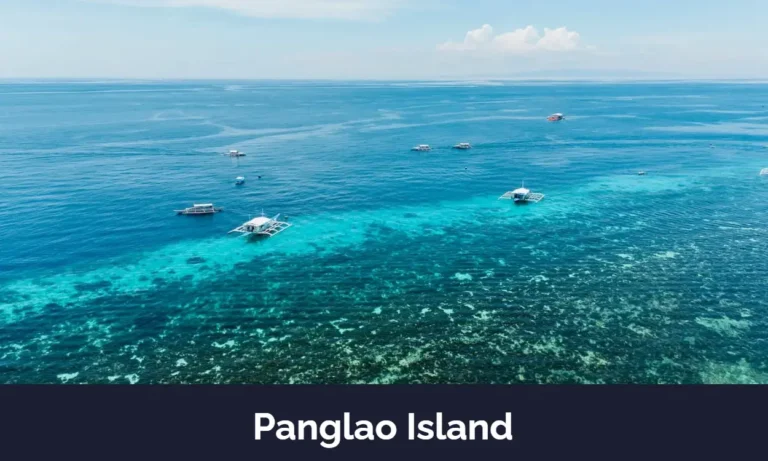
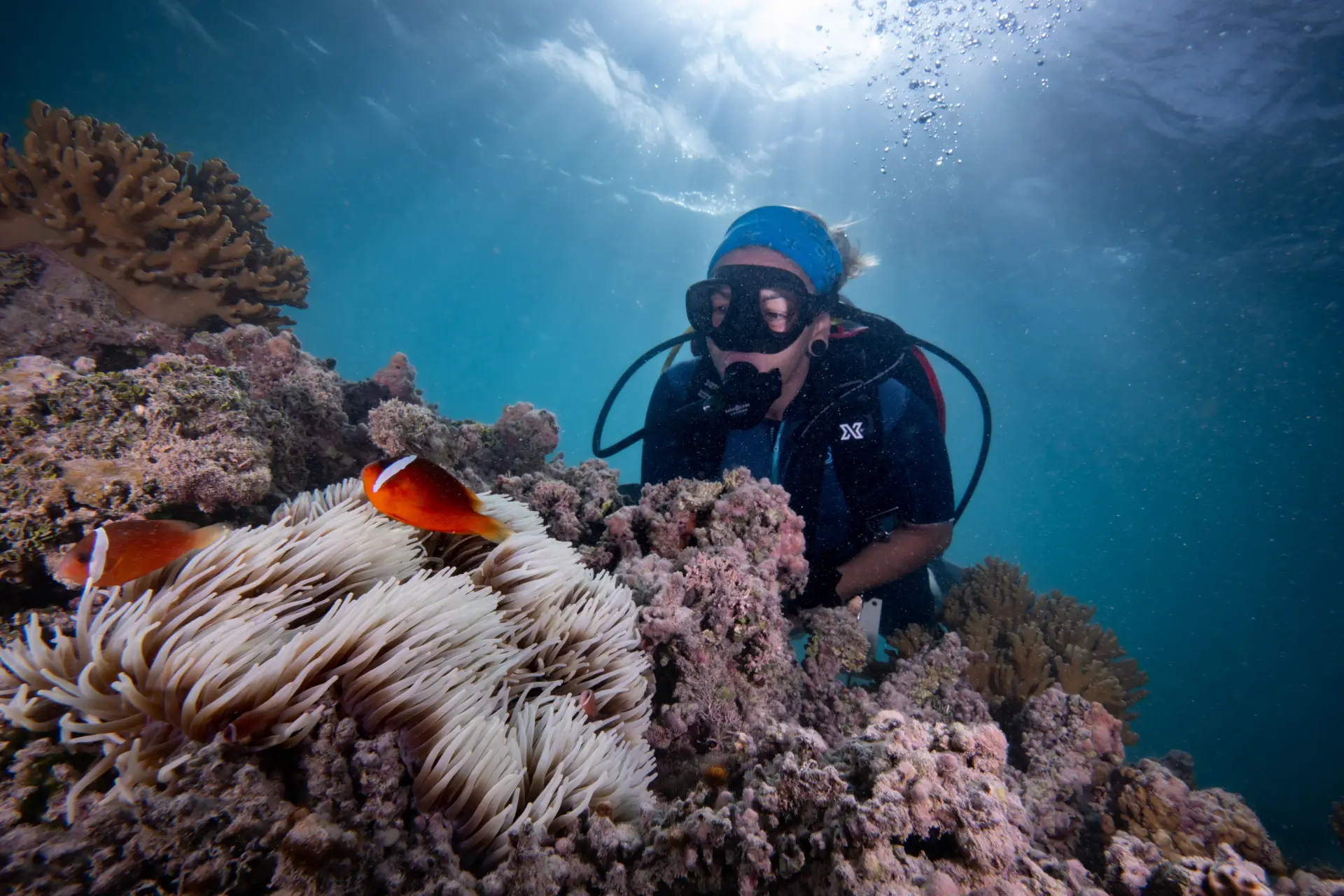
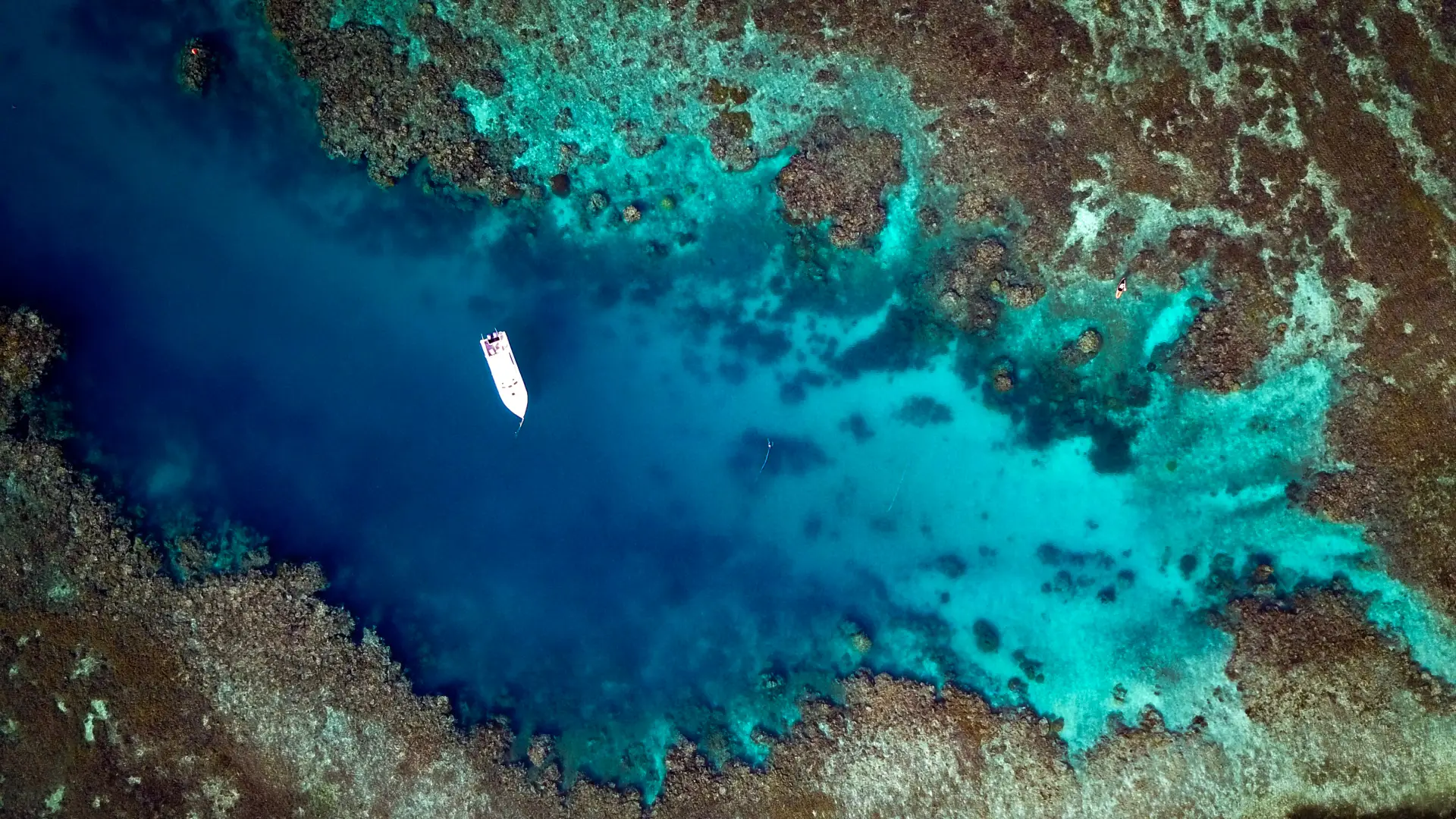
The Bohol Advantage: The dive sites directly off Alona Beach and Panglao Island act as the perfect photography studios.
- Zero Current Zones: We have numerous protected, shallow sites where the current is virtually nonexistent. This allows you to lock in your buoyancy, hover motionless, and dial in your settings without constantly fighting to stay in place.
- Exceptional Clarity: As we discussed in our seasonal guides, the visibility in the Bohol Sea frequently exceeds 20 to 30 meters. Clear water means less “backscatter” (the snow-like effect caused by your strobe light hitting floating particles). It allows you to practice wide-angle lighting techniques with clean, crisp results.
2. The Best “Models” in the Business: Macro Mastery
For a beginner underwater photographer, fast-moving fish are your worst enemy. By the time you get your camera focused and your strobes positioned, the fish is gone, leaving you with a perfectly lit photo of a rock.
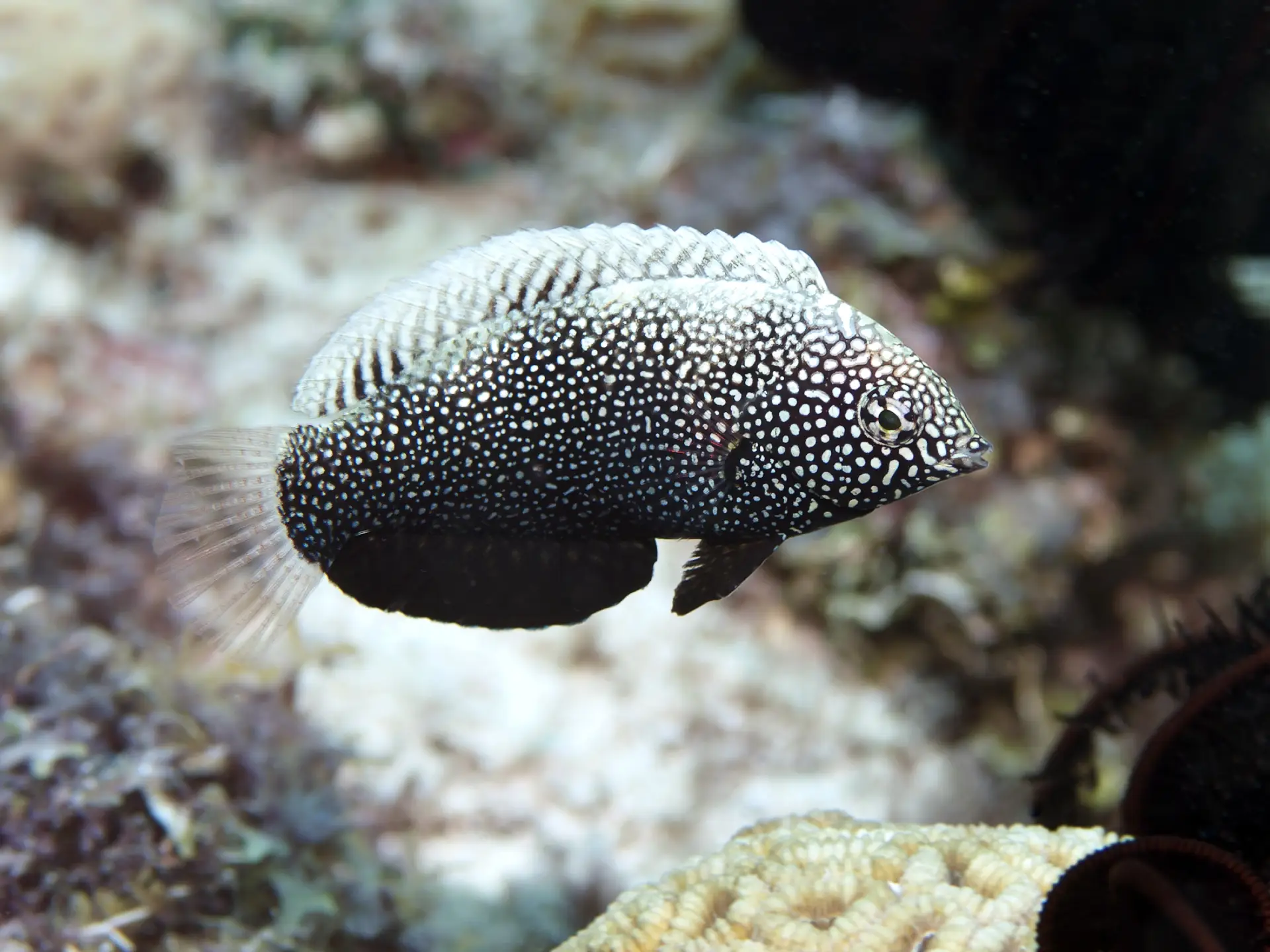
The best way to learn lighting and focus is to shoot macro (small) subjects that sit perfectly still. Bohol is a globally recognized macro paradise, offering you the most patient models in the ocean.
The Macro Subjects:
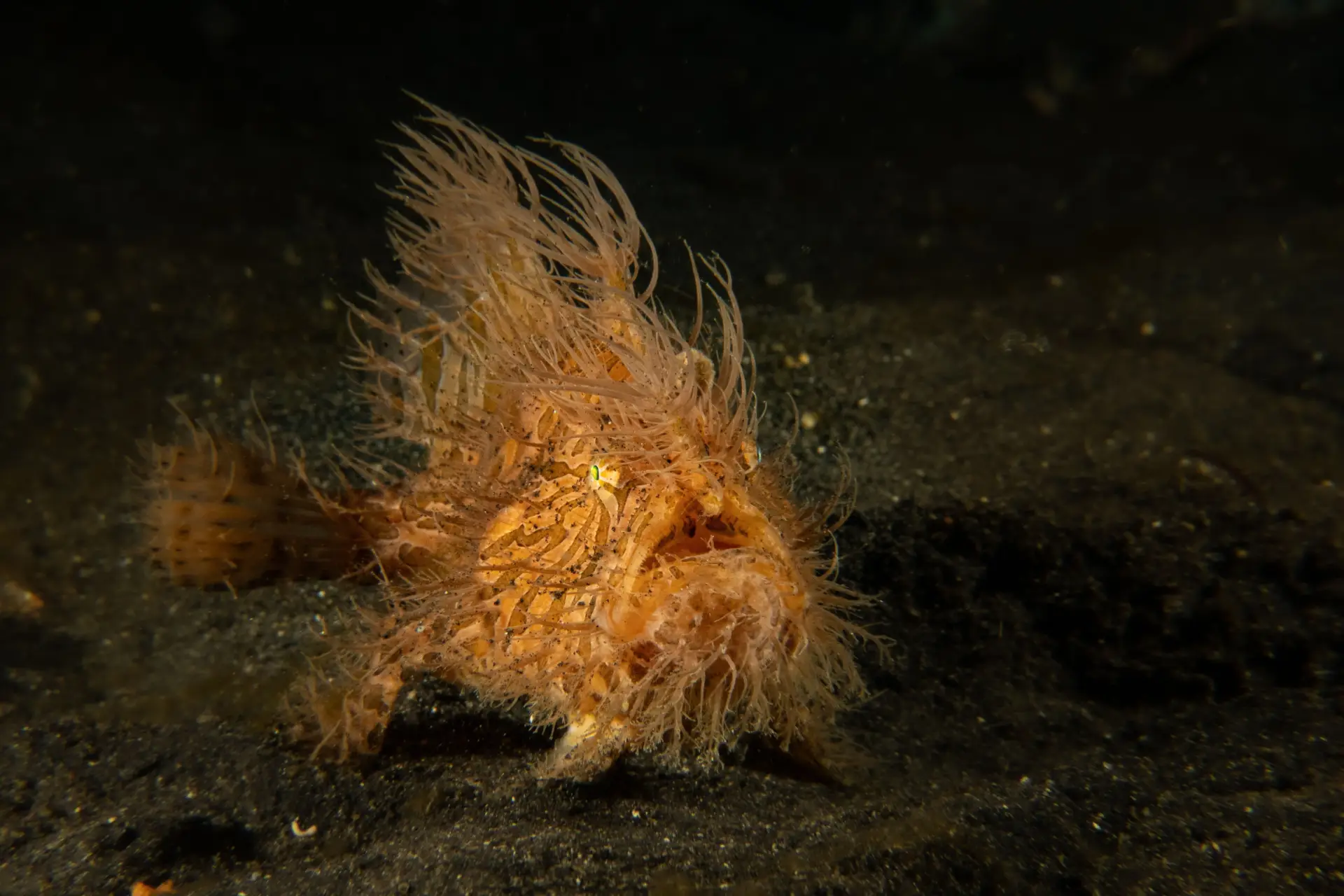
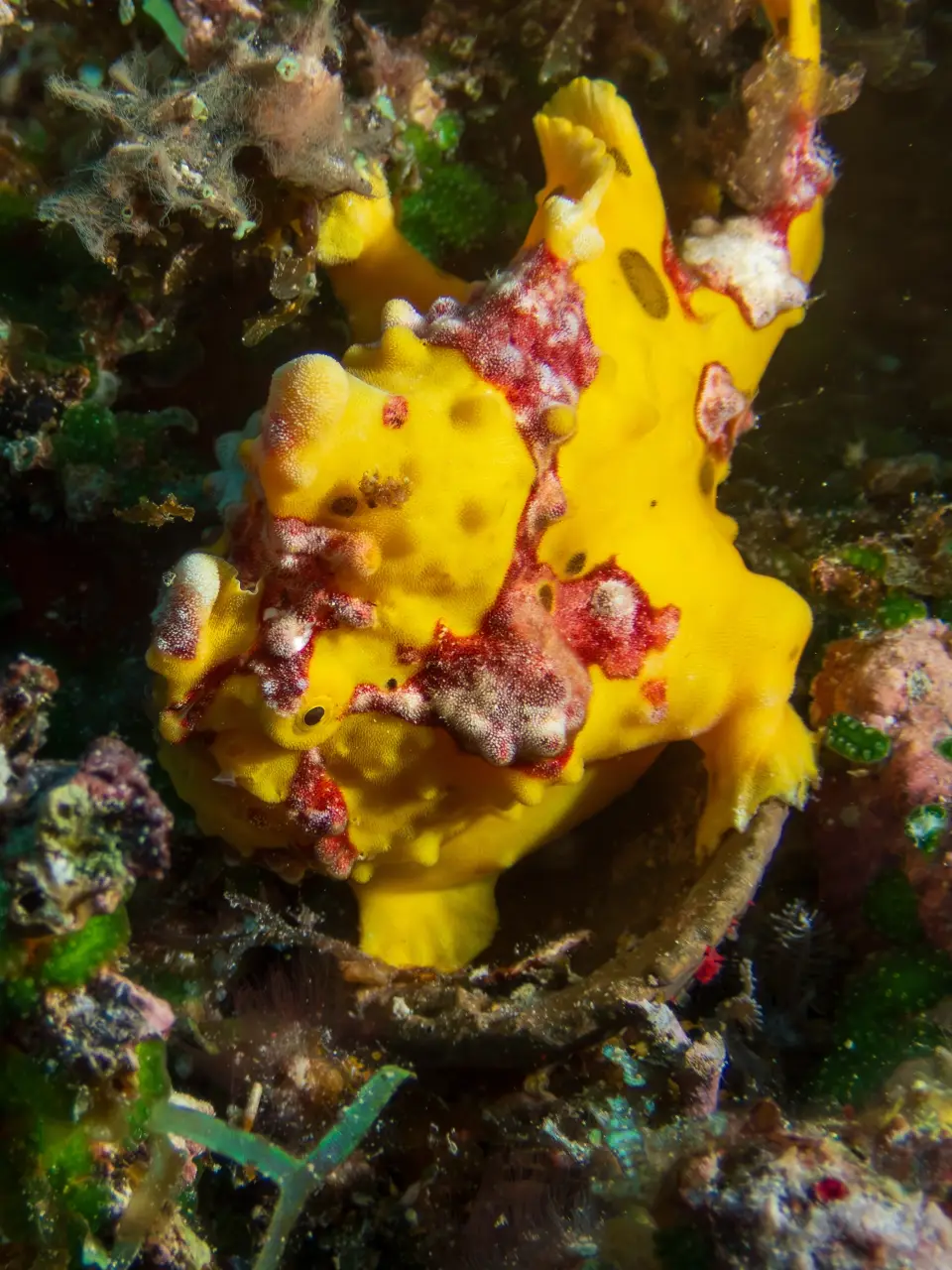
- Giant Frogfish: These bizarre, sponge-like fish are ambush predators. Their entire survival strategy relies on them not moving a single muscle. You can spend ten minutes hovering in front of a frogfish, adjusting your strobe angles to see how the light changes the texture of its skin, and it will not swim away.
- Nudibranchs: The colorful sea slugs of Arco Point and Doljo are slow-moving and vibrantly colored, making them the ultimate subjects for practicing your macro composition and contrasting colors.
- Seamoths and Pipefish: Finding a Short Dragonfish (Seamoth) walking along the sand gives you the perfect opportunity to practice getting your camera low to the seabed to shoot eye-to-eye, separating your subject from the background.
3. The Wide-Angle Wonders
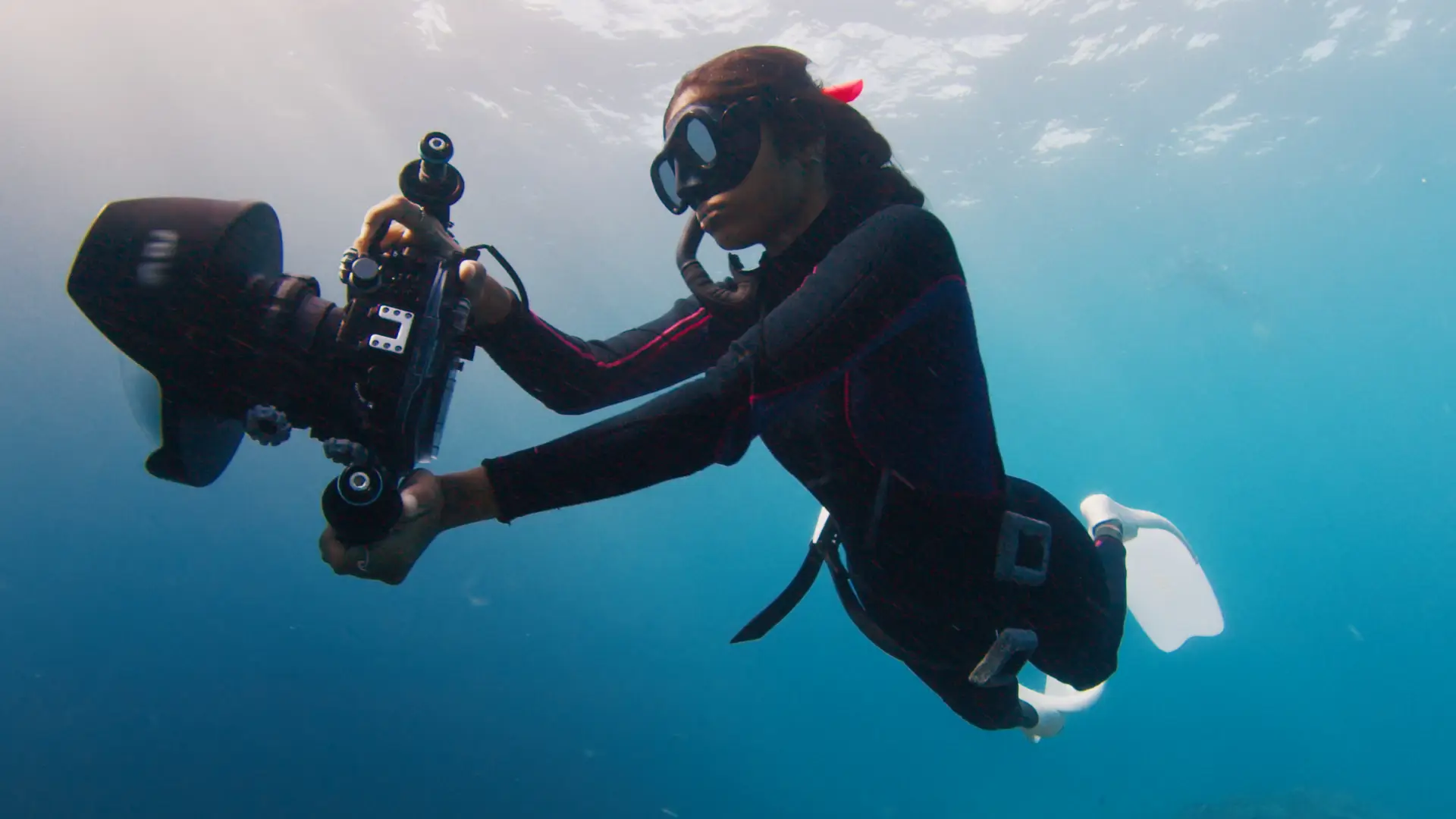
Once you have mastered the small stuff, the PADI DUP course teaches you how to capture the grandeur of the reef. Wide-angle photography requires a completely different approach to lighting (balancing ambient sunlight with your artificial strobes) and composition.
Bohol delivers wide-angle subjects that rival any destination on earth.
The Wide-Angle Subjects:
- The Balicasag Turtles: The Green Sea Turtles at Balicasag Island are incredibly habituated to divers. They graze peacefully on the shallow plateaus, allowing you to slowly approach (without touching or harassing them) and frame the perfect “turtle with a sunburst” shot.
- The Sardine Storm: The massive sardine run at Napaling Reef is a wide-angle photographer’s dream. You will learn how to expose for the shimmering silver of the bait ball without blowing out the highlights, capturing the dynamic shapes of the school as predators dart through it.
- The Giant Sea Fans: The deep vertical walls of Doljo Point are adorned with massive gorgonian fans. These are the perfect subjects for practicing your “close-focus wide-angle” technique, where you light the fan in the foreground with your strobes while capturing the deep blue abyss in the background.
4. Buoyancy: The Hidden Secret of Great Photography
We say it constantly at Sierra Madre Divers: A good photographer is, first and foremost, an exceptional diver.
You cannot take a sharp photo if you are bouncing up and down. More importantly, you cannot call yourself a good photographer if you are crushing the coral reef to get your shot.
During your PADI Underwater Photographer course with us, we don’t just teach you about f-stops and white balance; we relentlessly drill your buoyancy.
- We teach you how to use your lungs to make micro-adjustments in your depth so you can frame the shot without touching your BCD inflator.
- We teach you the “Frog Kick” and reverse kicking, allowing you to back away from a fragile coral head without kicking up a cloud of sand that ruins your photo and damages the reef.
5. The Digital Darkroom: Post-Processing
The PADI Digital Underwater Photographer course doesn’t end when you get back on the boat. In the era of digital cameras, capturing the image is only half the process.
Back at the Sierra Madre Divers center in Alona Beach, we sit down with you for the crucial “post-processing” workshop.
- We show you how to safely download and back up your files.
- We introduce you to basic editing software (like Adobe Lightroom) to show you how to bring the reds and oranges back into your photos, adjust the contrast, and crop your images for maximum impact.
- We teach you how to analyze your mistakes—looking at a photo with backscatter and explaining exactly how to move your strobes outward and backward on the next dive to fix it.
Your Camera is Useless Without the Knowledge
You can spend thousands of dollars on the best underwater camera housing and dual-strobe setup on the market, but if you don’t understand how light behaves underwater, your photos will still look like blue smudges.
Invest in the knowledge before you upgrade the gear.
Whether you are shooting with a basic GoPro or a full-frame DSLR, the PADI Digital Underwater Photographer course will drastically change the way you see the reef and capture your memories.
Ready to ditch the blue blur and start shooting photos you are proud to print? Let’s get your rig set up. Contact Sierra Madre Divers today to book your photography course in the ultimate underwater studio!