When the Sun Sets, the Real Show Begins: Bohol’s Night-Diving Marine Life
For many divers, the end of the day means rinsing gear, grabbing a beer, and watching the sunset from Alona Beach. But for a select few, the sunset is just the curtain call. As the light fades from the Bohol Sea, a profound transformation takes place underwater.
The reef you explored at 10:00 AM is gone. In its place is a mysterious, vibrant, and bustling nocturnal world that looks, feels, and acts completely differently.
Night diving in Bohol isn’t just about swimming in the dark; it’s about witnessing the “Shift.” It is the time when the herbivores (like Parrotfish) tuck themselves into crevices to sleep, and the carnivores, scavengers, and weirdos of the deep emerge to hunt.
If you have never taken the plunge after dark, you are missing 50% of the ocean’s biodiversity. Here is a guide to the strange and wonderful cast of characters that come out to play in Bohol after the sun goes down.
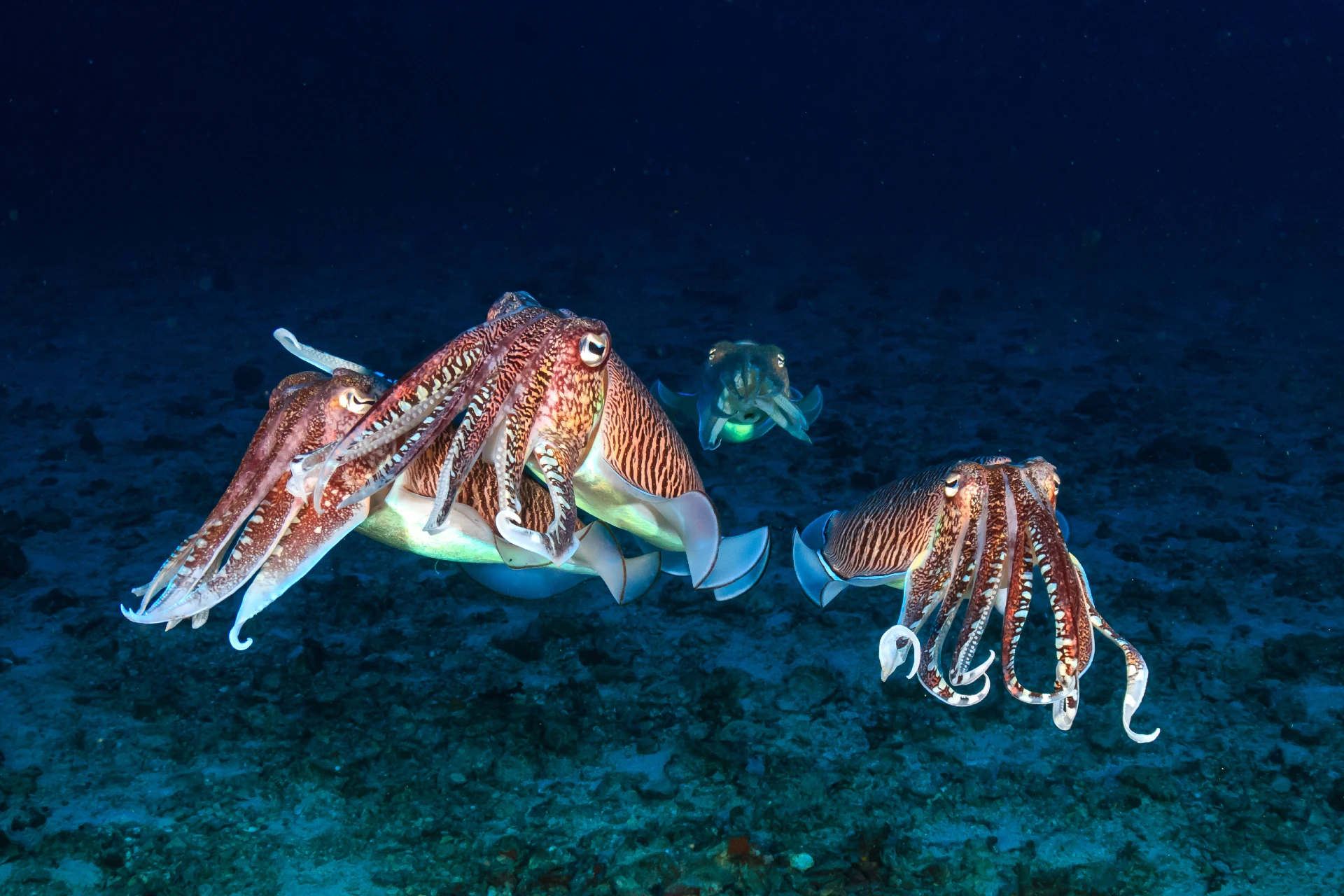
The Cephalopod Circus: Squids, Cuttlefish, and Octopuses
If you love aliens, you will love night diving in Panglao. The undisputed kings of the night are the cephalopods. During the day, they are masters of camouflage, hiding in holes or burying themselves in the sand. But at night, they are bold, active, and mesmerizing.
- The Bobtail Squid: These are the crowd favorites. Tiny (often no bigger than a golf ball) and impossibly cute, they hover in the water column buzzing like iridescent hummingbirds. When our dive lights hit them, they often flash neon colors of green, yellow, and purple.
- Cuttlefish: While you might see them during the day, at night they are hunting. You can witness their mesmerizing “hypnosis” display, where they ripple waves of color across their skin to confuse their prey (usually crabs). Keep an eye out for the rare Flamboyant Cuttlefish walking along the bottom on the muckier slopes.
- Reef Octopus: The common reef octopus is nocturnal. You will see them flowing over the coral heads like liquid, probing holes with their arms to flush out sleeping fish. It is a high-speed, tactile hunt that is thrilling to watch.
The Crustacean Invasion
During the day, crabs and lobsters are food. They stay hidden deep inside the reef to avoid being eaten by Triggerfish. At night, the reef becomes their playground.
- Decorator Crabs: These are the fashionistas of the deep. To hide from predators, they stick pieces of sponge, soft coral, and hydroids to their shells. At night, you can see them scuttling across the fans, looking like walking pieces of reef.
- Sponge Crabs: Similar to decorators, these strong crabs carry a large piece of living sponge on their back using their hind legs, using it as a portable shield.
- Hermit Crabs: The sheer number of hermit crabs—some massive, dragging heavy triton shells, others tiny—is staggering. The “traffic” on the sandy bottom at night is mostly these guys looking for a meal.
- Slipper Lobsters: Unlike the spiny lobsters you might know, these look like prehistoric, flattened armored tanks. They are shy but often spotted shuffling through the rubble.
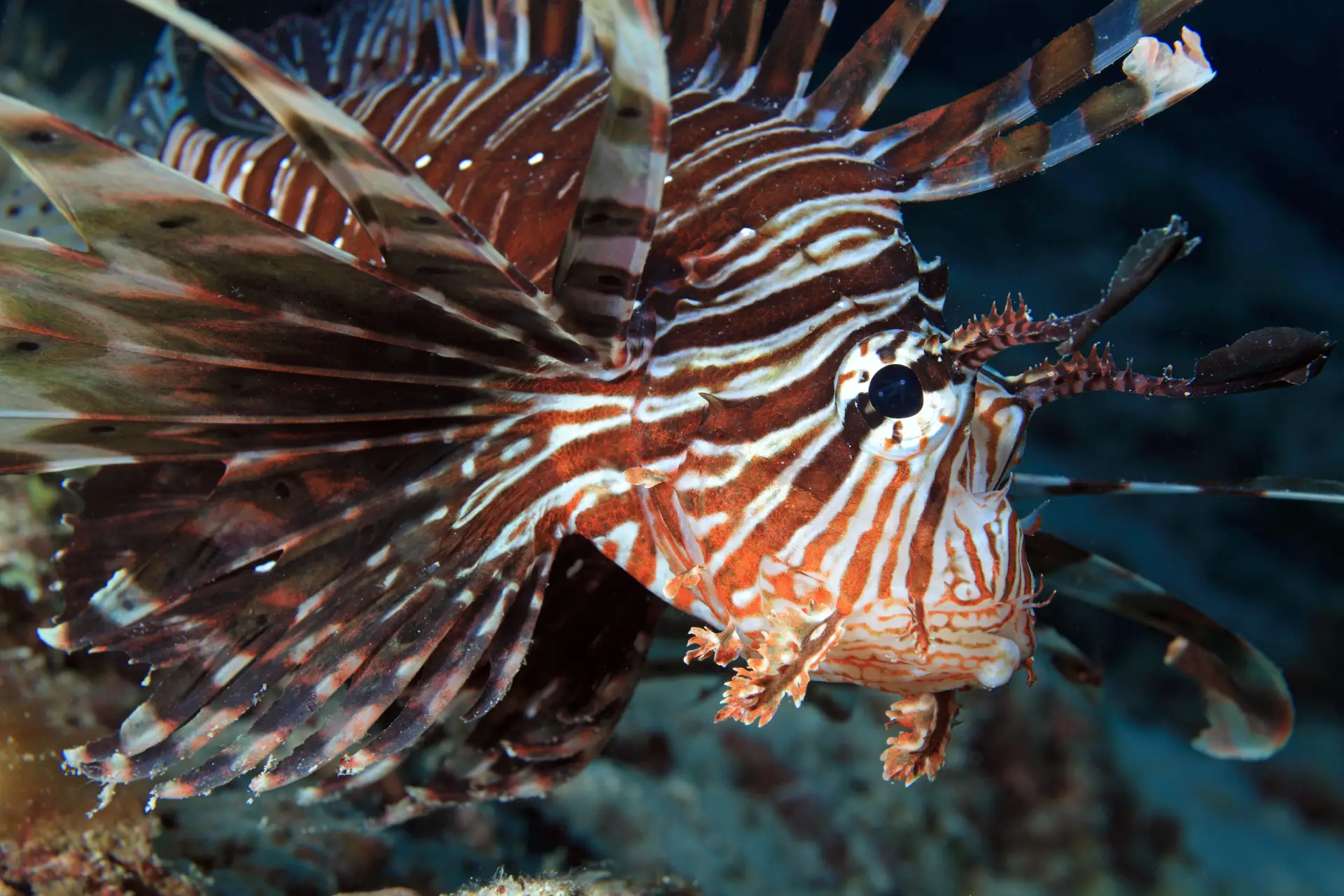
The Hunters: Lionfish and Eels
The “bad boys” of the reef take over the night shift.
- Lionfish: During the day, Lionfish often hang lazily under ledges. At night, they are active predators. They use their massive, fan-like pectoral fins to herd small fish into corners before striking with lightning speed.
- Moray Eels: seeing a Giant Moray free-swimming is a rare treat during the day. At night, it’s common. They leave their holes to slither through the reef structure, hunting by smell. Seeing a 1.5-meter eel swimming in the open is an adrenaline rush that reminds you why you respect the reef.
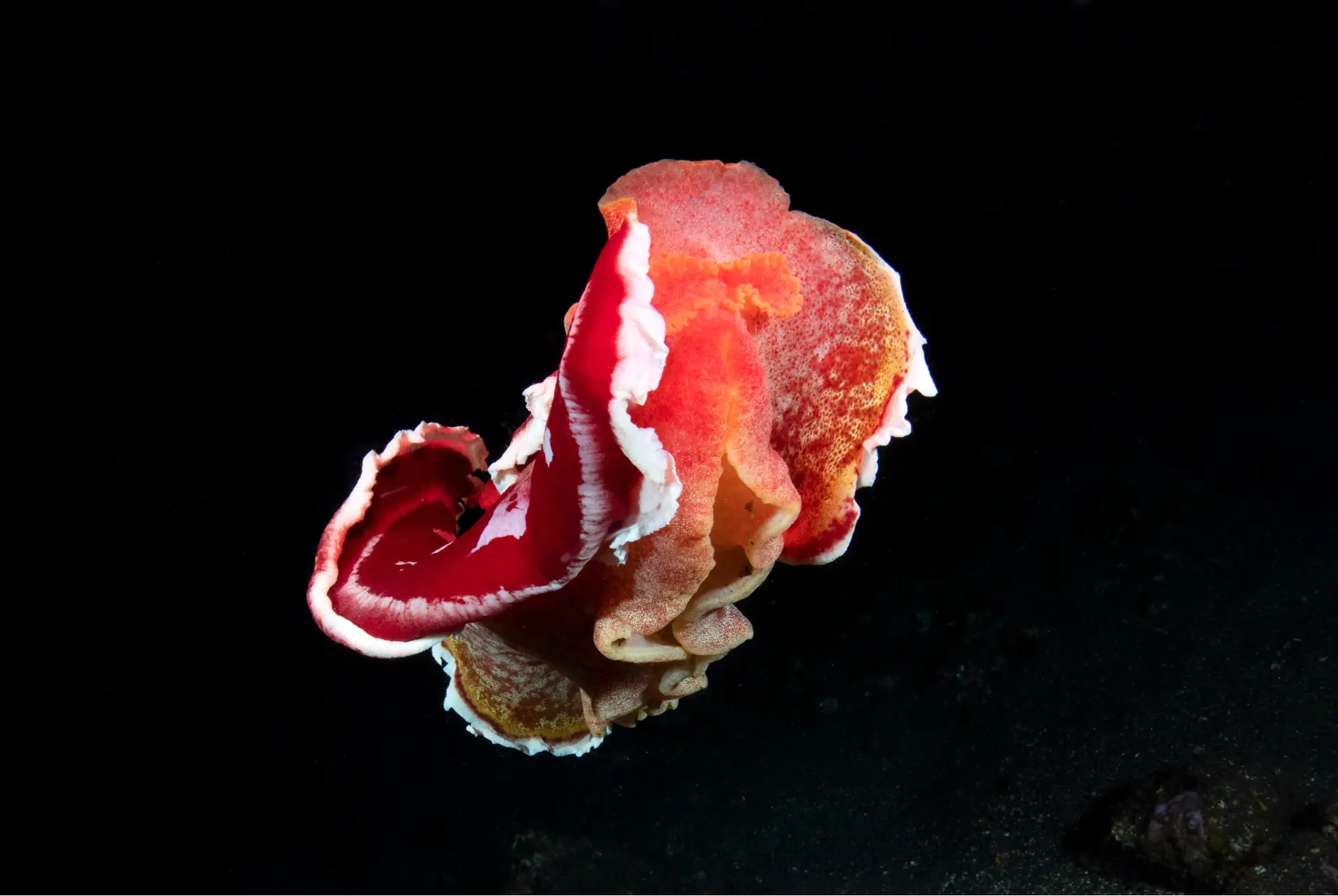
The Aliens: Basket Stars and Spanish Dancers
Some creatures are so strange they defy description.
- Basket Stars: During the day, these look like a tangled ball of dead twigs curled up on a fan. At night, they unfurl into a massive, intricate net that can be a meter wide. They perch on top of coral heads to catch plankton in the current. Seeing one react to your light and slowly curl its arms is like watching a sci-fi movie.
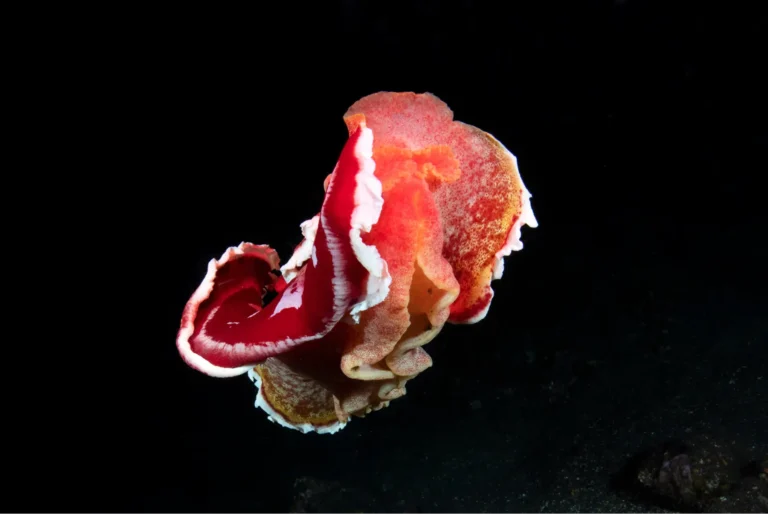
- The Spanish Dancer: This is the Holy Grail of night diving. The largest of all nudibranchs (growing up to 40cm!), this bright red slug swims by undulating its body skirts, looking exactly like the ruffles of a flamenco dancer’s dress.
The Magic Trick: Bioluminescence
There is one moment on a night dive that could beat everything else.
Towards the end of the dive, your Sierra Madre Divers guide may ask you to gather in a circle on a sandy patch. They will signal for everyone to cover their torch lights (or turn them off completely).
Suddenly, you are in pitch blackness. But then, you wave your arms.
The water explodes with sparks. This is bioluminescence—tiny plankton that emit light when disturbed. It looks like “Avatar” or “Harry Potter” magic. You can write your name in the water with green fire. It is a moment of pure, childlike wonder that connects you to the ocean in a spiritual way.
Why Night Dive with Sierra Madre Divers?
Navigating the reef in the dark requires skill and local knowledge. It’s easy to get disoriented, and even easier to miss the small critters if you don’t know where to look.
- The Best Site: We typically dive Kalipayan (Happy Wall) or the Alona Beach Sanctuary for night dives. These sites are close (5 minutes by boat), shallow, and safe, yet absolutely teeming with life.
- Critter Spotting: Our guides are experts at finding the tiny stuff. They know which specific anemone the decorator crab lives in and where the bobtail squid likes to hang out.
- Safety First: We keep our night diving groups small. We provide thorough briefings on light signals and lost-buddy procedures, ensuring you feel safe and comfortable the entire time.
Don’t be afraid of the dark. The ocean at night is not a scary place; it is a busy, colorful, and fascinating metropolis.
Book a night dive with Sierra Madre Divers on your next trip. We promise, it will change the way you see the ocean forever.