The Hidden Giant of Panglao: A Complete Guide to Diving Doljo Point
When divers start researching a trip to Bohol, the same names pop up over and over again. Balicasag Island is praised for its turtles and jackfish. Napaling Reef is celebrated for its swirling sardine run. Pamilacan Island is revered for its sweeping currents and wild pelagics.
Because these sites soak up all the spotlight, another spectacular location often slips completely under the radar. Tucked away on the quiet, northwestern tip of Panglao Island lies a dive site that offers some of the most dramatic topography, pristine coral health, and massive marine life in the Visayas.
Welcome to Doljo Point (pronounced Dol-ho).
If you are a diver who loves sheer drop-offs, gin-clear water, and escaping the crowds, this is the site you need to request. Here is the ultimate rundown of Doljo Point, what makes it a world-class dive, what you can expect to see, and the secret season when this site truly shines.
The Topography: A Journey to the Center of the Earth
What makes Doljo Point truly special is its dramatic, awe-inspiring structure. It is the definition of a classic wall dive.
The dive typically begins on a beautiful, sunlit sandy slope that ranges from 5 to 10 meters deep. This shallow plateau is covered in hard corals, sea grass, and colorful reef fish, making it a great spot for your safety stop at the end of the dive.
But as you swim away from the shore, the slope abruptly vanishes. The reef simply falls away into a sheer, vertical wall that plunges straight down into the abyss. The bottom here drops well past 60 meters (200 feet), far beyond recreational diving limits.
Swimming over the edge of Doljo Point feels like stepping off a skyscraper. Because the water visibility here is often exceptional—regularly exceeding 30 meters—you can look down and see nothing but the deep, mesmerizing blue. It gives you an incredible sensation of flying weightless through space.
The Giants of the Wall: Sea Fans and Barrel Sponges
Because the wall at Doljo Point is exposed to steady, nutrient-rich currents from the open Bohol Sea, it supports a specific type of marine growth that you don’t see as much on the shallower, more sheltered sites.
This is the land of the giants.
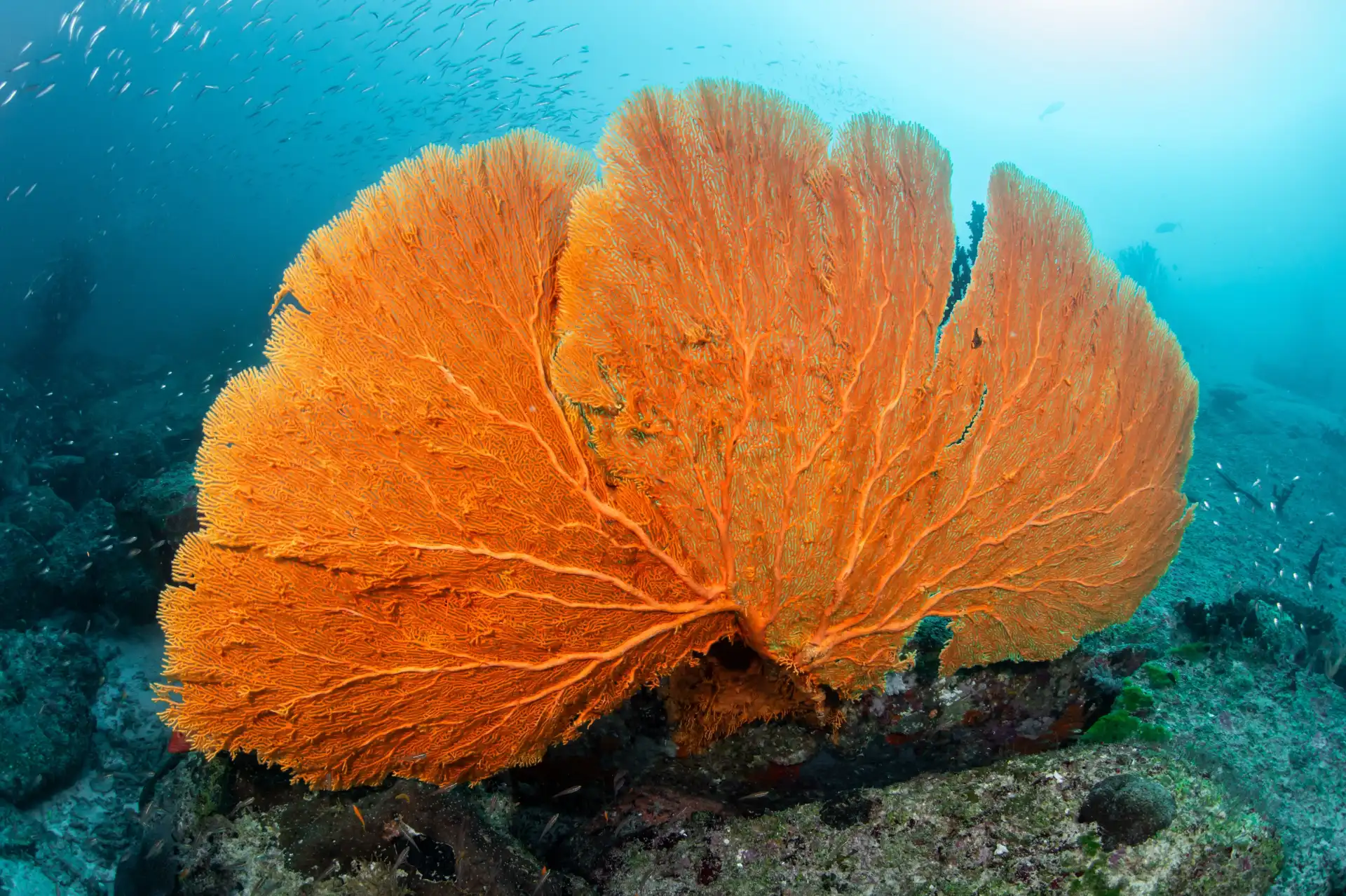
As you drift along the vertical face between 18 and 30 meters, you will be surrounded by some of the largest Gorgonian Sea Fans in the Philippines. These intricate, lace-like structures grow outwards from the rock to catch plankton in the current. Some of the fans at Doljo are easily the size of a car door, glowing in vibrant shades of pink, red, and orange when illuminated by a dive torch.
Alongside the fans are massive Giant Barrel Sponges. These ancient organisms can live for hundreds of years, and at Doljo Point, many of them have grown large enough that a diver could easily fit inside (though, of course, we never touch them!). The sheer scale of the coral and sponge growth here makes you feel incredibly small and reminds you of the ancient, slow-moving life cycles of the ocean.
What You Might See: From Macro to Mega
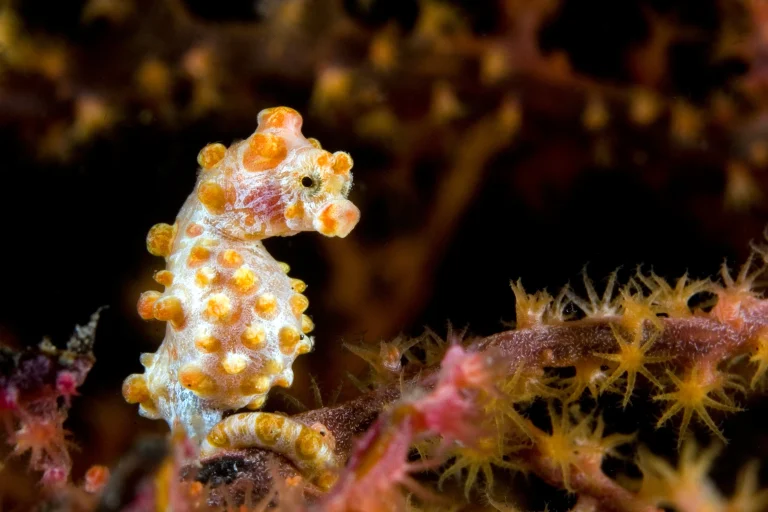
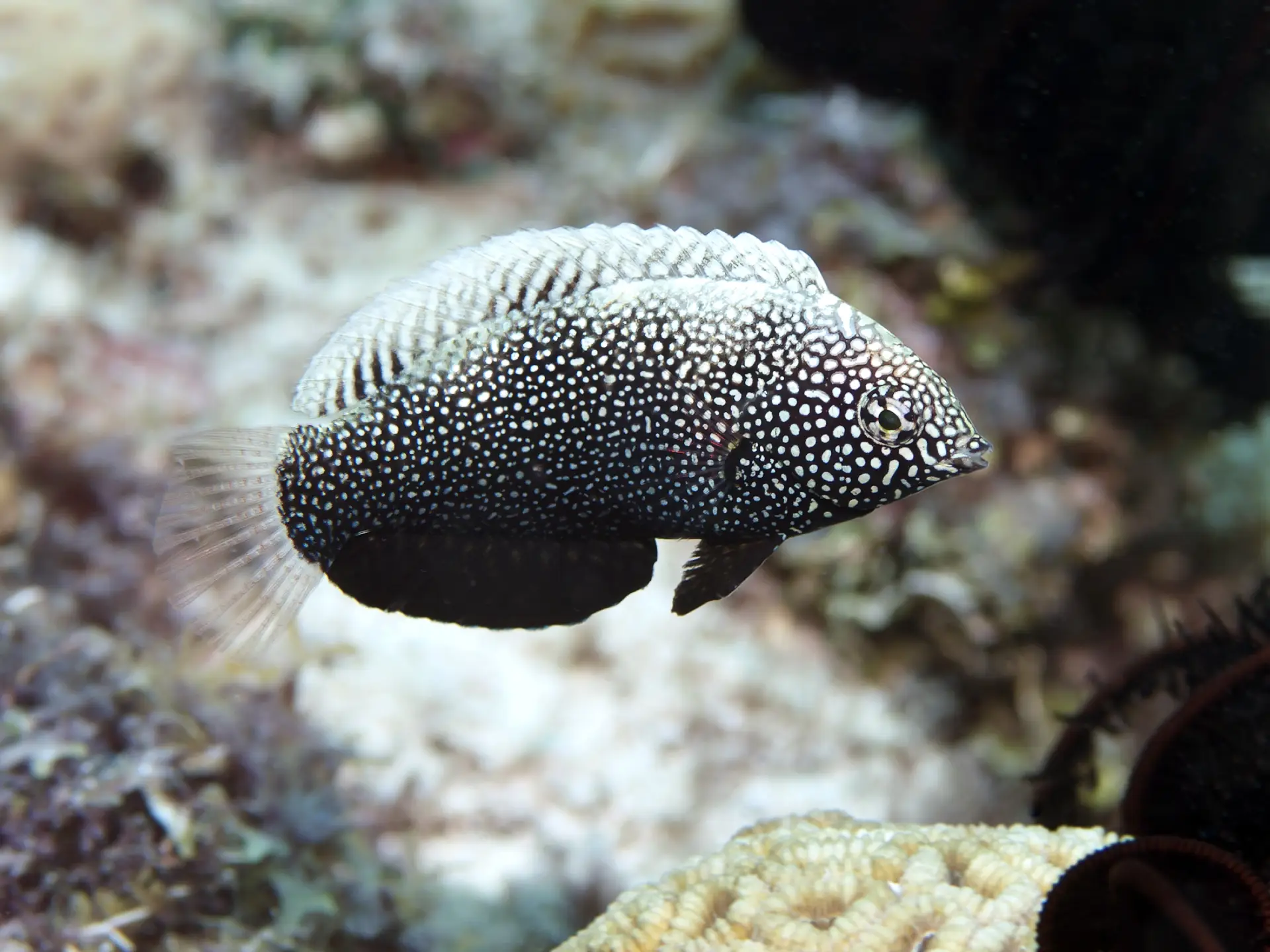
Doljo Point offers a fantastic balance between macro (tiny) critters hiding on the wall and larger pelagic fish cruising out in the blue.
Looking at the Wall:
- Frogfish: The giant sponges are the perfect hiding places for Giant Frogfish. These masters of camouflage sit motionless, blending in perfectly with the sponge’s texture, waiting to ambush passing prey.
- Nudibranchs: The wall is covered in colorful sea slugs. Keep an eye out for the vibrant Chromodoris species and the intricate, alien-like Flabellina.
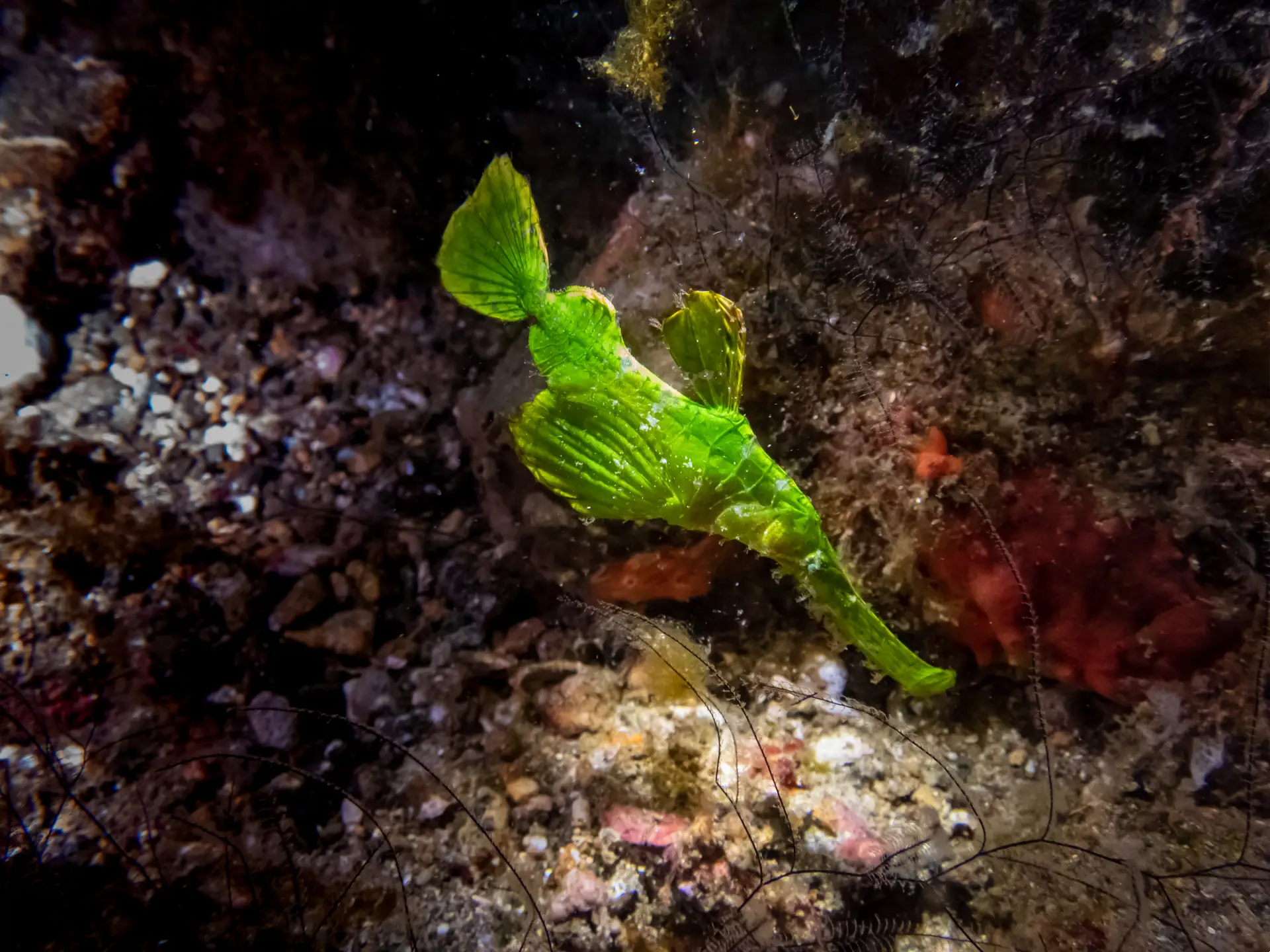
- Ghost Pipefish: Often found hovering upside down near the sea fans or feather stars, these elusive fish look exactly like dead leaves or pieces of seagrass.
Looking into the Blue:
- Schooling Fish: You will frequently encounter massive schools of surgeonfish, batfish, and vividly colored sweetlips hanging effortlessly in the current just off the wall.
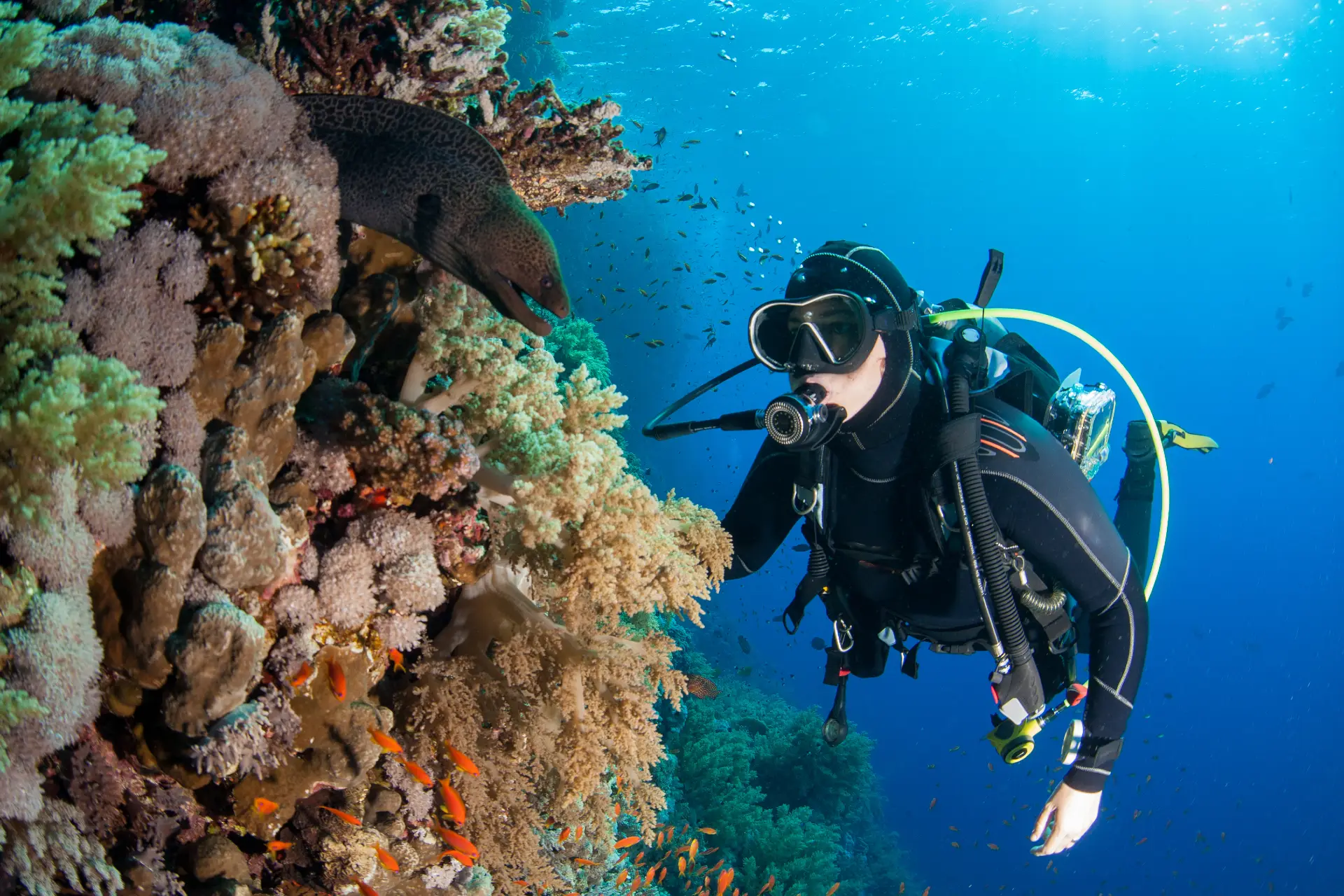
- The Hunters: Keep one eye focused on the deep blue water away from the reef. Doljo Point is a great place to spot passing Trevally (Jacks) and Dogtooth Tuna hunting along the drop-off.
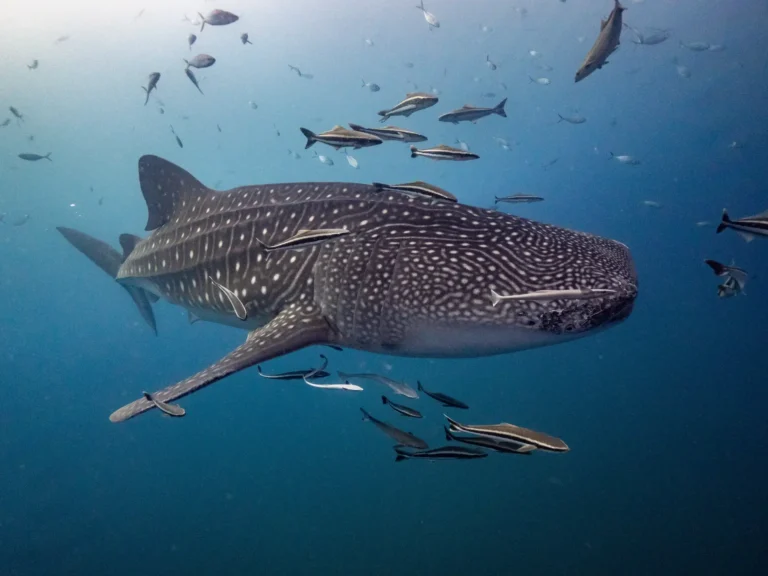
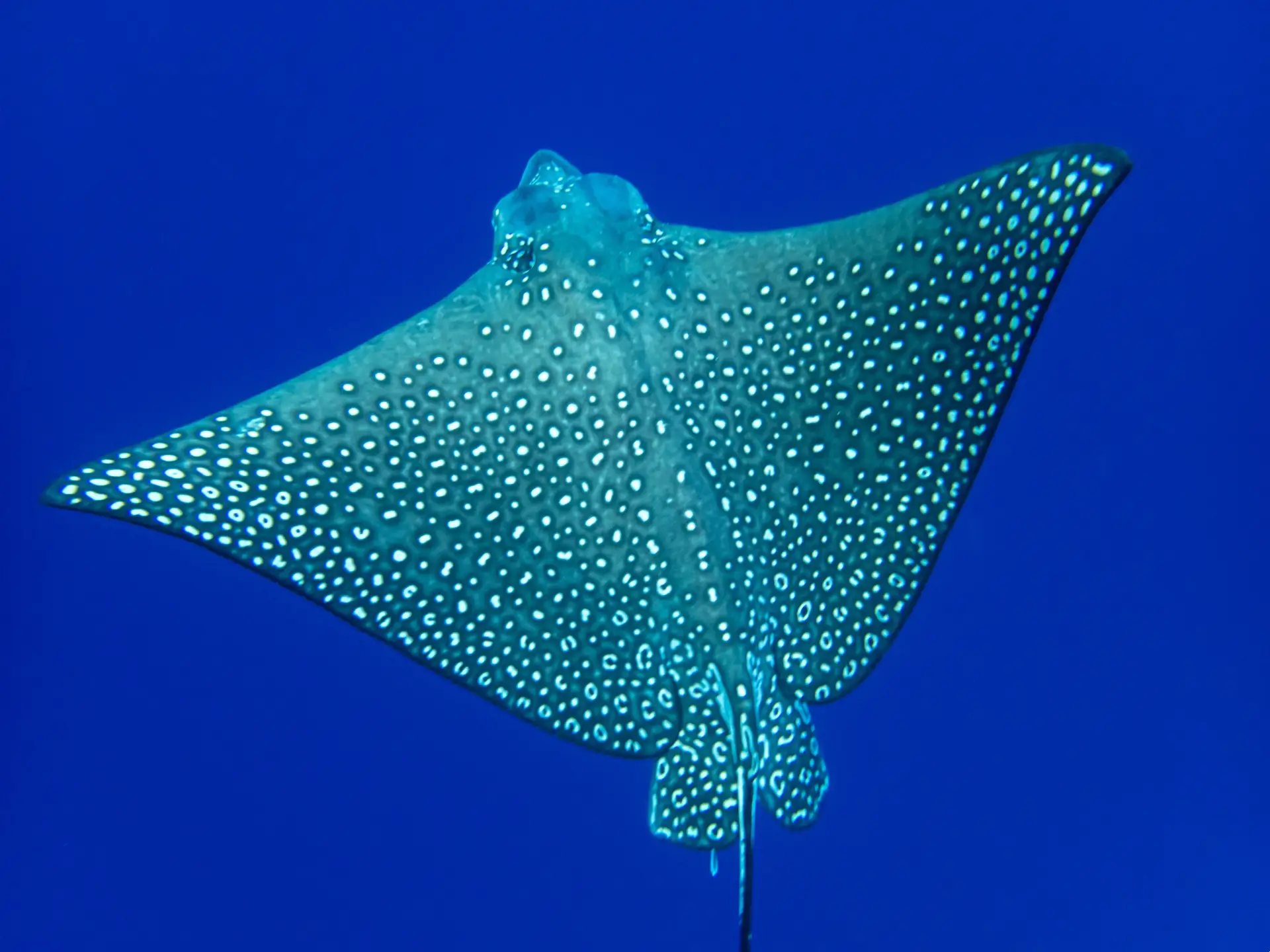
- Pelagic Surprises: Because the wall drops into very deep water, Doljo acts as a highway for larger ocean wanderers. Lucky divers have been known to spot passing Eagle Rays, solitary reef sharks, and large schools of chevron barracuda cruising the depths.
The Secret Advantage: The “Habagat” Season
Here is the best-kept secret about diving in Panglao.
The Philippines has two primary weather seasons: the Amihan (Northeast Monsoon, roughly November to May) and the Habagat (Southwest Monsoon, roughly June to October).
During the Habagat season, the winds blow from the southwest. This can occasionally make the water choppy and wavy on the southern side of Panglao (where Alona Beach is located).
However, because Doljo Point is located on the extreme northwestern tip of the island, it is completely geographically sheltered from the Southwest Monsoon winds. When the waves are picking up at other dive sites, Doljo Point is often sitting in the “lee” of the island, meaning the surface is as flat and calm as a mirror.
If you are planning a dive trip to Bohol during the summer or early autumn months (July through September), Doljo Point transforms from a hidden gem into the absolute best dive site on the island. It guarantees calm entries, smooth boat rides, and crystal-clear visibility when other sites might be blown out.
Who Should Dive Doljo Point?
Because of its unique topography, Doljo is a versatile site, but it requires good dive discipline.
- Advanced Divers: This is an Advanced Open Water diver’s playground. To truly appreciate the giant sea fans and sponges, you need to dive in the 20 to 30-meter range. Excellent buoyancy control is absolutely mandatory here, as there is no bottom to catch you if you start to sink.
- Tec Divers: As we highlighted in our previous post about Technical Diving, Doljo is the premier training ground for deep diving in Bohol. The sheer vertical drop allows Tec divers to plan precise decompression dives to 40, 50, or 60 meters in pristine, uncrowded conditions.
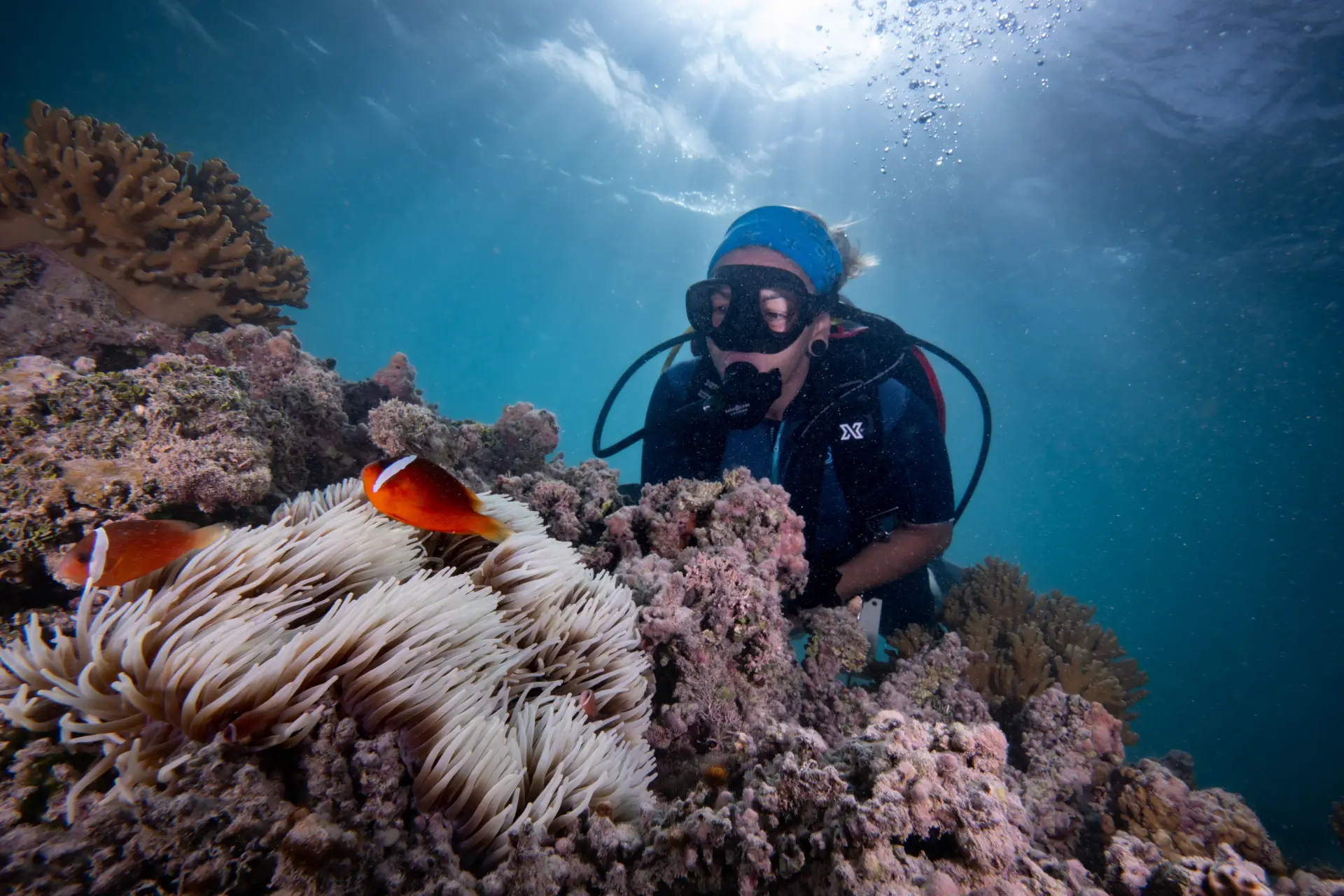
- Open Water Divers: Beginners can still dive Doljo! The shallow plateau at the top of the reef (5 to 12 meters) is beautiful, calm, and filled with reef fish, making it a spectacular and safe dive, provided you stay away from the deep edge.
Why Dive Doljo with Sierra Madre Divers?
Because Doljo Point is located further away from the main hub of Alona Beach, many of the smaller dive shops simply don’t make the journey, opting instead for the closer, more crowded local reefs.
At Sierra Madre Divers, we believe in showing you the absolute best of Bohol, which means venturing off the beaten path. Our spacious, comfortable boats make the trip around the peninsula enjoyable, and our expert guides know exactly how to read the complex currents that wrap around the point. We know where the biggest sea fans live, which sponges hold the frogfish, and how to guide you safely along the drop-off.
If you are tired of diving in a crowd and want to experience the awe-inspiring scale of a true vertical wall, ask us to add Doljo Point to your itinerary.
Prepare to take the plunge. The giant fans are waiting.