The Dragon of the Sand: Uncovering the Secrets of the Short Seamoth in Bohol
Scuba diving in Bohol is often defined by the “big stuff”—the turtles of Balicasag, the swirling schools of jacks, or the passing whale sharks. But for the observant diver, the true magic often lies hidden in the sand, camouflaged in plain sight.
You might be finning along a sandy slope, looking for the usual suspects, when suddenly, a small, craggy rock decides to stand up and walk away. It spreads a pair of magnificent, wing-like pectoral fins, flashes a splash of blue or white, and waddles across the bottom like a mechanical toy.
You have just met one of the ocean’s most bizarre and enchanting oddities: the Seamoth.
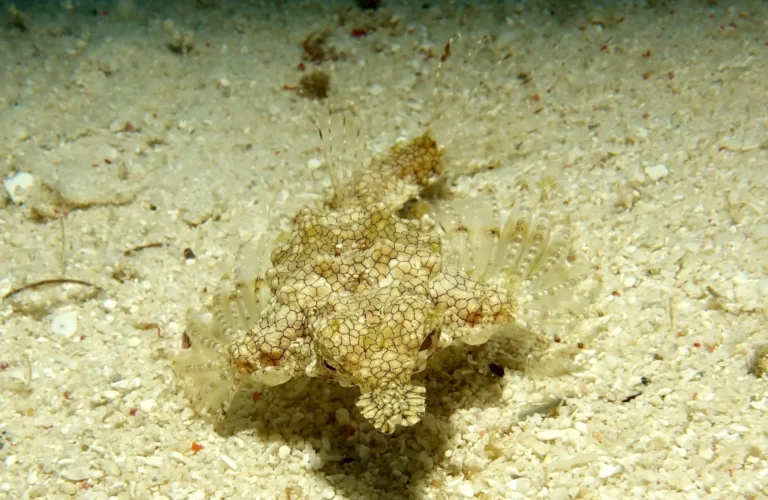
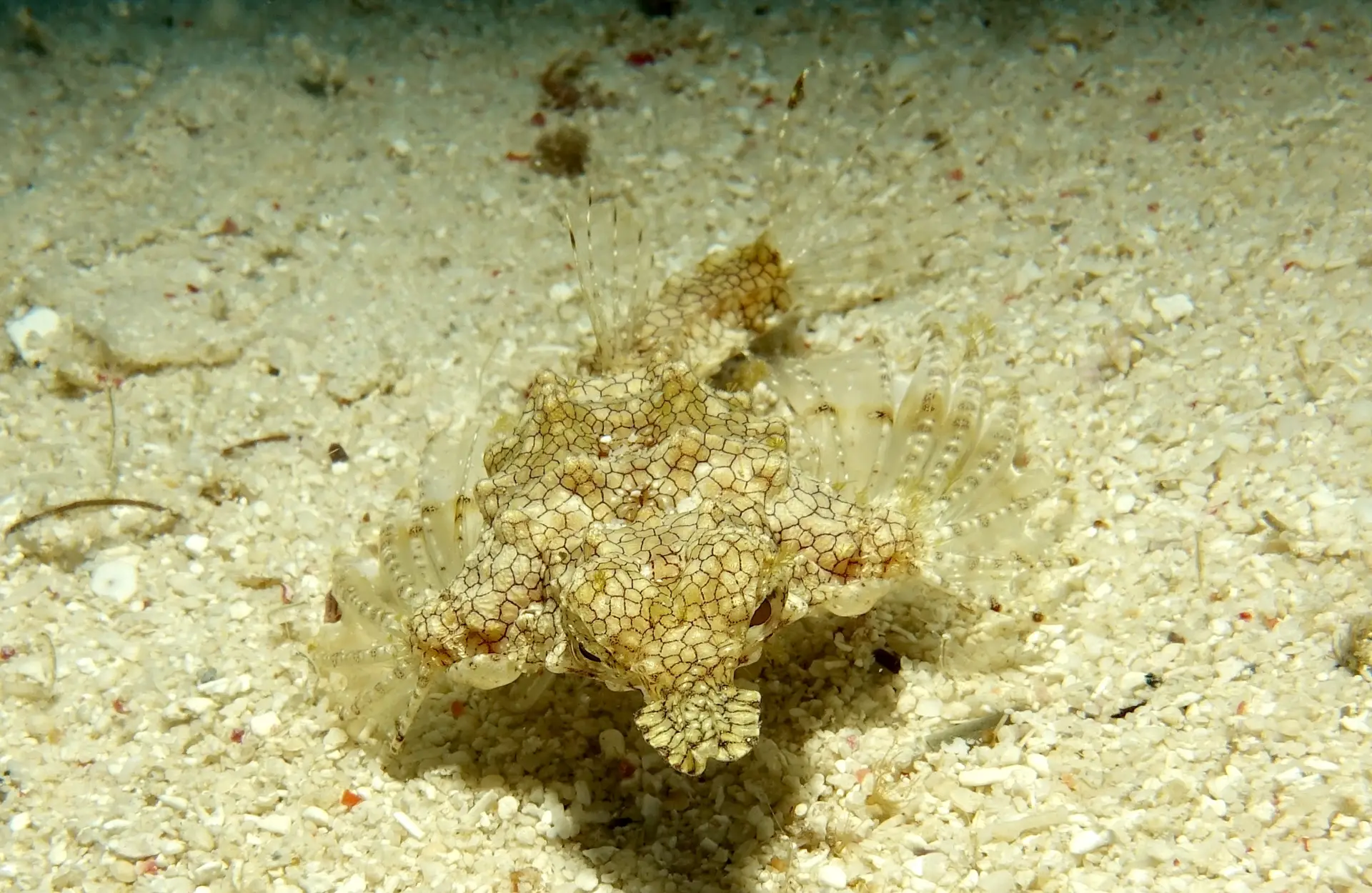
Specifically, the creature in the photo above is the Short Dragonfish (Eurypegasus draconis), a member of the Pegasidae family. It is a fish that looks like a mythical hybrid—part bird, part reptile, and part tank. For muck diving enthusiasts and macro photographers in Bohol, finding one of these “Little Dragons” is a highlight of any trip.
Here is everything you need to know about this shy, walking wonder.
A Mythical Identity Crisis
The scientific names for Seamoths tell you everything you need to know about how strange they look. The family name, Pegasidae, comes from Pegasus, the winged horse of Greek mythology. It refers to their large, wing-like pectoral fins that they fan out when alarmed or attracting a mate.
The species name for the one in your photo, draconis, literally means “dragon.”
When you look closely, the name fits. They don’t have scales like normal fish. Instead, their bodies are encased in a rigid suit of bony plates, acting like a suit of armor. This gives them a prehistoric, rugged texture that helps them blend perfectly into the coarse sand and shell rubble where they live. They have a long, flattened snout (rostrum) that extends over a small, toothless mouth, which they use to suck up tiny worms and crustaceans from the sediment.
The Fish That Prefers to Walk
One of the most captivating behaviors of the Short Dragonfish is how it moves. While they can swim using their tail and “wings,” they are generally poor swimmers. They prefer to stay grounded.
If you watch one carefully, you will notice it isn’t gliding; it’s walking.
The Seamoth has modified pelvic fins that have evolved into finger-like spines. They use these hooked “legs” to crawl along the seabed, step by step. This walking motion allows them to sneak up on prey without creating the pressure waves that swimming would generate. It also adds to their clumsy, endearing charm. When they do decide to “take flight,” they spread their pectoral fins wide (which are often beautifully edged in neon blue) and glide for a meter or two before settling back down into the sand.
A Romantic Life: Monogamy in the Muck
In the wild world of the reef, true love is rare—but Seamoths are the exception. These little creatures are largely monogamous, forming long-term pair bonds that can last for their entire lives.
They are rarely found alone. If you spot one Short Dragonfish in Bohol, freeze and look around the immediate area (usually within a meter or two). You will almost certainly find its partner nearby. They live as a team, feeding and resting together.
Their bond is most evident at sunset. This is when the pair performs a beautiful spawning dance. They meet, press their bellies together, and slowly rise up into the water column, cheek-to-cheek, to release their eggs and sperm. It’s a synchronized, tender ritual that stands in stark contrast to their rugged, armored appearance.
The Skin-Shedding Trick
Seamoths have another superpower that is extremely rare in the fish world: they molt.
Because they are slow-moving bottom dwellers encased in hard armor, they are susceptible to parasites, algae, and grime building up on their bodies. To stay clean and healthy, the Seamoth periodically sheds its entire outer layer of skin (a mucus-bound cuticle), much like a snake or a crab shedding its shell.
They do this by rapidly expanding and contracting their bodies, essentially “jumping” out of their old skin. This leaves them shiny, clean, and free of pests. It’s a brilliant evolutionary adaptation for a creature that spends its life buried in the dirt.
Where to Find Them in Bohol
While they are elusive, Bohol is a fantastic place to spot Eurypegasus draconis. You won’t find them on the vertical walls or in the strong currents. They crave the quiet, sandy slopes and seagrass beds.
- Alona Beach House Reef: The sandy patches between the coral heads, especially towards the deeper slopes (15m – 20m), are classic Seamoth territory.
- Doljo Point: The sandy areas leading up to the wall are often hiding places for these masters of camouflage.
- Arco Point: While known for the “Hole in the Wall,” the surrounding sandy rubble zones are perfect hunting grounds for macro critters like the Seamoth.
The key to finding them is patience. They look exactly like a piece of dead coral or a shell covered in algae. Look for the “rock” that has a tail, or watch for the subtle movement of their “walking legs.”
Photography Tips: Capturing the Dragon
Photographing a Short Dragonfish can be tricky due to their camouflage and shy nature.
- Get Low: The biggest mistake divers make is shooting from above. This flattens the fish and makes it blend into the sand. Get your camera down to the sand level (carefully!) and shoot eye-to-eye. This separates the fish from the background and highlights its bizarre facial features.
- Wait for the “Wings”: A Seamoth with its fins tucked in looks like a rock. If you are patient and wait without harassing it, it may eventually spread its pectoral fins to move. This is the “money shot,” revealing the beautiful patterns and colors of its wings.
- Respect the Pair: If you find two, try to frame them together to tell the story of their bond. But remember, never herd or touch them to get a better angle. Their bony armor makes them rigid, but they are easily stressed.
A Species in Need of Protection
Despite their armor, Seamoths are vulnerable. Because they are slow-moving and live on sandy bottoms, they are frequently caught as bycatch in trawl nets. Tragically, they are also targeted for the Traditional Chinese Medicine trade (dried and sold as a cure for various ailments, similar to seahorses) and the aquarium trade.
By diving with responsible operators like Sierra Madre Divers, you are supporting eco-tourism that places more value on these creatures alive in their natural habitat than dried in a market.
Come Look for Dragons with Us
The Short Dragonfish is a reminder that in the ocean, you don’t always need to go deep or look for the biggest animals to find something truly wondrous. Sometimes, the most incredible alien life forms are right under your nose, walking across the sand.
Want to add the “Little Dragon” to your life list? Let our expert guides at Sierra Madre Divers know you love macro, and we will take you to the best sandy slopes in Bohol to hunt for the elusive Seamoth.